Protocol Development
We build custom Layer 1 and Layer 2 protocols, consensus mechanisms, and execution environments tailored to throughput, finality, and decentralisation requirements.
Our Services
Production-grade distributed systems engineered for performance, interoperability, and operational resilience across public and permissioned networks.
180+
Production blockchain systems shipped
$3.1B+
Transaction value processed across deployments
40+
Networks integrated (EVM, non-EVM, permissioned)
8+
Years of distributed systems engineering experience
Our services
Nine blockchain engineering disciplines - from protocol-level development and node infrastructure to cross-chain bridges and permissioned ledgers - each scoped independently and engineered to enterprise production standards.
We build custom Layer 1 and Layer 2 protocols, consensus mechanisms, and execution environments tailored to throughput, finality, and decentralisation requirements.
We design network topology, consensus selection, data availability layers, and validator economics before any node software is deployed.
We deploy and operate validator, archive, and RPC node clusters with high-availability configurations, monitoring, and automated failover.
We engineer message-passing and asset bridge contracts with multi-signature validators, fraud proofs, and rate-limited withdrawal queues.
We build optimistic and zero-knowledge rollup deployments, sequencer infrastructure, and data availability integrations for throughput-bound applications.
We deploy Hyperledger Fabric, Besu, and Corda networks with role-based access, channel privacy, and regulator observability built in.
We connect blockchain systems to enterprise stacks - ERPs, identity providers, payment rails, and data warehouses - through audited middleware and event pipelines.
We model token supply schedules, staking rewards, fee distribution, and incentive structures with simulation-backed parameter recommendations.
We migrate legacy chain deployments, upgrade consensus layers, and modernize contract sets without service interruption or state loss.
Next step
Share your chain, timeline, and constraints - we respond within one business day with a scoped recommendation, not a sales pitch.
Delivery scope
Every engagement produces a defined artifact set. Scope is agreed upfront; nothing is a billable surprise.
Chain type, consensus mechanism, and validator topology chosen against your performance and trust requirements.
Attack surfaces documented across nodes, bridges, and integration boundaries before deployment design begins.
Throughput, finality, and failover behaviour validated under adversarial conditions, not just happy-path benchmarks.
Per-transaction cost, node operating expense, and scaling headroom profiled with documented bottlenecks.
Reproducible network bootstrapping, genesis verification, and validator onboarding scripts.
Documented procedures for upgrades, key rotations, and incident response - handed to your ops team, not kept in our heads.
Tooling stack
Chosen for production reliability, ecosystem maturity, and operational track record.
Default stack
Go · Rust · Hyperledger Besu · Geth · Tendermint
Node clients, infra
Substrate, Solana
EVM contracts
Aptos & Sui
Tooling & SDKs
Scripting & analytics
Hyperledger Fabric chaincode
Bitcoin Core, EOS
StarkNet
Audit-friendly EVM
Public EVM L1
Permissioned
EVM scaling
High-throughput L1
Subnet architecture
App-chain framework
Parachain ecosystem
Optimistic rollup
OP Stack
Enterprise EVM
Node orchestration
Containerisation
Infra as code
Metrics
Observability
Cloud deployment
Cloud deployment
Config management
Key management
Log aggregation
Oracle network
Indexing
Debug & monitor
RPC infrastructure
Node API
Dedicated nodes
Decentralised storage
JS library
Legacy ETH
Dev environment
Trust & diligence
We coordinate independent verification with recognised third-party audit firms your stakeholders already trust - a strong signal for regulators, investors, and enterprise buyers.
Third-party names and marks belong to their respective owners.
Partner with us
Blockchain systems are operational infrastructure. A single misconfigured validator, a missed upgrade window, or an unhandled fork can take down liquidity, freeze settlement, and erode user trust. We build for teams who treat distributed systems as production infrastructure - with monitoring, runbooks, and incident response from day one.
Why Bitronix
Not a feature list. Six specific reasons enterprises choose Bitronix for programmes that must stay online - and stay explainable to regulators.
We build for live operation, not demo conditions. Every deployment ships with monitoring dashboards, alerting rules, and runbooks your ops team can execute under pressure - not slide decks describing how it should work.
You see every architectural decision, every benchmark result, and every operational trade-off as we build. Enterprise clients get a live documentation trail their security and compliance teams can review at any phase of the engagement.
We deploy across Ethereum, Hyperledger, Cosmos, Solana, Polygon, and Avalanche - driven by your performance, trust, and regulatory requirements, not by our tooling preferences.
Documentation, runbooks, and on-call training are part of the engagement, not a change order. Your team takes over with confidence - or we stay on retainer with defined SLAs.
Most firms ship and disappear. We provide on-chain monitoring, incident response with defined SLAs, and scheduled upgrade operations - because deployment is the start of the contract, not the end.
Our case studies are public, our infrastructure choices are documented, and our partners are named. Read the architecture, check the chains, verify the firms. We give you the evidence to decide, not asks to trust.
Security & testing methodology
Most outages are preventable with disciplined design and operational rigour. We engineer the preventable ones out so your systems run on substance, not luck.
Before any node spins up, we document throughput targets, finality requirements, validator economics, and failure tolerances. Network topology is mapped to your operational and regulatory constraints - not to default templates.
We model consensus trade-offs (PoS, PoA, BFT variants) against your decentralisation, latency, and cost requirements. Validator sets are sized and geographically distributed to match your trust and resilience profile.
Networks are stress-tested under realistic and adversarial conditions: validator churn, network partitions, transaction floods, and malicious peers. Performance envelopes are documented before mainnet, not discovered during incidents.
Every node ships with metrics, structured logs, and alert rules tuned to your operational SLAs. Dashboards surface validator health, peer connectivity, and consensus participation - so on-call engineers diagnose issues in minutes, not hours.
Hard fork procedures, key rotation playbooks, and disaster recovery runbooks are written and rehearsed before launch. Your team practices the upgrade before the upgrade matters.
Every engagement produces a structured handoff: architecture diagrams, runbooks, alerting configurations, and trained on-call procedures. Your team operates the system end-to-end after the engagement closes - or extends us into a support retainer.
Our methodology is available to review before you engage.
Industries
Nine industries where blockchain infrastructure is replacing legacy systems with verifiable, resilient, and interoperable platforms.
We build blockchain infrastructure for player-owned economies, cross-game asset interoperability, and tournament settlement layers - engineered for the throughput and latency live gaming demands.
Learn moreWe deploy permissioned networks and archival node clusters for land registry, procurement attestations, and tax reconciliation - giving agencies a verifiable ledger layer regulators can observe without public chain exposure.
Learn moreWe engineer chain backends for royalty routing, rights metadata anchoring, and payout settlement across distributors - so usage events flow into deterministic settlement rails your finance team can audit.
Learn moreWe integrate decentralised identifier infrastructure with enterprise IAM - bridges, attestations, and revocation registries - so credentials verify on-chain without centralised honeypots of personal data.
Learn moreWe operate multi-party ledger networks with channel-level privacy, sensor attestation pipelines, and dispute windows - so counterparties share one tamper-evident state without exposing competitive data.
Learn moreWe build settlement and collateral tracking infrastructure that connects lending cores to custody, pricing feeds, and repayment rails - engineered for finality SLAs and failover across regions.
Learn moreWe deploy tokenisation settlement networks, cap-table synchronisation, and investor onboarding integrations - linking property systems, escrow banks, and on-chain ownership records with reconciliation guarantees.
Learn moreWe implement consent and audit trail ledgers that sit alongside EHR systems - event-sourced access logs, break-glass procedures, and researcher-facing proofs without moving raw PHI to a public chain.
Learn moreWe run oracle-connected ledger layers for parametric triggers, claims attestations, and reinsurance netting - so payouts settle against verifiable network state instead of batch CSV reconciliation.
Learn moreExecution model
No handoffs that lose context. The team that scopes your project ships it and supports it post-launch. Every phase produces a defined artifact - nothing moves forward without it.
Timeline: 3-5 business days
We map network requirements, throughput targets, trust model, and regulatory constraints before architecture decisions. Stakeholders align on success metrics, integration boundaries, and phase gates.
Timeline: 1-3 weeks
We document network topology, consensus selection, validator economics, and integration boundaries - including rejected alternatives with rationale so auditors and your internal teams understand trade-offs.
Timeline: 4-12 weeks
We build node configurations, chain software forks or modules, integration middleware, and operational tooling - with continuous benchmarking and load injection in CI so performance regressions surface early.
Timeline: 2-4 weeks
Independent security review, load testing, and adversarial scenario validation run before any production deployment. Findings are triaged and remediated against agreed severity SLAs.
Timeline: 1-2 weeks
We coordinate network bootstrap, validator onboarding, and observability activation against explicit go-live criteria - including rollback and communication plans for participants.
Timeline: Ongoing
On-chain monitoring, incident response, scheduled upgrades, and operational coverage continue under defined SLAs - with the engineers who built the system on the critical path for incidents.
Timelines assume responsive client feedback at phase gates. Independent security review scheduling is often the pacing item - reserve review capacity before your target bootstrap or migration date.
How we partner
Three ways to engage - structured around how your team works, not how we prefer to sell. Every model operates on the same delivery standard, the same engineering team, and the same accountability chain.
3-12 months · 2-5 engineers · Full-time exclusive
Your programme gets dedicated protocol, infrastructure, and DevOps engineers working exclusively on your network - no context-switching between client projects, no junior handoffs mid-engagement. Suited to programmes launching new chains, bridge programmes, or long-run operational coverage with defined SLAs.
Best for: Greenfield chain launches, enterprise permissioned programmes, multi-region validator operations
1-6 months · 1-3 engineers · Integrated with your team
We embed into your existing engineering org - attending standups, working in your repos, and running inside your change-management processes. You retain architectural ownership; we bring node operations, benchmarking discipline, and cross-chain integration depth your team is still staffing.
Best for: Platform teams scaling validator fleets, infra groups hardening bridges, enterprises integrating ledgers with legacy stacks
4-16 weeks · Fixed deliverables · Fixed price
A defined scope, artifact set, and price agreed before work begins. Discovery through network bootstrap - or any single phase - delivered against milestones with no billable surprises. Load-testing engagements, bridge hardening, and migration cutovers are common project-based programmes.
Best for: Defined network milestones, validation sprints, migrations, or standalone observability and runbook deliverables
Not sure which model fits? Book a 30-min scoping call → - we'll recommend the right structure based on your team, timeline, and programme scope.
Case studies
Permissioned settlement, RWA infrastructure, multi-party provenance, and regional trading networks - programmes you can diligence end to end.
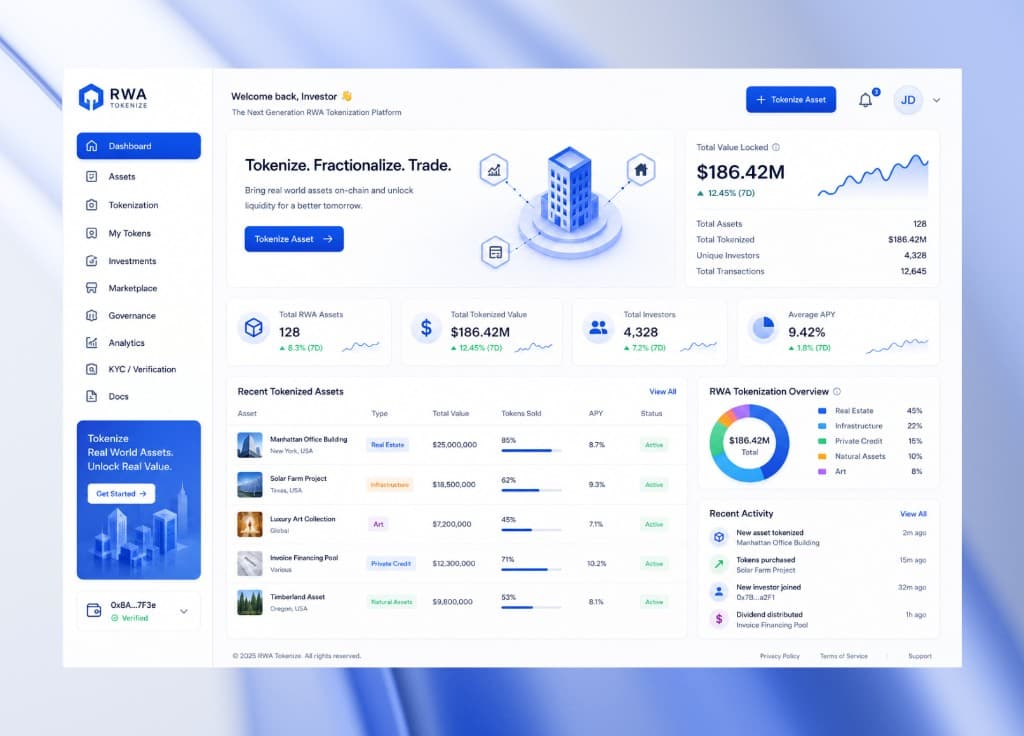
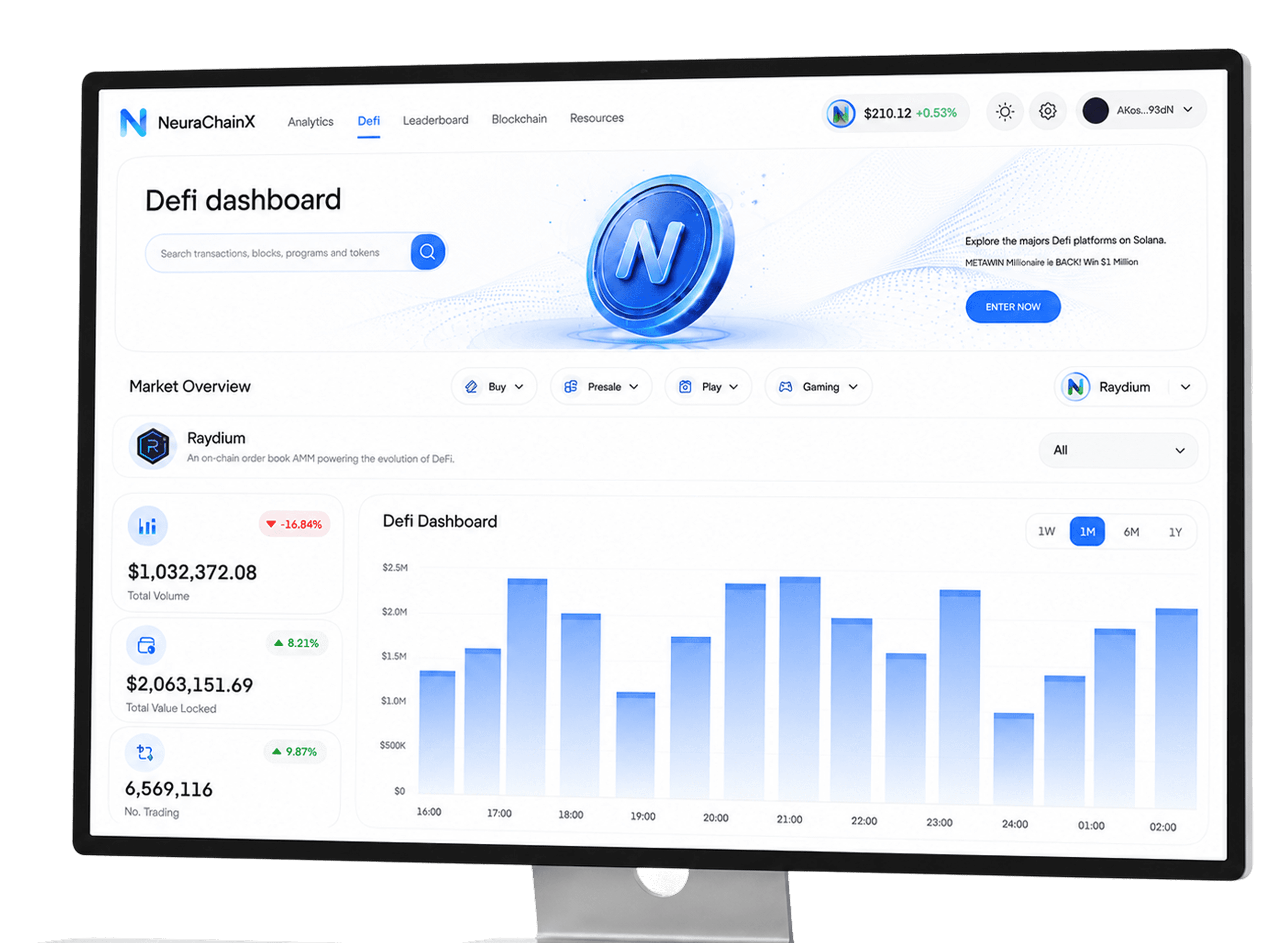
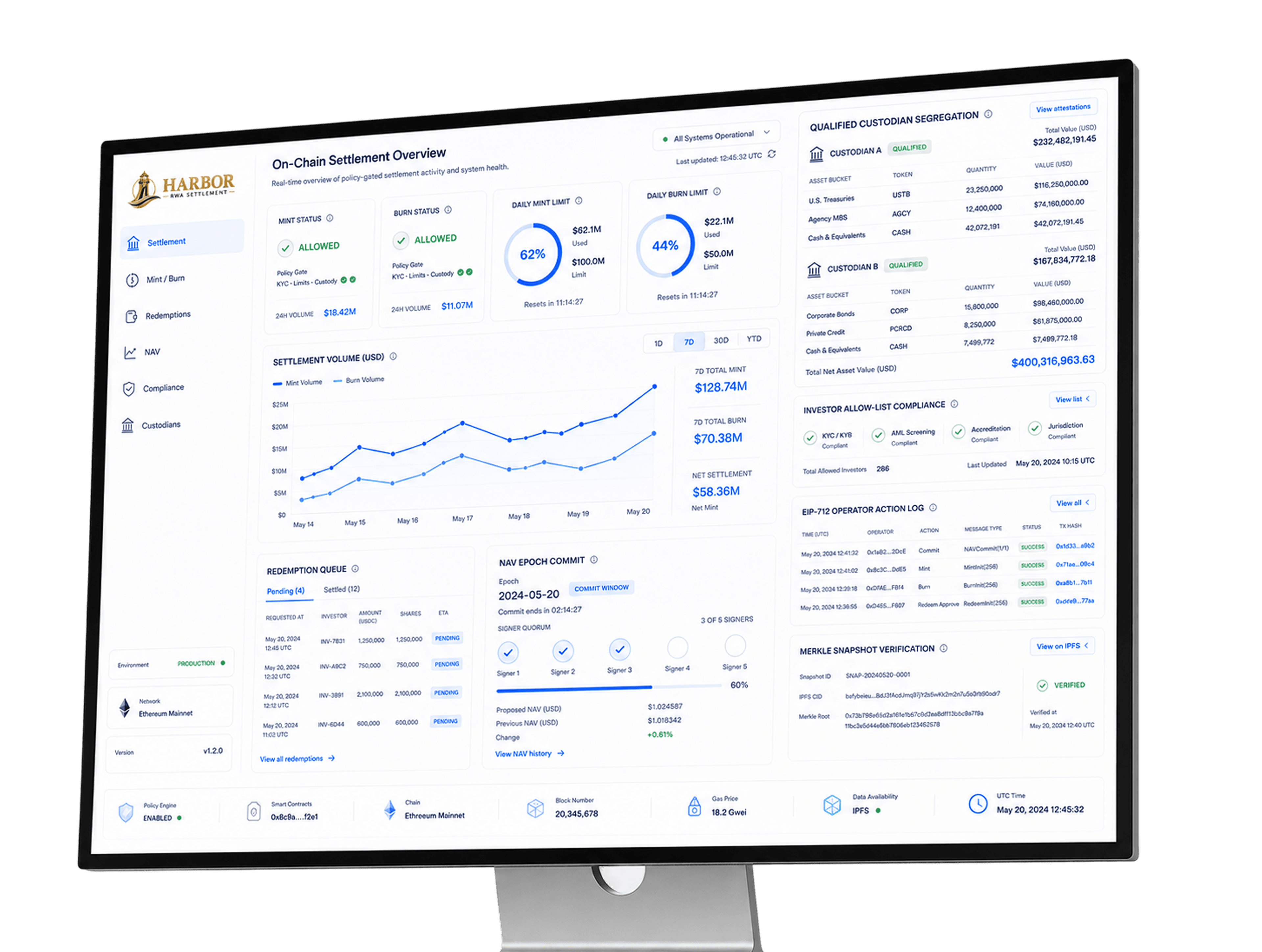
RWA tokenization development - policy-gated minting, NAV oracle quorum, and qualified-custodian segregation on Ethereum
Harbor is on-chain settlement infrastructure we built for tokenizing real-world assets (RWAs). It connects off-chain custody and attestations to transferable reference tokens: mint and burn paths are policy-gated, NAV updates are bound to a signer quorum, and redemption queues stay observable to both issuers and investors. Bitronix engineered the full settlement surface - core contracts, compliance modules, and verification tooling - to mirror fund rules while keeping investor data off-chain.
Settlement rails tying custody attestations to policy-gated mint and burn with quorum-bound NAV updates.
Tech stack
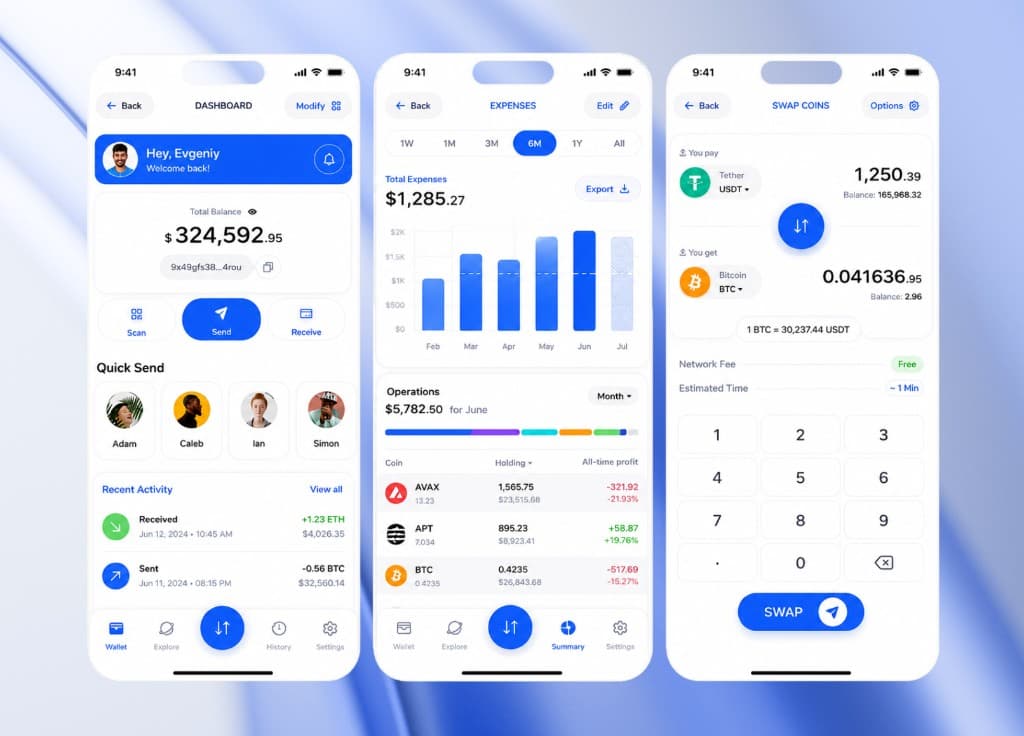
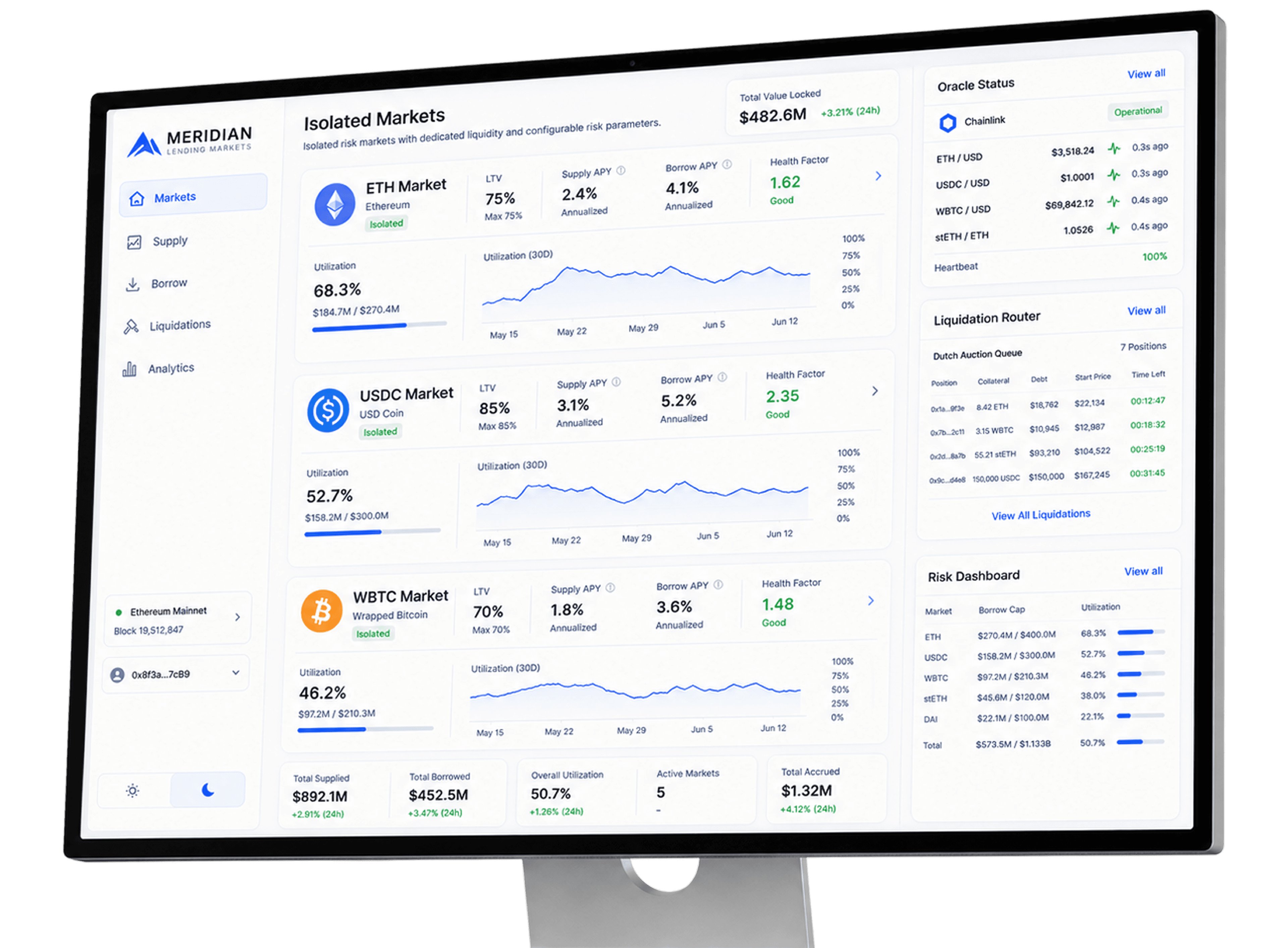
DeFi lending protocol development - isolated pools, configurable LTV, risk-bounded liquidations, and Chainlink oracle safeguards
Meridian is an isolated-pool DeFi lending protocol we engineered for institutional desks. It pairs aggressive capital efficiency with conservative risk controls: per-asset silos, configurable loan-to-value (LTV) and liquidation bonuses, and predictable auction paths that keep solvency provable under stress. Bitronix delivered the full lending-protocol surface - Solidity markets, oracle safeguards, and a composable liquidation router - built audit-ready from day one.
Isolated lending pools with Chainlink-style oracle semantics and predictable liquidation auctions.
Tech stack
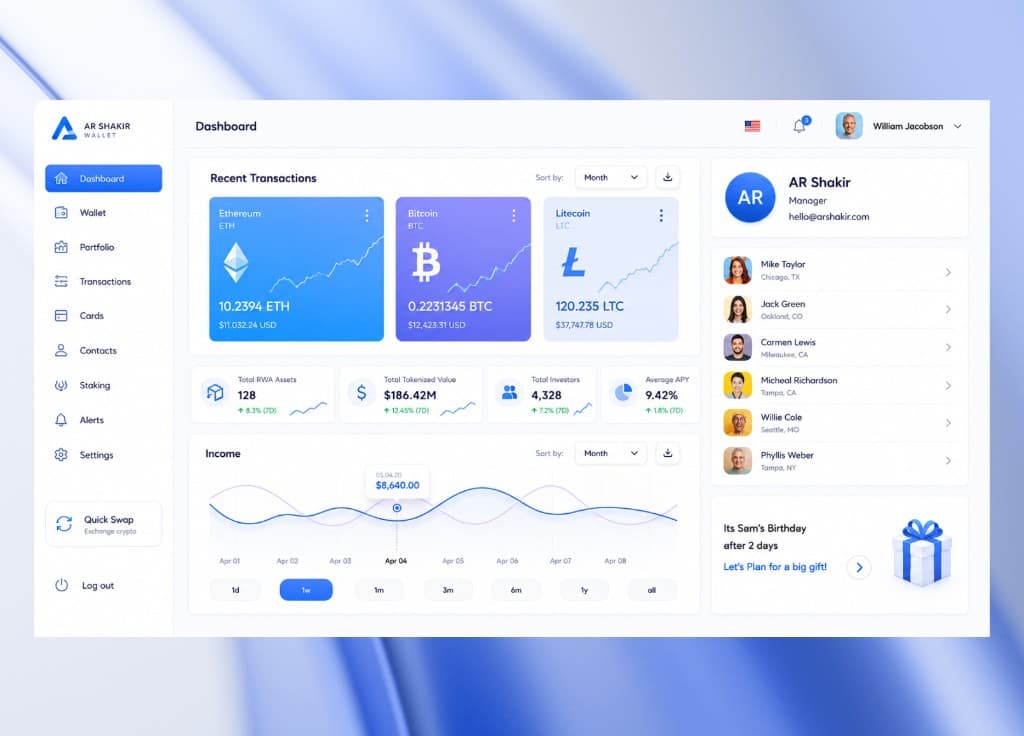
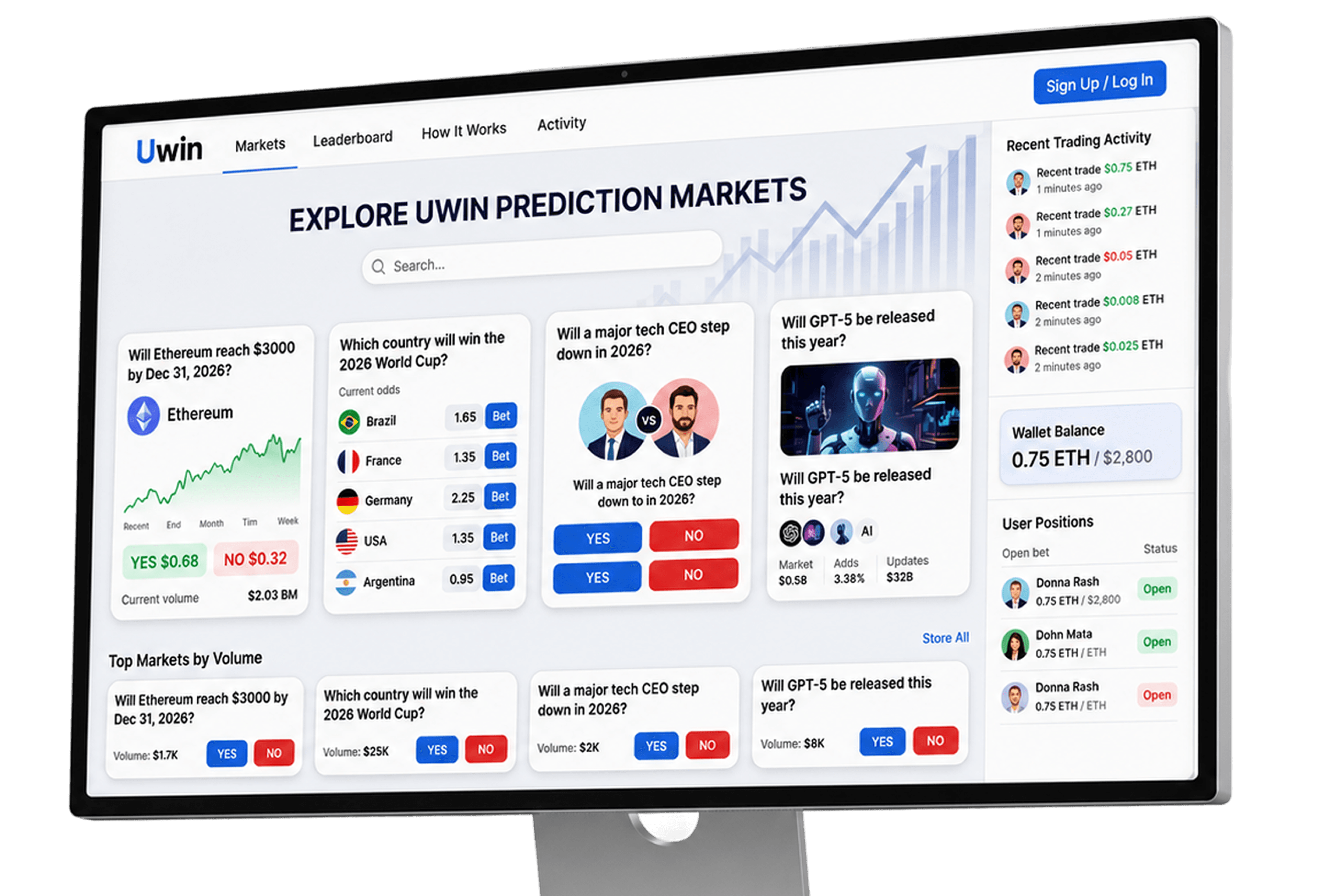
Polymarket-style prediction market development - outcome-share trading, Chainlink resolution, and collateral accounting on MEAN/MERN + Solidity
Uwin is a custom prediction market platform we built end-to-end, inspired by Polymarket: traders buy and sell outcome shares on real-world events, with transparent resolution rules and deep liquidity across binary and multi-outcome markets. Bitronix delivered the full surface - trader app, operator console, smart contracts, and oracle-backed settlement - rather than skinning a generic template.
Collateral and resolution contracts integrated with indexed market metadata across hybrid stacks.
Tech stack
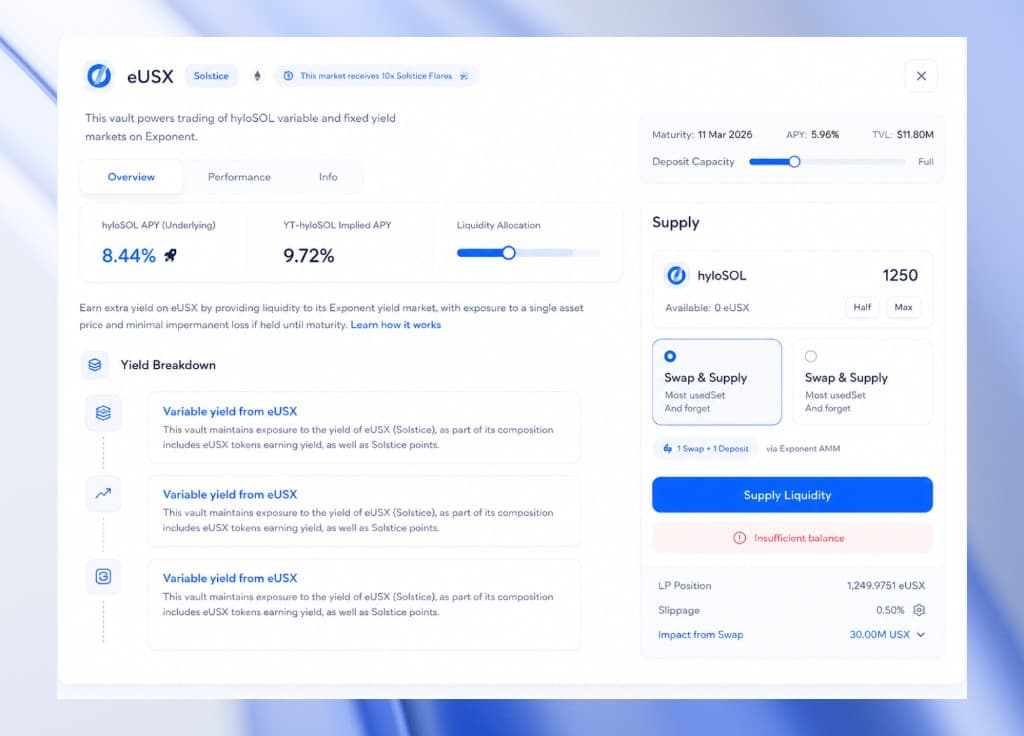
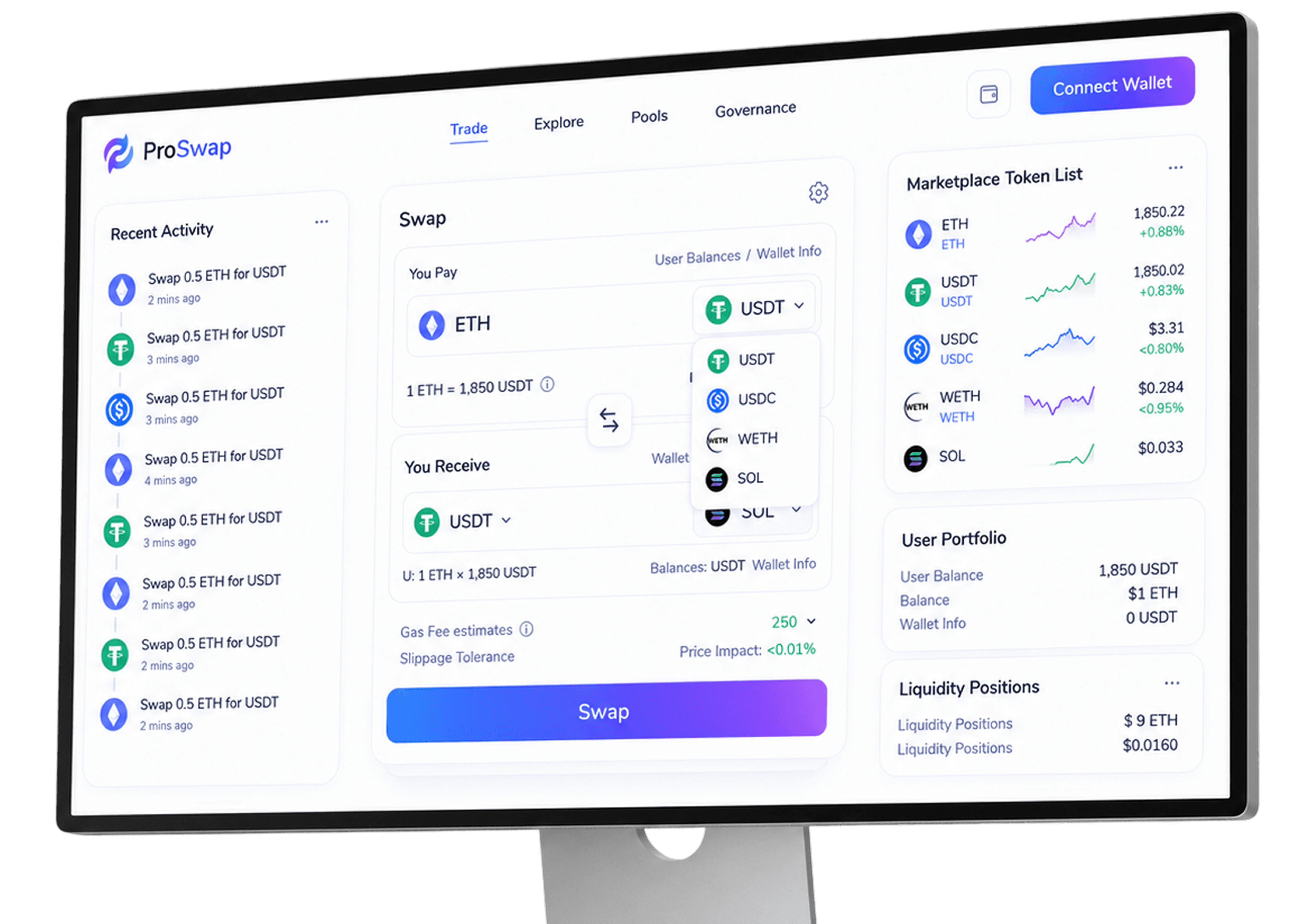
Uniswap-style AMM DEX development - constant-product and stable pools, swap router, and liquidity analytics on MERN + Solidity
ProSwap is a custom decentralized exchange (DEX) we built in the Uniswap tradition: an automated market maker with constant-product and stable-style pools, configurable slippage controls, and a swap router the client could brand and deploy to their target chain. Bitronix delivered the full AMM stack - Solidity pool and router contracts, a trader-facing swap app, pool analytics, and an operator panel - engineered for a controlled mainnet launch.
AMM pools and routers adapted for client fee tiers with subgraph-style indexing for reserves.
Tech stack
Google reviews
Verified feedback from our Google Business Profile.
Other services
Explore neighbouring practices - same delivery bar, shared architectural standards.
Enterprise Blockchain
Permissioned ledgers for regulated industries
View service
Smart Contract Development
Audit-ready contracts, testing, and deployment pipelines
View servicedApp Development
Interfaces & backends built for chain edge cases
View serviceDAO Development
Governance contracts, treasury, and voting
View serviceAI Automation Systems
Agents, workflows, and integrations with operational guardrails
View serviceDeFi Platforms
AMMs, lending, perpetuals, and yield infrastructure
View serviceCoin & Token Development
Tokenomics, vesting, sale infrastructure, and listing readiness
View serviceNFT Development
Collections, royalties, minting, and marketplace contracts
View serviceGenerative AI Solutions
AI-native products, RAG, fine-tuning, evaluation, and multimodal delivery
View serviceRWA Tokenization
Compliant on-chain asset representation
View serviceWeb3 Game Development
On-chain assets, economies, and smart contract logic
View serviceNext step
Share throughput targets, trust model, and integration boundaries - we respond within one business day with a scoped recommendation.
FAQ
Straight answers for engineering and procurement teams - before you enter diligence.
Yes. Ongoing operations are core to how we engage - not an after-thought. After go-live we can run validator and RPC clusters under agreed SLAs, maintain monitoring and alerting tuned to your network topology, execute coordinated upgrades and hard-forks, and provide incident response with defined response times. Many clients start with a managed handoff window (weeks to months) where we pair with your ops team on runbooks and on-call rotations, then transition to your staff-only operations, a joint model, or a long-term retainer. Pricing maps to coverage tier - monitoring-only, monitoring plus upgrade execution, or full production operations - so procurement teams can line-item compare without hunting for hidden fees. If you already have an internal SRE or cloud partner, we document every playbook and export configurations (Terraform, Kubernetes manifests, Prometheus rules) so you are never locked into our hosting.
We work across public EVM chains (Ethereum, Polygon, Arbitrum, Optimism, Avalanche C-Chain), high-throughput L1s like Solana, Cosmos SDK app-chains, Polkadot parachains, Hyperledger Fabric, Hyperledger Besu, Corda, and custom Tendermint-based networks. Consensus coverage includes BFT variants (Tendermint/CometBFT, IBFT 2.0), PoS operational patterns, PoA networks for permissioned consortia, and hybrid setups with external security. Chain and consensus choice follows your latency, finality, privacy, and regulatory constraints - not our default stack.
Validator keys are treated as Tier-0 secrets. We design key ceremonies aligned to your HSM or cloud KMS standards, enforce separation between signing and operational keys, document rotation intervals, and rehearse failover where one region or signer set drops offline. HashiCorp Vault, cloud-native KMS, or hardware modules are integrated per your security policy, with audit logs for every signing operation your compliance team can ingest.
Yes. We routinely deploy Fabric, Besu, and Corda topologies with channel- or private-transaction privacy, RBAC at the network and application layers, and observer nodes for regulators. Networks are scoped with data residency, identity federation, and retention policies documented before genesis - so legal and engineering sign the same architecture.
Six phases: Discovery (requirements, constraints, trust model) → Architecture (topology, consensus, economics) → Development (node software, middleware, tooling with continuous benchmarking) → Validation (independent security review, load and adversarial testing) → Launch (bootstrap, validator onboarding, observability) → Support (monitoring, incidents, upgrades under SLAs). Each phase gates on agreed deliverables before the next begins.
Both. For live networks we start with a read-only assessment: client versions, peer topology, monitoring gaps, and incident history - then scope upgrades, scaling, or bridge integrations without forcing a reboot. Greenfield programmes follow the full phase model from Discovery through handoff.
We maintain upgrade runbooks with client version matrices, dry-run environments, rollback criteria, and communication templates for validators and partners. Coordinated upgrades use maintenance windows aligned to your SLA; emergency patches follow a faster path with pre-approved breaker procedures. Every upgrade is rehearsed on a shadow network where possible.
Greenfield permissioned or app-chain programmes commonly run 12-24 weeks from Discovery to production bootstrap depending on integration complexity and review cycles. A typical core team is a lead protocol or infra engineer, a second engineer for integration and automation, and a DevOps specialist for pipelines and observability. Timelines compress for isolated milestones (e.g., bridge hardening-only) and extend when multi-region HA or heavy legacy integration is in scope.
Yes. Monitoring covers consensus health, peer counts, block production, RPC latency, bridge message queues, and integration consumer lag - with paging rules matched to severity. Incident response includes triage playbooks, stakeholder comms templates, and post-incident reports suitable for risk committees.
The fastest starts include: target chain class (public, permissioned, hybrid), throughput and finality targets, trust model (who runs validators), regulatory or data-residency constraints, existing systems to integrate, and target go-live window. We respond within one business day with a scoped recommendation - no NDA required for an initial conversation.