DEX Clone Script: Features, Development Cost & How to Build a Decentralized Exchange

By Tausif AhmedFounder and CTO
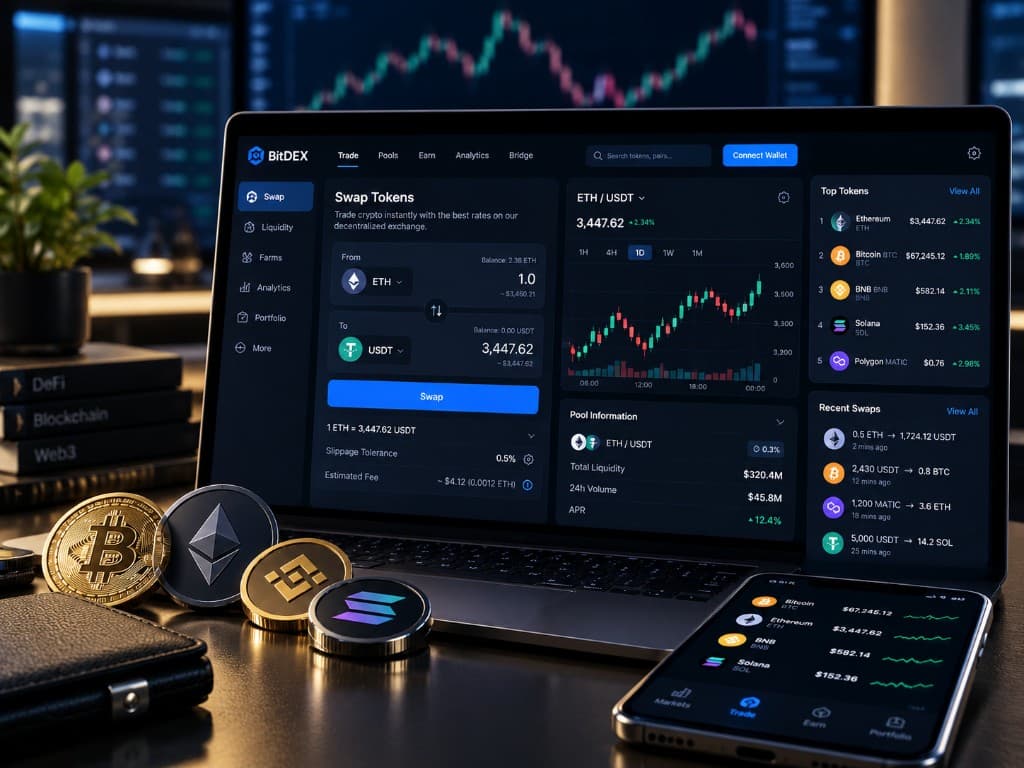
The way people trade cryptocurrencies has changed. Many users now prefer platforms that let them connect their wallets and exchange digital assets without relying on a traditional centralized exchange to hold their funds.
This has created opportunities for businesses that want to launch their own decentralized exchange, commonly known as a DEX.
However, building a DEX involves much more than creating a trading website. The platform needs smart contracts, wallet connectivity, liquidity management, transaction routing, blockchain integration, and strong security controls. Every component must work together to provide a reliable trading experience.
A DEX clone script can help businesses get started with an existing software foundation instead of developing every component from scratch. It can be customized to support a company's brand, selected blockchain network, trading features, and business requirements.
But choosing a clone script is only the beginning. Businesses also need to decide how their exchange will attract liquidity, protect users, generate revenue, and stand out from existing platforms.
In this guide, Bitronix Technologies explains DEX clone script development, its essential features, available exchange models, development costs, security requirements, and the steps involved in launching a decentralized exchange.
What Is a DEX Clone Script?
A DEX clone script is a software foundation used to build a decentralized cryptocurrency exchange. Depending on the solution, it may include token swapping, wallet integration, liquidity pools, transaction tracking, smart contracts, and an administrative interface.
Instead of building every feature from the beginning, a business can start with existing components and customize them to meet its requirements.
For example, a startup might want to launch a decentralized exchange for selected tokens on an EVM-compatible blockchain. A suitable script could provide a starting point for wallet connectivity, swap functionality, and liquidity management. The development team would then adapt the software, review the contracts, test the system, and prepare it for deployment.
A clone script should not mean copying another company's branding, protected content, or proprietary code without permission. The goal is to use a similar product concept while creating an independently branded and properly licensed implementation.
Who can use a DEX clone script?
This development approach may suit:
- Startups planning to enter the decentralized finance market.
- Crypto businesses expanding into non-custodial trading.
- Web3 companies launching a new DeFi product.
- Businesses building an exchange for a particular token ecosystem.
- Established platforms exploring additional blockchain networks.
The right solution depends on the project's technical requirements, target users, available budget, and business model.
How Does a Decentralized Exchange Work?
A decentralized exchange allows users to trade supported digital assets through blockchain-based protocols. In a typical non-custodial DEX, users connect their wallets and authorize transactions themselves rather than depositing assets into an exchange-controlled account.
Many DEXs use an automated market maker (AMM) model. Instead of matching every buyer with a seller through a traditional order book, an AMM allows users to trade against liquidity pools managed by smart contracts. Uniswap is a well-known example of this model.
A typical token swap works as follows:
A user connects a compatible cryptocurrency wallet.
The user selects the token they want to exchange and the token they want to receive.
The platform calculates an estimated output based on available liquidity, pricing rules, fees, and routing.
The user reviews the transaction and approves it in their wallet.
The blockchain processes the transaction after the required network fee is paid.
The platform displays the transaction result and updates the user's balances.
The exact process depends on the exchange architecture and blockchain.
A DEX interface may look similar to a centralized trading application, but the underlying transaction model is different. Smart contracts and blockchain infrastructure handle the on-chain operations, while the frontend helps users interact with them.
Essential Features of a DEX Clone Script
The features required for a decentralized exchange depend on its intended use. A basic swap platform does not need every feature offered by a large DeFi ecosystem. It is often better to launch with a focused set of functions and expand after validating user demand.
1. Cryptocurrency wallet integration
Wallet connectivity allows users to interact with the exchange using compatible wallets. The platform should clearly display the connected account, selected network, transaction details, and wallet approval requests.
Common integration options depend on the selected blockchain ecosystem and may include browser wallets and wallet-connection protocols.
2. Token swapping
Token swapping is the central function of many DEX platforms. Users select the assets they want to exchange, review the estimated output, and approve the transaction.
A good implementation should display relevant information such as transaction fees, price impact, slippage tolerance, and minimum expected output where applicable.
3. Liquidity pool management
Liquidity pools hold assets that traders can exchange against in an AMM-based DEX. Depending on the protocol, users may be able to add or remove liquidity and review their pool positions.
Pool creation, supported pairs, fee settings, and liquidity-provider rules must be designed around the chosen protocol.
4. Smart contract integration
Smart contracts handle core on-chain operations such as swaps, liquidity deposits, withdrawals, and fee calculations.
The contract design should be reviewed carefully because errors can affect transactions and digital assets. A clone script should never be assumed safe simply because it is already available.
5. Token and trading-pair management
The platform may allow users to view supported tokens, available trading pairs, token information, and liquidity details.
Token discovery should be handled carefully. A token being visible on a blockchain does not mean it is legitimate or safe to trade.
6. Transaction history
Users should be able to review their recent swaps, transaction status, token amounts, and blockchain transaction links.
The platform may use a blockchain indexer or other data infrastructure to display transaction history efficiently.
7. Price charts and analytics
Charts and trading analytics can help users understand recent activity, price changes, and liquidity conditions.
The platform should explain the source and limitations of displayed data. Thinly traded tokens may have unreliable prices, and historical performance does not guarantee future results.
8. Administrative dashboard
An administrative dashboard can help authorized operators manage application settings, supported assets, platform analytics, and other off-chain functions.
Administrative permissions should be limited carefully. A decentralized exchange should clearly explain which actions are controlled by smart contracts and which depend on the platform operator.
9. Mobile-friendly interface
Many users access Web3 applications through mobile devices. Responsive design, readable transaction details, and reliable wallet connections can improve the user experience across desktop and mobile screens.
10. Security and monitoring
Security measures may include contract testing, access controls, dependency checks, infrastructure monitoring, incident response procedures, and user-facing risk warnings.
No security feature can guarantee that a DEX will never be exploited. Security must be maintained throughout the platform's life.
Advanced Features to Consider
Once the core exchange works reliably, businesses can evaluate additional features based on customer needs.
- Multi-chain support: Support for additional blockchain networks, with network-specific integrations and testing.
- Cross-chain swaps: Asset transfers between networks using suitable interoperability infrastructure.
- Advanced routing: Searching supported liquidity sources for an appropriate execution path.
- Staking and rewards: Additional smart-contract functionality with clearly explained risks and reward rules.
- Governance: Voting or proposal mechanisms if the project has a suitable governance model.
- Liquidity analytics: Reporting on pool activity, trading volume, and liquidity distribution.
- Developer APIs: Interfaces that let approved external applications access selected platform data or services.
These features increase technical complexity. Cross-chain transactions, in particular, introduce additional bridge, messaging, and settlement risks. They should not be added merely to make the feature list look longer.
AMM vs. Order-Book DEX: Which Model Is Right for You?
Before choosing a DEX clone script, decide how the exchange should execute trades.
Automated market maker (AMM)
An AMM uses liquidity pools and pricing rules to support swaps. Liquidity providers supply assets to the pools, and traders exchange tokens against the available reserves.
This model can suit projects that want a pool-based trading experience. However, liquidity depth, price impact, impermanent loss, and smart contract risk need careful consideration.
Order-book DEX
An order-book exchange organizes buy and sell orders by price. Trades execute when compatible orders can be matched.
This model may suit projects that require more familiar order-entry functionality, but its performance and cost depend on how order matching, settlement, and blockchain interactions are implemented.
Aggregator-based DEX
A DEX aggregator searches across supported liquidity sources or routes to identify a suitable trade execution path. It does not necessarily operate its own liquidity pools.
An aggregator may be useful when a business wants to connect users to existing liquidity instead of building and maintaining every pool itself.
Hybrid model
A hybrid platform combines selected elements of different architectures. It may offer flexibility, but it also requires additional design, testing, and maintenance.
The best model is the one that fits your target users, liquidity strategy, supported assets, and technical budget, not necessarily the one with the most features.
DEX Clone Script vs. Custom DEX Development
Both approaches can work. The better choice depends on how much control and customization the business needs.
| Factor | DEX clone script | Custom DEX development |
|---|---|---|
| Starting point | Existing software foundation | Architecture designed for the project |
| Initial development effort | May be lower if components are reusable | Often higher because more components must be designed |
| Customization | Depends on code quality and licensing | Greater control over the architecture |
| Security review | Still required after customization | Required throughout development |
| Differentiation | Requires meaningful customization | Can be designed around specialized requirements |
| Best fit | Projects using common DEX functionality | Projects with unique trading or protocol requirements |
A clone script does not automatically mean a faster or safer launch. The team must inspect the code, understand its dependencies, verify licensing, and assess whether the architecture is suitable for the intended use.
For some businesses, a hybrid approach is sensible: use established components where appropriate and build custom functionality where the business needs to stand out.
How Much Does DEX Clone Script Development Cost?
DEX development costs depend on the exchange model, blockchain, smart contracts, wallet integrations, liquidity design, user interface, security requirements, and administrative features.
The figures below are illustrative software-development budget ranges, not fixed prices or a quotation from Bitronix Technologies.
| Development level | Illustrative cost | Typical scope |
|---|---|---|
| Basic DEX MVP | $15,000–$30,000 | One selected network, wallet connection, core swap flow, basic interface |
| Mid-level DEX | $30,000–$70,000 | Expanded trading features, liquidity tools, analytics, administrative functions |
| Advanced DEX | $70,000–$150,000+ | Complex routing, multiple networks, advanced liquidity architecture, extensive integrations |
These ranges assume a custom implementation or substantial customization. Reusing a well-maintained and appropriately licensed codebase may change the budget, while complex contract engineering or additional integrations may increase it.
What affects the development cost?
- Blockchain selection: Each network has different development tools, transaction costs, standards, and integration requirements.
- Smart contract complexity: Swaps, liquidity pools, fee mechanisms, permissions, and other protocol functions require engineering and testing.
- Wallet integrations: The required wallets and supported networks affect implementation and quality assurance.
- Liquidity architecture: Operating pools, connecting external liquidity sources, or implementing advanced routing can change the scope significantly.
- User interface: Trading charts, portfolio views, token discovery, and responsive layouts require design and development work.
- Security testing: Code review, automated analysis, testing, and independent audits add to the budget.
- Third-party infrastructure: Indexers, RPC providers, analytics services, and monitoring systems may have ongoing costs.
- Maintenance: Bug fixes, dependency updates, infrastructure monitoring, and new network integrations continue after launch.
Costs beyond software development
A realistic budget should also consider blockchain transaction fees, infrastructure subscriptions, independent smart contract audits, legal advice, licensing assessments where applicable, monitoring, and post-launch support.
Liquidity capital is a separate consideration. A platform may be technically complete but still offer a poor trading experience if its pools lack sufficient liquidity. Liquidity should be planned as part of the business strategy, not treated as a guaranteed result of software development.
How to Build a DEX Using a Clone Script
A structured development process helps businesses control scope, identify risks early, and avoid paying for unnecessary features.
Step 1: Define the business model
Decide whether the platform will be an AMM, order-book exchange, aggregator, or hybrid product. Identify the target users, supported assets, revenue model, and main reason users would choose the platform.
Step 2: Select the blockchain
Evaluate transaction costs, ecosystem support, network reliability, development tooling, and integration requirements. If multi-chain support is planned, establish the strategy before designing the architecture.
Step 3: Review the codebase
Inspect the clone script's source code, dependencies, documentation, licensing, and test coverage. Confirm which features are implemented and which are only demonstrated in a user interface.
Step 4: Design the platform architecture
Plan the smart contracts, frontend, blockchain data access, transaction monitoring, wallet connections, and any off-chain services.
Step 5: Customize the user experience
Develop the branding, trading interface, supported asset views, transaction screens, analytics, and administrative tools needed for the intended users.
Step 6: Develop and test smart contracts
Test core trading operations, liquidity changes, access controls, error handling, and unexpected transaction conditions. Arrange independent review and auditing appropriate to the project's risk.
Step 7: Test on a test network
Validate wallet connections, swap flows, transaction handling, data display, and failure scenarios before considering a mainnet launch.
Step 8: Prepare the launch
Complete the security review, operational monitoring, documentation, incident response planning, and any necessary legal or regulatory work. Clearly explain platform limitations and user risks.
Step 9: Monitor and improve
After launch, review performance, user feedback, transaction errors, security alerts, and liquidity conditions. Maintain the software and respond to vulnerabilities as they are identified.
How Can a DEX Make Money?
A decentralized exchange may use several revenue models. The appropriate model depends on the protocol design, governance structure, target users, and applicable rules.
Trading fees
The protocol may charge a fee on eligible swaps. How the fee is distributed between liquidity providers, the protocol, or other parties depends on the implementation.
Routing or service fees
A platform that routes trades across supported liquidity sources may use a disclosed service-fee model, where technically and legally appropriate.
Premium services
Potential offerings include advanced analytics, specialized interfaces, institutional tools, or other value-added features. These should provide clear value rather than simply restricting essential information.
Ecosystem services
A business may offer developer integrations, data services, or other products around the exchange.
Revenue is not guaranteed. It depends on factors such as trading activity, liquidity, user demand, competition, fee structure, and operating costs. The business model should be validated before relying on projected trading volume.
Security Risks in DEX Development
A decentralized exchange can interact with smart contracts and digital assets directly. A vulnerability may therefore lead to financial loss or disrupted trading.
Important risks include:
- Smart contract vulnerabilities: Errors in swap or liquidity logic may allow unintended outcomes.
- Malicious tokens: A token can contain misleading behavior or harmful transfer restrictions.
- Oracle and pricing risks: Incorrect or manipulable external data can affect applications that depend on it.
- Liquidity attacks: Low liquidity and poorly designed incentives can make markets vulnerable to manipulation.
- Wallet approval risks: Users may approve transactions or permissions they do not fully understand.
- Frontend and infrastructure attacks: A compromised website or dependency may mislead users even when the core contracts are unchanged.
- Cross-chain risks: Bridges and messaging systems introduce additional trust assumptions and possible failure points.
Security planning should include threat modeling, careful code review, automated and manual testing, independent auditing where appropriate, dependency monitoring, and a clear incident response process.
A smart contract audit is valuable, but it is not a guarantee of complete security. Businesses should avoid marketing claims that imply a platform is risk-free.
Regulatory Considerations for a DEX
The legal treatment of a decentralized exchange depends on the jurisdictions involved, the assets supported, the services provided, and the degree of control exercised by the operators.
Depending on the circumstances, relevant requirements may involve financial services, securities, commodities, sanctions, anti-money laundering, consumer protection, data privacy, and restrictions on certain users or markets.
Calling a platform decentralized does not automatically exempt the business, its operators, or related services from applicable laws.
Before launch, obtain qualified legal advice for the target markets. Establish clear user disclosures, assess any licensing requirements, and determine whether additional controls are needed for the intended activities.
How to Choose a DEX Clone Script Development Company
The development partner can affect the platform's security, maintainability, and ability to grow.
Before selecting a company, ask:
- Can you review the source code and explain how the core contracts work?
- Which blockchain networks and wallet integrations are supported?
- What testing and independent audit arrangements are included?
- Which features are ready, and which require custom development?
- Who owns the customized code and related intellectual property?
- What are the expected delivery milestones and exclusions?
- What support is available after launch?
- What additional infrastructure, audit, and maintenance costs should be budgeted?
Compare proposals based on technical clarity, code quality, security practices, documentation, and total cost, not just the number of advertised features.
Why Consider Bitronix Technologies for DEX Development?
Bitronix Technologies works on blockchain platforms, smart contracts, and Web3 solutions. Businesses planning a decentralized exchange can start by defining the trading model, target network, user experience, and security requirements.
Depending on the project scope, development work may include:
- Technical planning and blockchain architecture
- Smart contract development and integration
- Web3 wallet connectivity
- Trading interface and administrative tools
- Blockchain data and third-party integrations
- Testing, deployment planning, and ongoing improvements
The appropriate solution should be based on the business requirements and the results of technical assessment.
Explore smart contract development services to learn more about building blockchain-based applications.
Plan Your DEX Project
Answer these five questions to create a project outline tailored to your business requirements.
Share your answers on WhatsApp and we will outline the next steps. Select one or more options above to personalise your message.
Ready to Launch Your Own Decentralized Exchange?
Build a DEX around your business goals with the right blockchain architecture, smart contract functionality, and trading experience. Whether you are planning a token swap platform, a liquidity pool-based exchange, or a more advanced DeFi product, Bitronix Technologies can help you assess your requirements and plan the development process.
Explore smart contract development services.
Final Conclusion
Launching a decentralized exchange takes more than a ready-made script. The platform needs a suitable trading model, reliable smart contracts, a clear liquidity strategy, secure wallet interactions, and an interface users can understand.
A DEX clone script can provide a useful starting point, particularly when its code is well documented, properly licensed, and suitable for the planned architecture. But the business still needs to verify the code, customize the product, test the smart contracts, and prepare for ongoing maintenance.
Before development begins, define the users you want to serve, choose the right blockchain, decide which features are essential, and set a realistic budget. Starting with a focused MVP can help validate the concept before investing in advanced features.
Bitronix Technologies can help businesses plan blockchain applications and smart contract solutions based on their requirements. The goal should be to build a decentralized exchange that offers a clear reason to use it, not simply a copy of an existing platform.
Frequently Asked Questions
1. What is a DEX clone script?
A DEX clone script is a software foundation used to build a decentralized cryptocurrency exchange. Depending on the solution, it may include token swaps, wallet connectivity, liquidity management, and smart contract integration.
2. How much does it cost to develop a DEX clone script?
An illustrative budget may range from $15,000–$30,000 for a basic MVP to $70,000–$150,000 or more for an advanced platform. The final cost depends on architecture, features, security, integrations, and customization.
3. How long does it take to build a DEX?
A focused MVP may take a few months, while advanced platforms can take longer. The timeline depends on code reuse, smart contract complexity, network integrations, testing, and security reviews.
4. What features should a DEX include?
Common features include wallet connectivity, token swaps, smart contracts, liquidity management, transaction history, supported-token information, analytics, and appropriate security controls.
5. What is the difference between a DEX and a centralized exchange?
A typical non-custodial DEX lets users authorize trades through their wallets and interact with blockchain-based protocols. A centralized exchange generally manages trading through infrastructure controlled by the operator and may custody customer assets.
6. Which blockchain is best for a DEX?
There is no single best network for every project. Selection should consider transaction fees, security, ecosystem support, wallet compatibility, developer tooling, liquidity access, and the intended user base.
7. Can a DEX clone script be customized?
Yes, if the codebase, licensing, and architecture permit the required changes. Customization may include branding, interface design, supported networks, trading features, and selected smart contract functionality.
8. How does a DEX generate revenue?
Possible models include protocol trading fees, routing or service fees, premium features, and related ecosystem services. The model must be compatible with the protocol design and applicable laws.
9. Is a DEX clone script secure?
Security depends on the actual code, implementation, dependencies, configuration, and maintenance. Source code review, testing, appropriate independent audits, and ongoing monitoring are important.
10. Do I need liquidity to launch a DEX?
A pool-based DEX needs sufficient liquidity for users to trade efficiently. Low liquidity can lead to higher price impact and poor execution. A liquidity strategy should be planned separately from software development.
11. Is a DEX legally permitted in every country?
No. Requirements vary by jurisdiction and by the platform's activities. Businesses should obtain qualified legal advice and assess relevant licensing and compliance obligations before launch.
12. Can Bitronix Technologies help develop a DEX?
Bitronix Technologies can help assess blockchain architecture, smart contract requirements, wallet integration, and platform development needs. The scope, delivery schedule, and cost should be determined through a project-specific assessment.

Founder and CTO
Founder and CTO of Bitronix Technologies. Helps businesses plan decentralized exchanges, including trading models, smart contracts, wallet integration and launch scope.
Related Posts
 Blockchain
October 21, 202613 min read
Agricultural Commodity Tokenization in 2027: Benefits, Process & Cost
Learn how agricultural commodity tokenization works, its benefits, development process, costs, use cases, and key regulatory considerations.
Read article Blockchain
October 21, 202618 min read
CoinMarketCap Clone Script: Features, Cost, and How to Build a Crypto Price Tracking Platform
Explore CoinMarketCap clone script features, development costs, APIs, revenue models, and how to build a cryptocurrency market data platform.
Read article Blockchain
October 14, 202615 min read
Crypto Token Development Cost in 2027: Pricing, Features and Budget Breakdown
Explore crypto token development cost in 2027, with estimated pricing, key cost factors, smart contract audits, development timelines, & hidden expenses.
Read article