














Custom Layer 2 Architecture
We design Layer 2 systems around your specific transaction volume and use case, choosing between rollups, sidechains, or a hybrid model based on what your application actually needs.
Data & Models
Exchange Platforms
Wallet Platforms
Tokenization Platforms
Marketplaces & Launchpads
Ready-Made Platforms

Base chains slow down and get expensive the moment real usage hits them. Bitronix delivers Layer 2 blockchain development services, including rollups, sidechains and custom Layer 2 scaling solutions, engineered to increase throughput, cut transaction costs and support blockchain scalability without weakening security.
As blockchain networks grow, transaction speed drops and gas fees rise. This slows down user adoption and hurts the overall experience. Bitronix solves this with Layer 2 blockchain development services built around rollups, sidechains and custom scaling solutions.
Our approach increases transaction throughput, reduces costs and keeps your network secure, without changing how your base chain works. Whether you need a rollup-based solution or a custom Layer 2 architecture, we build it around your product's actual needs.
Bitronix builds Layer 2 solutions engineered around how your network actually gets used, not a generic rollup template. Every build targets lower fees, faster transactions and stronger throughput without weakening base chain security.
We design Layer 2 systems around your specific transaction volume and use case, choosing between rollups, sidechains, or a hybrid model based on what your application actually needs.
We build scaling solutions for Ethereum-based applications that cut gas fees and speed up transaction finality, without requiring changes to your existing smart contracts.
We build zero-knowledge rollups that bundle transactions off-chain and settle them with cryptographic proof, giving you fast processing and strong privacy at once.
We build optimistic rollups with fraud-proof mechanisms that assume transactions are valid by default, cutting processing overhead while keeping a clear path to dispute resolution.
We write and deploy smart contracts optimized for Layer 2 environments, tuned for lower gas costs and faster execution without changing core contract logic.
We build decentralized applications that run natively on Layer 2 networks, giving users faster load times and lower fees without a confusing multi-chain experience.
We connect your Layer 2 network to wallets, bridges and exchanges, so assets and users can move across your blockchain stack without friction.
We help you choose the right scaling approach for your product, rollups, sidechains, or a hybrid and map out a roadmap that scales as your user base grows.
Each Layer 2 network makes a different tradeoff between cost, speed and proof mechanism. We pick based on what your application actually needs, not a default preference.
Best when your DeFi platform needs proven Ethereum compatibility and high transaction volume. Its optimistic rollup model keeps costs low while giving you a mature, battle-tested security track record.
Best when you want to deploy existing Ethereum contracts with minimal changes. Its focus on Ethereum equivalence means your current codebase mostly ports over as is, cutting migration time.
Best when privacy and fast finality both matter. Zero-knowledge proofs validate transactions without exposing full data on-chain, useful for applications where speed and confidentiality can't be traded off against each other.
Best when your application needs heavy on-chain computation at low cost. STARK-based proofs handle complex logic efficiently, a fit for advanced DeFi and gaming applications standard rollups struggle with.
Best when you want zero-knowledge scaling without rewriting your contracts. Full EVM equivalence means your existing Solidity code deploys with little to no modification.

Best for consumer-facing applications that need fast, low-cost deployment and tight integration with the broader Ethereum ecosystem, useful when time to market matters more than deep customization.
No single Layer 2 model fits every use case. We choose based on your application's transaction volume, latency needs and security requirements.
Transactions process off-chain and post to Layer 1 with fraud-proof backing, assumed valid unless challenged. A strong fit for DeFi platforms and high-transaction applications that need Ethereum-level security without Ethereum-level fees.
Zero-knowledge proofs validate transaction batches without exposing the underlying data. Useful when your application needs both high throughput and strong privacy at the same time, not one traded for the other.
Users transact off-chain directly with each other and settle only the final state on-chain. Built for applications with frequent, real-time interactions, payments and gaming being the most common fit.
Child chains run alongside your main chain and periodically commit proofs back to Layer 1. Useful when an application needs to handle high transaction volume without loading every transaction onto the base chain.
Independent chains connected to your main network through a bridge, running their own consensus rules. A fit when your application needs more flexibility in consensus design than the base chain allows.
Combines zero-knowledge proofs with off-chain data storage, keeping most data off the base chain while still proving transaction validity. Built for enterprise systems that need extreme throughput and can accept a different data availability tradeoff.
Every Layer 2 system we build is judged against one thing: does it hold up once real traffic hits it. Here's what that looks like in practice.
Execution moves off-chain, so your network can handle far more transactions without Layer 1 congestion slowing things down.
Batched, optimized transaction processing means users pay a fraction of what a base chain would charge for the same activity.
Every transaction still settles back to your base chain, so you get Layer 2 speed without giving up Layer 1's security guarantees.
Transactions confirm in seconds, not minutes, keeping DeFi, gaming and payment applications responsive under real usage.
Assets and data move cleanly between Layer 1 and Layer 2 environments, so your application isn't siloed to one network.
Contracts are tuned specifically for Layer 2 execution, cutting computational load without changing what they actually do.
Architecture is built for growth from day one, so a traffic spike doesn't mean a redesign six months later.
Speed and cost improvements don't come at the expense of trustlessness. Your application stays censorship-resistant and transparent.
Tech Stack We Leverage
Our expertise spans the technologies powering today's most innovative digital ecosystems. We select and implement technologies that support growth, resilience and continuous innovation.
Categories
1 / 815 technologies
Robust, secure and scalable blockchain platforms for the next generation of decentralized applications.


Layer 2 matters most in industries where speed and cost directly affect whether people use the product at all.
Trading, lending and staking all involve frequent transactions. Layer 2 keeps gas fees low enough that these actions stay worth doing at any transaction size.
Minting and trading NFTs on a base chain gets expensive fast during high demand. Layer 2 keeps costs predictable even when volume spikes.
In-game asset transfers and actions need to feel instant. Layer 2 removes the lag and fees that break real-time gameplay.
High transaction volume needs infrastructure that doesn't buckle under load. Layer 2 gives exchanges the throughput to process trades quickly at scale.
Supply chain tracking and data management need blockchain infrastructure that's both secure and affordable to run at business scale, not just proof-of-concept scale.
Everyday payments only work on-chain if they're fast and cheap enough to compete with existing payment rails. Layer 2 makes that possible.
Tokenized real estate, commodities and securities involve frequent transfers and settlement events. Layer 2 keeps those transactions affordable at scale.
Outcome-share trading involves constant order flow right up until resolution. Layer 2 keeps that trading fast and cheap even during high-activity periods around major events.
A structured build sequence, each step producing a real deliverable before the next one starts.

We map your transaction flow, expected volume and scalability constraints first, so the Layer 2 approach we recommend is based on your actual usage, not a default choice.
Step 01
Step 01
We map your transaction flow, expected volume and scalability constraints first, so the Layer 2 approach we recommend is based on your actual usage, not a default choice.
Step 02
We select the scaling model, rollup, sidechain, or hybrid, that fits your throughput and security needs and design the architecture around it before any code gets written.
Step 02
We select the scaling model, rollup, sidechain, or hybrid, that fits your throughput and security needs and design the architecture around it before any code gets written.
Contracts get built and optimized specifically for Layer 2 execution, tuned for gas efficiency and clean integration with your existing application.
Step 03
Step 03
Contracts get built and optimized specifically for Layer 2 execution, tuned for gas efficiency and clean integration with your existing application.
Step 04
We build and integrate the chosen solution into your blockchain stack, connecting it to your base chain and application layer for smooth transaction flow.
Step 04
We build and integrate the chosen solution into your blockchain stack, connecting it to your base chain and application layer for smooth transaction flow.
Every component gets tested for performance and reviewed for vulnerabilities before it goes anywhere near production traffic.
Step 05
Step 05
Every component gets tested for performance and reviewed for vulnerabilities before it goes anywhere near production traffic.
Step 06
We deploy to mainnet with full integration support, checking system compatibility and migration paths so nothing breaks on launch day.
Step 06
We deploy to mainnet with full integration support, checking system compatibility and migration paths so nothing breaks on launch day.
We stay on after launch, monitoring performance and applying updates as your transaction volume and requirements evolve.
Step 07
Step 07
We stay on after launch, monitoring performance and applying updates as your transaction volume and requirements evolve.
Most Layer 2 vendors default to whichever rollup framework is easiest for them to deploy. Bitronix picks the architecture based on your actual transaction volume and latency needs, rollups, sidechains, or a hybrid model and builds it with the same security rigor we apply to every smart contract engagement, invariant testing, gas profiling and audit coordination before mainnet, not after.
We stay on past deployment too. Every engagement includes a post-launch monitoring period, so performance issues get caught by us, not by your users.
Layer 2 development means building scaling solutions that process transactions off the main blockchain and settle back to it, cutting costs and increasing speed without weakening the base chain's security.
Layer 1 is the base blockchain itself, the layer that handles final settlement and consensus. Layer 2 sits on top of it, handling transaction execution off-chain and posting results back to Layer 1 for security.
We build optimistic rollups, zk-rollups, state channels, sidechains, plasma chains and validium solutions. The right choice depends on your application's transaction volume, latency needs and security requirements.
Optimistic rollups assume transactions are valid and only check them if challenged, which keeps costs low but adds a withdrawal delay. zk-rollups validate every transaction upfront using cryptographic proofs, which is faster to finalize but more computationally intensive to generate.
It depends on what you're optimizing for. Arbitrum and Optimism suit DeFi platforms needing proven Ethereum compatibility. zkSync and Starknet fit applications needing strong privacy or heavy on-chain computation. We'll walk through the tradeoffs specific to your use case during scoping.
No, when built correctly. Layer 2 solutions inherit security from the base chain through cryptographic proofs or fraud-proof mechanisms. The tradeoffs are in speed of finality and data availability, not in the underlying trust model.
In most cases, yes, especially on EVM-compatible networks like Arbitrum, Optimism, or Polygon zkEVM. Some gas optimization work is usually needed to get the most benefit from the Layer 2 environment.
A focused rollup integration can ship in 6 to 10 weeks. A custom Layer 2 architecture with full security audit and mainnet deployment typically runs 3 to 6 months depending on complexity.
Yes. Bridge integration is part of our Layer 2 development process, connecting your Layer 2 network to wallets, exchanges and the base chain so assets move without friction.
Yes. Every engagement includes a post-launch monitoring period, followed by ongoing performance optimization and updates as your transaction volume grows.
Google reviews
Verified feedback from our Google Business Profile.
 Google
Really good experience with Bitronix Technologies. The team was professional, helpful and easy to communicate with. They understood my requirements and did a great job delivering the project. I really appreciated their attention to detail and willingness to help throughout the process. Would definitely recommend them!
Mohammad Haroon
a day ago · Google review
GoogleWe compared a few companies before choosing Bitronix and I think we made the right decision. The quality of work was good and the overall cost was reasonable. They were also flexible when we had some changes during development. Good technical team and good value for money.
Shivranjan Kumar
3 weeks ago · Google review
GoogleI had a very good experience with Bitronix Technologies. Their team is very smart, helpful and knows their work well. They completed my project on time and the quality of work was really good. Thank you to the whole team for the hard work and support. I would surely recommend them.
Asif Ali
4 months ago · Google review
GoogleMy experience with Bitronix Technologies was excellent The staff were polite and professional, communication was clear and the project was completed on schedule. Their transparent pricing and smooth process made everything stress-free. Strongly recommend their services.
VISHAKHA CHAUDHARY
4 months ago · Google review
GoogleWorked with Bitronix Technologies for a blockchain project and honestly couldn't be happier. They delivered everything on time, no delays, no excuses - and the pricing was very reasonable for the quality of work. The team clearly knows their stuff. Highly recommend if you're looking for reliable tech development!
Monty Thakur
4 months ago · Google review
GoogleHad a great experience with Bitronix Technologies. They understood my requirements from the very first call. The process was smooth, communication was clear and the project was delivered on time. Pricing was fair and transparent with no hidden surprises. Highly recommended!
md empire
4 months ago · Google review
GoogleA extremely brilliant experience. We are mesmerised by their services and the immense knowledge they have in their field. We certainly look forward to have a great relationship with this company and hope to do many projects together, learning and using their expertise for our business.
M محمد Riaz Vali Sayed
4 months ago · Google review
GoogleExcellent service and communication, fast response and transparent , will do more business in future.
Asif Shahzad
4 months ago · Google review
GoogleReally good experience with Bitronix Technologies. The team was professional, helpful and easy to communicate with. They understood my requirements and did a great job delivering the project. I really appreciated their attention to detail and willingness to help throughout the process. Would definitely recommend them!
Mohammad Haroon
a day ago · Google review
GoogleWe compared a few companies before choosing Bitronix and I think we made the right decision. The quality of work was good and the overall cost was reasonable. They were also flexible when we had some changes during development. Good technical team and good value for money.
Shivranjan Kumar
3 weeks ago · Google review
GoogleI had a very good experience with Bitronix Technologies. Their team is very smart, helpful and knows their work well. They completed my project on time and the quality of work was really good. Thank you to the whole team for the hard work and support. I would surely recommend them.
Asif Ali
4 months ago · Google review
GoogleMy experience with Bitronix Technologies was excellent The staff were polite and professional, communication was clear and the project was completed on schedule. Their transparent pricing and smooth process made everything stress-free. Strongly recommend their services.
VISHAKHA CHAUDHARY
4 months ago · Google review
GoogleWorked with Bitronix Technologies for a blockchain project and honestly couldn't be happier. They delivered everything on time, no delays, no excuses - and the pricing was very reasonable for the quality of work. The team clearly knows their stuff. Highly recommend if you're looking for reliable tech development!
Monty Thakur
4 months ago · Google review
GoogleHad a great experience with Bitronix Technologies. They understood my requirements from the very first call. The process was smooth, communication was clear and the project was delivered on time. Pricing was fair and transparent with no hidden surprises. Highly recommended!
md empire
4 months ago · Google review
GoogleA extremely brilliant experience. We are mesmerised by their services and the immense knowledge they have in their field. We certainly look forward to have a great relationship with this company and hope to do many projects together, learning and using their expertise for our business.
M محمد Riaz Vali Sayed
4 months ago · Google review
GoogleExcellent service and communication, fast response and transparent , will do more business in future.
Asif Shahzad
4 months ago · Google review
Insights from our engineering team
Notes on architecture, security and shipping AI in regulated environments.
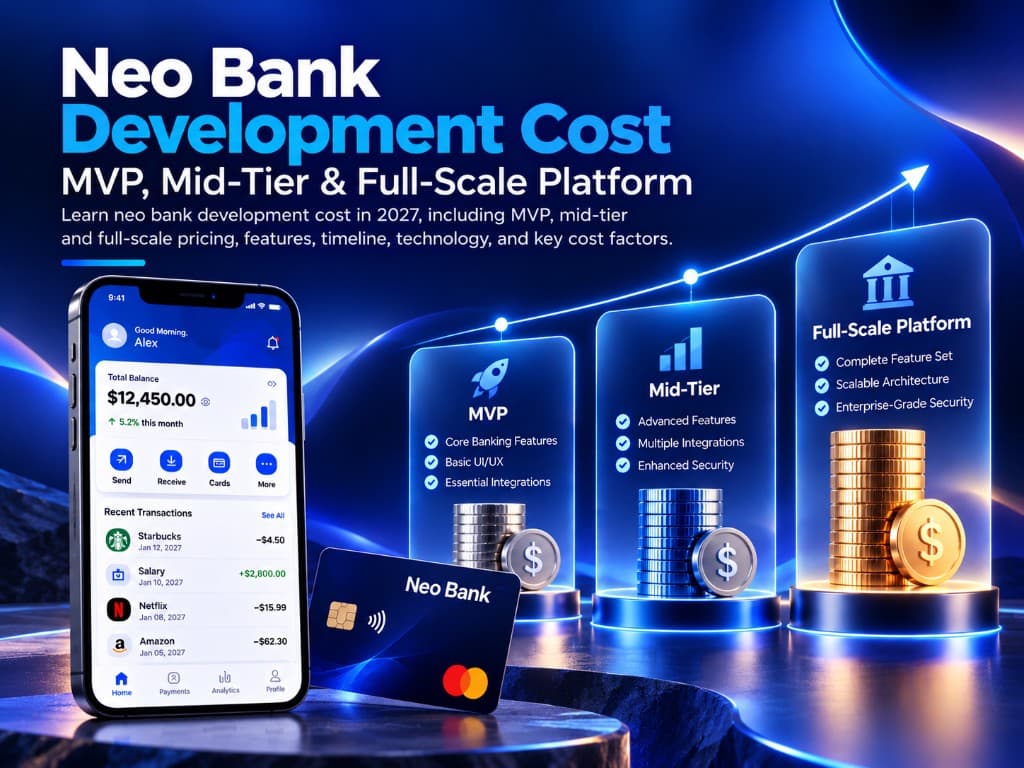
Learn neo bank development cost in 2027, including MVP, mid-tier and full-scale pricing, features, timeline, technology, and key cost factors.

Find the top 10 companies to hire blockchain developers in India. Compare blockchain services, expertise, use cases, & tips for choosing a development partner.
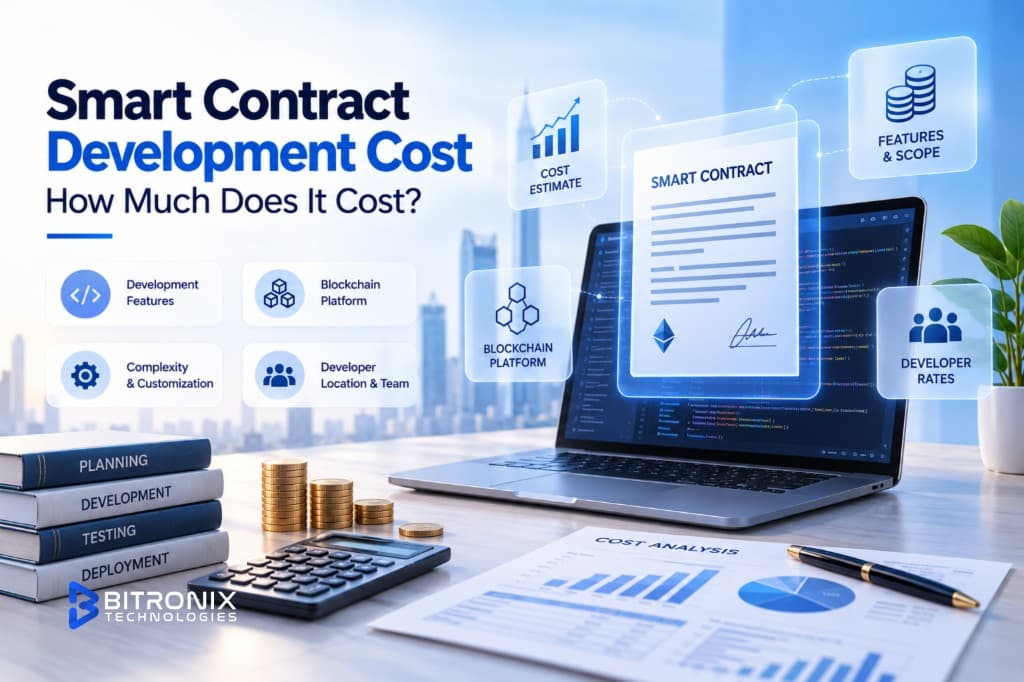
Discover smart contract development costs in 2027. Compare pricing from $5,000, project types, audit fees, timelines, & development factors.
Get in touch
We take on 4 new enterprise clients per quarter. Tell us what you're building.
Our offices
Direct lines to our delivery hubs. Same-day routing for qualified enterprise enquiries.
Global headquarters