















Protocol Architecture
Bitronix designs the core protocol layer, transaction validation logic, block structure and network rules built around your specific throughput and security requirements, not a generic template chain.
Data & Models
Exchange Platforms
Wallet Platforms
Tokenization Platforms
Marketplaces & Launchpads
Ready-Made Platforms
Bitronix Technologies is a Layer 1 blockchain development company building custom blockchains from consensus design to mainnet deployment. We build for real transaction volume, not just testnet performance.
Foundation Layer
Every dApp, token and smart contract eventually depends on one thing: the base chain underneath it. That's Layer 1, the protocol layer that decides how transactions get validated, how consensus is reached and how much throughput your network can actually handle before it slows down or gets expensive to use.
Bitronix builds Layer 1 blockchains from the ground up, consensus mechanism, validator architecture, native token design and governance rules, tailored to what your product actually needs to run at scale. Most teams don't need another generic chain. They need one built around their specific throughput, security and governance requirements. That's the part Bitronix focuses on.
Bitronix designs the core protocol layer, transaction validation logic, block structure and network rules built around your specific throughput and security requirements, not a generic template chain.
We build consensus models suited to your network's actual use case, Proof of Stake, Proof of Authority, or a hybrid model, weighing decentralization against speed based on what your product needs.
When an existing chain does not fit your requirements, we build one from the ground up, engineered around your governance rules, validator structure and network economics.
Every chain we build supports native token issuance and smart contract execution from day one, so your ecosystem can launch applications without bolting on support later.
We design and deploy the validator network your chain runs on, covering node distribution, staking mechanics and the operational tooling your team needs to run it long term.
Before mainnet launch, every protocol goes through structured security review and stress testing, checking consensus edge cases and network-level attack vectors that standard code audits miss.

Best when trust needs to come from the network itself, not from Bitronix or any single operator. Open participation, full transparency and no gatekeeping, the tradeoff is that every transaction is visible and validator control is distributed, not yours to configure.
Best when you need to control exactly who can transact and see network data. Enterprises running internal settlement, supply chain, or interbank systems choose this when permissioned access matters more than public decentralization.

Best when part of your system needs to stay open and part needs to stay controlled. We architect the split, what runs on a public layer, what stays permissioned, so you get selective transparency instead of an all-or-nothing tradeoff.
Market research puts the global blockchain industry at roughly $72 billion in 2026, on track to grow past $320 billion by 2030. That growth isn't evenly spread. It's concentrated in institutional adoption, tokenized assets and enterprise systems that need a base layer built for their specific throughput and compliance requirements, not a shared public chain running everyone else's traffic too. That's the layer Bitronix builds. We design custom Layer 1 blockchains for organizations that have outgrown what an existing chain can offer them, whether that's transaction cost, governance control, or regulatory alignment. If your product's growth depends on the chain underneath it, that's worth a conversation before you're locked into infrastructure you didn't choose.
Each Layer 1 network makes a different tradeoff between speed, decentralization and cost. Here's where Bitronix has hands-on protocol and development experience.
Battle-tested settlement layer for public ecosystems, DeFi and institutional-grade smart contracts.
High-throughput L1 for products that need speed and low fees without sacrificing a strong developer ecosystem.
App-chain architecture for teams that want sovereignty, IBC connectivity and custom module design.
Subnet-friendly L1 stack for enterprises that need isolated environments with shared security options.
Move-based Layer 1 for teams prioritizing formal-friendly asset safety and parallel execution.
A general-purpose chain forces your product to work around rules someone else set. A custom Layer 1 is built around your transaction types, your compliance needs and your users from the start.
Consensus rules, validator requirements and network permissions are yours to define and audit, instead of inheriting the security assumptions of a chain built for someone else's use case.
Network capacity gets designed around your projected transaction volume, not retrofitted after congestion and rising fees start pushing users away.
Governance, tokenomics and upgrade paths stay in your hands. You decide how the network evolves instead of waiting on another chain's roadmap or voting process.

We define what the chain actually needs to support, transaction types, expected volume, compliance constraints, before any architecture decisions get made.
Step 01
Step 01
We define what the chain actually needs to support, transaction types, expected volume, compliance constraints, before any architecture decisions get made.
Step 02
We select and design the consensus model, Proof of Stake, Proof of Authority, or a hybrid, along with node structure and validator requirements suited to your throughput and decentralization needs.
Step 02
We select and design the consensus model, Proof of Stake, Proof of Authority, or a hybrid, along with node structure and validator requirements suited to your throughput and decentralization needs.
Core parameters get defined here: block structure, transaction formats, permission levels and native asset rules that govern how the chain actually operates.
Step 03
Step 03
Core parameters get defined here: block structure, transaction formats, permission levels and native asset rules that govern how the chain actually operates.
Step 04
We build the APIs, SDKs and smart contract support developers need to build on your chain, so the network is usable the moment it launches, not months after.
Step 04
We build the APIs, SDKs and smart contract support developers need to build on your chain, so the network is usable the moment it launches, not months after.
Before mainnet, the chain goes through adversarial testing and security review, checking consensus edge cases and network-level vulnerabilities under simulated load.
Step 05
Step 05
Before mainnet, the chain goes through adversarial testing and security review, checking consensus edge cases and network-level vulnerabilities under simulated load.
Step 06
We deploy to mainnet, onboard validators and stay on for monitoring, upgrades and support as the network scales.
Step 06
We deploy to mainnet, onboard validators and stay on for monitoring, upgrades and support as the network scales.
Tell us what you're building. We'll walk through consensus design, chain architecture and timeline on the first call, no generic proposal until we've agreed there's a real fit.
A Layer 1 blockchain is the base protocol itself, the layer that validates transactions, reaches consensus and stores data without relying on another network underneath it. Ethereum, Bitcoin and Solana are all Layer 1 chains. Anything built on top of them, like a Layer 2 rollup or a dApp, depends on the Layer 1 for security and settlement.
Layer 1 is the base chain that handles consensus and final settlement. Layer 2 solutions process transactions off the base chain and settle back to it, usually to cut costs or increase speed. Building a Layer 1 gives you full control over consensus rules and governance, building on Layer 2 means inheriting the base chain's security model instead.
Public blockchains are open to anyone and secured by a distributed validator network. Private blockchains restrict access to approved participants, common in enterprise settlement systems. Hybrid blockchains combine both, keeping part of the network open and part permissioned, depending on what data needs to stay public and what needs to stay controlled.
Existing chains come with fixed consensus rules, fee structures and governance you don't control. A custom Layer 1 lets you design consensus, throughput and permissions around your specific transaction volume and compliance requirements, useful when an off-the-shelf chain doesn't fit your use case.
Architecture and consensus design typically take 4 to 6 weeks. A production-ready chain, including testing, security review and mainnet launch, usually runs 4 to 8 months depending on complexity and validator network size.
Cost depends on consensus complexity, validator infrastructure and how much custom tooling the network needs. There's no fixed number that applies across projects, you'll get a real estimate after a scoping call once we understand your requirements.
It depends on what you're optimizing for. Proof of Stake balances decentralization and speed for most public use cases. Proof of Authority suits permissioned networks where validator identity is already known and trusted. We'll walk through the tradeoffs specific to your use case during discovery.
Bitronix designs consensus mechanisms and validator architecture around your actual requirements instead of adapting a template chain. Every build goes through adversarial security testing before mainnet and our team stays on through launch and validator onboarding, not just the development phase.
Google reviews
Verified feedback from our Google Business Profile.
 Google
Really good experience with Bitronix Technologies. The team was professional, helpful and easy to communicate with. They understood my requirements and did a great job delivering the project. I really appreciated their attention to detail and willingness to help throughout the process. Would definitely recommend them!
Mohammad Haroon
a day ago · Google review
GoogleWe compared a few companies before choosing Bitronix and I think we made the right decision. The quality of work was good and the overall cost was reasonable. They were also flexible when we had some changes during development. Good technical team and good value for money.
Shivranjan Kumar
3 weeks ago · Google review
GoogleI had a very good experience with Bitronix Technologies. Their team is very smart, helpful and knows their work well. They completed my project on time and the quality of work was really good. Thank you to the whole team for the hard work and support. I would surely recommend them.
Asif Ali
4 months ago · Google review
GoogleMy experience with Bitronix Technologies was excellent The staff were polite and professional, communication was clear and the project was completed on schedule. Their transparent pricing and smooth process made everything stress-free. Strongly recommend their services.
VISHAKHA CHAUDHARY
4 months ago · Google review
GoogleWorked with Bitronix Technologies for a blockchain project and honestly couldn't be happier. They delivered everything on time, no delays, no excuses - and the pricing was very reasonable for the quality of work. The team clearly knows their stuff. Highly recommend if you're looking for reliable tech development!
Monty Thakur
4 months ago · Google review
GoogleHad a great experience with Bitronix Technologies. They understood my requirements from the very first call. The process was smooth, communication was clear and the project was delivered on time. Pricing was fair and transparent with no hidden surprises. Highly recommended!
md empire
4 months ago · Google review
GoogleA extremely brilliant experience. We are mesmerised by their services and the immense knowledge they have in their field. We certainly look forward to have a great relationship with this company and hope to do many projects together, learning and using their expertise for our business.
M محمد Riaz Vali Sayed
4 months ago · Google review
GoogleExcellent service and communication, fast response and transparent , will do more business in future.
Asif Shahzad
4 months ago · Google review
GoogleReally good experience with Bitronix Technologies. The team was professional, helpful and easy to communicate with. They understood my requirements and did a great job delivering the project. I really appreciated their attention to detail and willingness to help throughout the process. Would definitely recommend them!
Mohammad Haroon
a day ago · Google review
GoogleWe compared a few companies before choosing Bitronix and I think we made the right decision. The quality of work was good and the overall cost was reasonable. They were also flexible when we had some changes during development. Good technical team and good value for money.
Shivranjan Kumar
3 weeks ago · Google review
GoogleI had a very good experience with Bitronix Technologies. Their team is very smart, helpful and knows their work well. They completed my project on time and the quality of work was really good. Thank you to the whole team for the hard work and support. I would surely recommend them.
Asif Ali
4 months ago · Google review
GoogleMy experience with Bitronix Technologies was excellent The staff were polite and professional, communication was clear and the project was completed on schedule. Their transparent pricing and smooth process made everything stress-free. Strongly recommend their services.
VISHAKHA CHAUDHARY
4 months ago · Google review
GoogleWorked with Bitronix Technologies for a blockchain project and honestly couldn't be happier. They delivered everything on time, no delays, no excuses - and the pricing was very reasonable for the quality of work. The team clearly knows their stuff. Highly recommend if you're looking for reliable tech development!
Monty Thakur
4 months ago · Google review
GoogleHad a great experience with Bitronix Technologies. They understood my requirements from the very first call. The process was smooth, communication was clear and the project was delivered on time. Pricing was fair and transparent with no hidden surprises. Highly recommended!
md empire
4 months ago · Google review
GoogleA extremely brilliant experience. We are mesmerised by their services and the immense knowledge they have in their field. We certainly look forward to have a great relationship with this company and hope to do many projects together, learning and using their expertise for our business.
M محمد Riaz Vali Sayed
4 months ago · Google review
GoogleExcellent service and communication, fast response and transparent , will do more business in future.
Asif Shahzad
4 months ago · Google review
Insights from our engineering team
Notes on architecture, security and shipping AI in regulated environments.
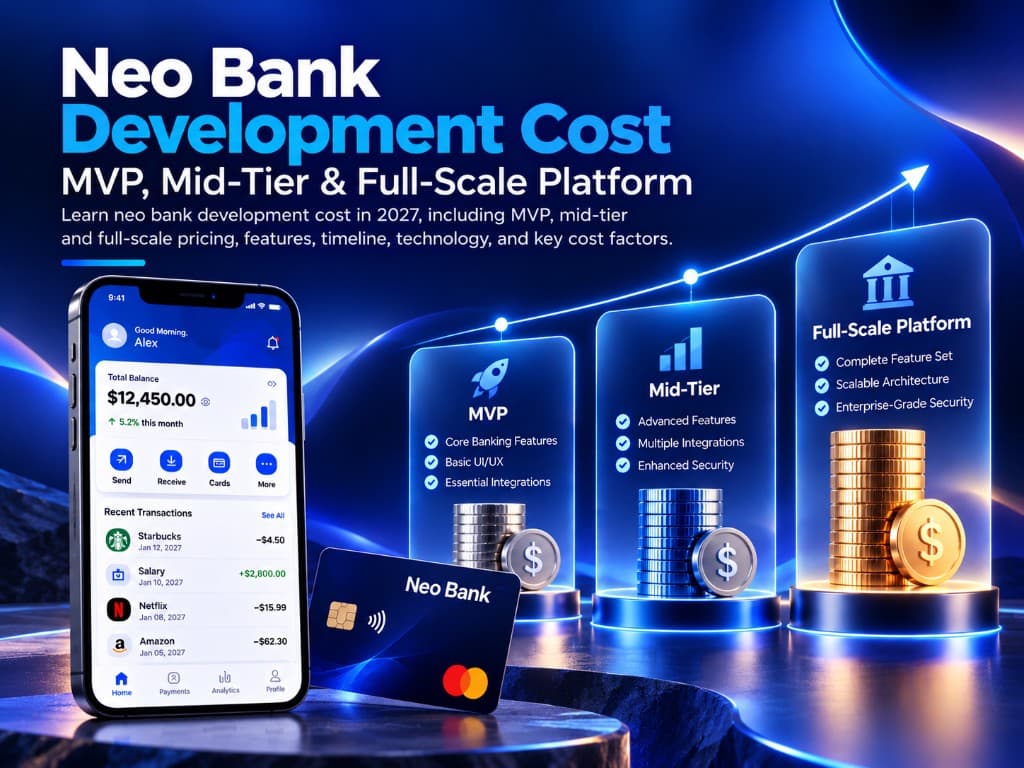
Learn neo bank development cost in 2027, including MVP, mid-tier and full-scale pricing, features, timeline, technology, and key cost factors.

Find the top 10 companies to hire blockchain developers in India. Compare blockchain services, expertise, use cases, & tips for choosing a development partner.

Discover smart contract development costs in 2027. Compare pricing from $5,000, project types, audit fees, timelines, & development factors.
Get in touch
We take on 4 new enterprise clients per quarter. Tell us what you're building.
Our offices
Direct lines to our delivery hubs. Same-day routing for qualified enterprise enquiries.
Global headquarters