ProSwap: A Uniswap-Style AMM DEX with Custom Pools and Swap Routing
Uniswap-style AMM DEX development - constant-product and stable pools, swap router, and liquidity analytics on MERN + Solidity
Tech stack
- MongoDB
- Express
- React
- Node.js
- Solidity
- Ethereum
- TypeScript
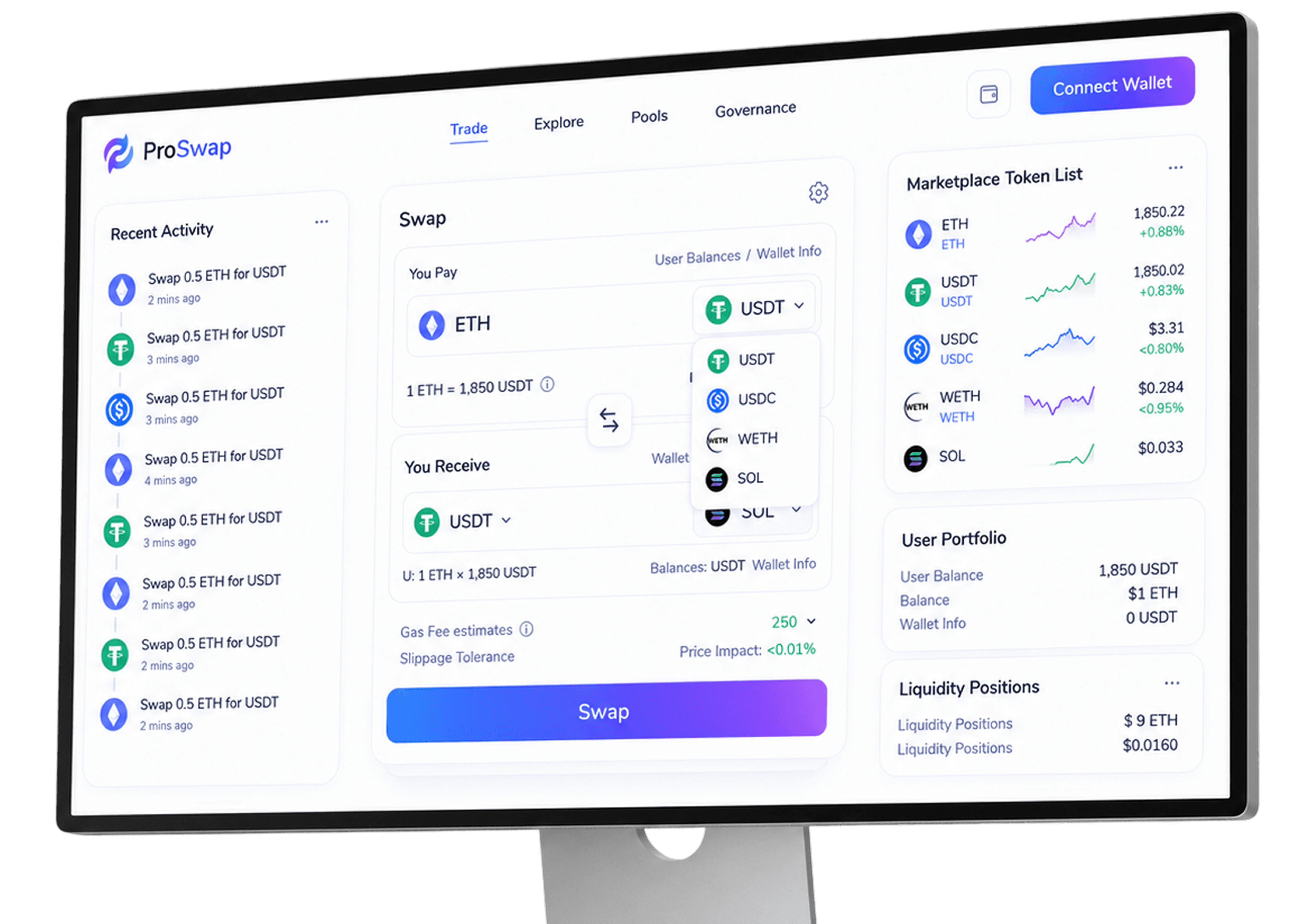
Project snapshot
| Industry | DeFi / Web3 |
|---|---|
| Service line | Custom DEX and AMM development |
| AMM model | Uniswap-style constant-product and stable-style pools |
| Stack | MongoDB, Express, React, Node.js, Solidity, TypeScript, Ethereum |
| Router | Custom swap router with slippage controls and multi-hop paths |
| Outcome | A deployable, brandable DEX stack ready for demo environments and controlled mainnet launches |
The challenge: battle-tested AMM mechanics without fork blind spots
The client wanted proven automated market maker development patterns without inheriting the deployment blind spots that sink Uniswap clone development projects. Copy-paste forks routinely break on the edge cases that matter when real liquidity is at stake - and the brief was a DEX hardened against them from day one.
Four requirements defined the engagement:
- Reentrancy-safe token transfers - every swap path treats external token calls as untrusted.
- Correct swap-fee accounting - protocol and LP fees tracked precisely across pool types.
- Precise LP token math - liquidity providers receive shares that reflect actual pool state.
- Resilient swap UX - a frontend that recovers cleanly from chain reorgs and failed transactions instead of stranding users mid-swap.
The brief, in short: build a decentralized exchange like Uniswap the client could brand, deploy, and operate - with contracts and tooling that survive a controlled mainnet launch.
Our approach: Solidity AMM core + MERN trading surface
We split the build into a hardened on-chain AMM layer and a fast application surface for traders and operators, coordinated through TypeScript-typed integrations.
1. Smart contract layer (Solidity pools and router)
Solidity pool and router contracts follow proven Uniswap v2/v3 fork development patterns, adapted to the client's requirements:
- Constant-product pools for standard token pairs with configurable fee tiers.
- Stable-style pools for pegged-asset pairs where concentrated liquidity math applies.
- Custom swap router supporting multi-hop paths, slippage limits, and whitelist-gated tokens.
- Reentrancy-safe transfer patterns and tested fee distribution logic.
2. Application layer (MongoDB, Express, React, Node.js)
The MERN stack powers everything traders and operators interact with off-chain:
- Swap interface with slippage controls, route preview, and transaction recovery after failures.
- Live price charts and pool analytics for liquidity providers and traders.
- Operator panel for listing new tokens, creating pools, and pausing pairs during incidents.
- TypeScript across integration layers for safer contract-to-frontend wiring.
3. Indexing and liquidity analytics
Subgraph-style indexing feeds near-real-time pool reserves, prices, and volume into the application layer - so the liquidity pool analytics dashboard stays accurate under load without querying the chain on every page view.
Key features delivered
- Constant-product and stable-style pools with custom fee tier configuration.
- Multi-hop swap router with slippage protection and route optimization.
- Pool creation UI for spinning up new pairs through a guided workflow.
- LP token math that reflects precise liquidity share accounting.
- Operator controls to list tokens, pause pairs, and respond to incidents.
- Real-time pool analytics - reserves, volume, and price history.
- Documented deployment scripts for demo and controlled mainnet environments.
The outcome: a deployable DEX the client owns
We delivered a deployable, brandable DEX stack with documented deployment scripts, a pool-creation UI, and a clean swap experience suitable for both demonstration environments and controlled mainnet launches. The client can spin up new pools, adjust fee tiers, and respond to incidents through the operator panel without re-auditing or re-architecting the core AMM contracts.
Why this matters for DEX development projects
If you're evaluating DEX development, the gap between a swap demo and a production AMM is fee accounting, reentrancy safety, LP math, and frontend recovery after failed transactions - not just a forked router address. ProSwap was engineered around those realities from day one. Before any mainnet launch, the same audit-ready contract discipline we recommend for all DeFi deployments applies here.
If you are scoping a custom AMM or tokenized-asset trading surface, our DeFi development and smart contract development teams build swap infrastructure to this standard.
Frequently asked questions
How long does DEX development take?
Timelines depend on pool types (constant-product, stable, or both), whether you need concentrated liquidity, the depth of operator tooling, and target chain deployment requirements. A focused swap-and-pool MVP ships faster than a multi-chain router with custom fee governance - we scope each engagement to your launch goals.
What's the difference between a Uniswap fork and a custom AMM build?
Forks inherit code quickly but often carry deployment blind spots - incorrect fee accounting, unsafe callbacks, and frontend state that breaks on reorgs. A custom build like ProSwap adapts proven Uniswap v2/v3 patterns to your fee tiers and whitelist rules while hardening the edge cases that sink production launches.
Why does reentrancy protection matter in swap contracts?
Swap paths call external token contracts during transfers. Without reentrancy guards and checks-effects-interactions discipline, a malicious token can re-enter the pool mid-swap and drain liquidity. Production DEX contracts must treat every external call as untrusted.
Can you customize fee tiers and token whitelists?
Yes. ProSwap was adapted to the client's custom fee tiers and token whitelist requirements at both the pool and router level, so new pairs can be gated and fees adjusted without rewriting core AMM math.
Do you build DEXes on chains other than Ethereum?
ProSwap was delivered with Ethereum as the primary deployment target. We can deploy the same AMM stack to other EVM-compatible chains depending on your liquidity strategy, fee tolerance, and ecosystem requirements.
Ready to Build Something Similar?
We design and ship production Web3 systems - marketplaces, DeFi protocols, and enterprise blockchain platforms - with audit-ready engineering from day one.
More Case Studies
 Gaming & Metaverse
Custom NFT marketplace development - minting, auctions, royalties, and collection discovery on MERN + Solidity
NFT Universe
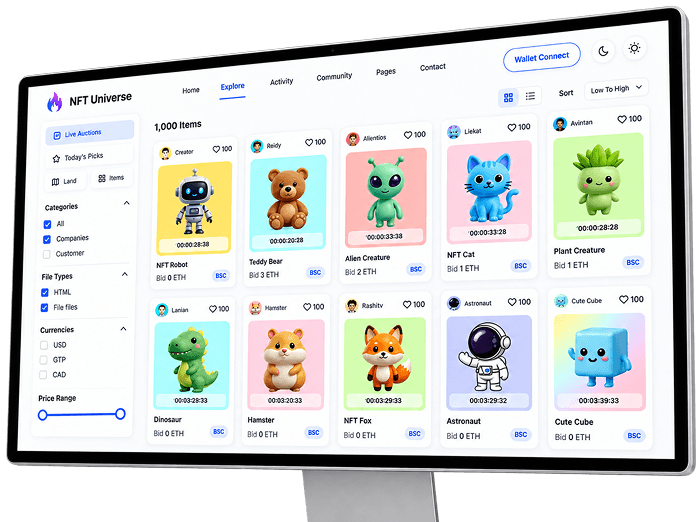
NFT Universe is a full-featured, production-grade NFT marketplace Bitronix Technologies designed and built for creators and collectors. Rather than reskinning a generic white-label template, we engineered a marketplace with the trading flows users expect from leading venues - wallet onboarding, gas-aware minting, on-chain royalties, live auctions, and an indexer-backed explorer that stays accurate under load.
Read case studyTech stack
- MongoDB
- Express
- React
- Node.js
- Solidity
- Ethereum
- IPFS
 FinTech
Polymarket-style prediction market development - outcome-share trading, Chainlink resolution, and collateral accounting on MEAN/MERN + Solidity
Uwin
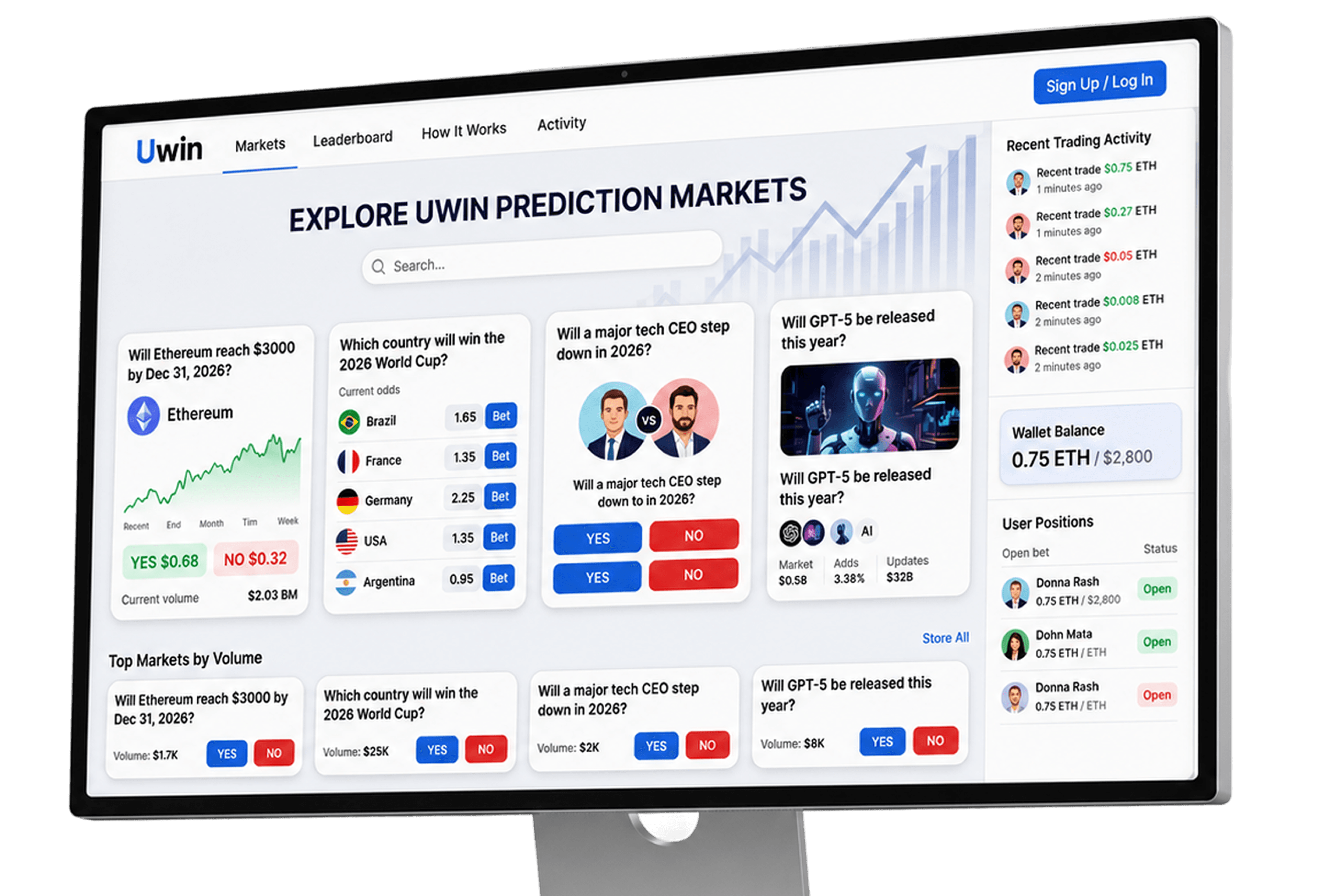
Uwin is a custom prediction market platform we built end-to-end, inspired by Polymarket: traders buy and sell outcome shares on real-world events, with transparent resolution rules and deep liquidity across binary and multi-outcome markets. Bitronix delivered the full surface - trader app, operator console, smart contracts, and oracle-backed settlement - rather than skinning a generic template.
Read case studyTech stack
- MongoDB
- Express
- React
- Angular
- Node.js
- Solidity
- Chainlink
 DeFi
DeFiDeFi lending protocol development - isolated pools, configurable LTV, risk-bounded liquidations, and Chainlink oracle safeguards
Meridian Lending Markets
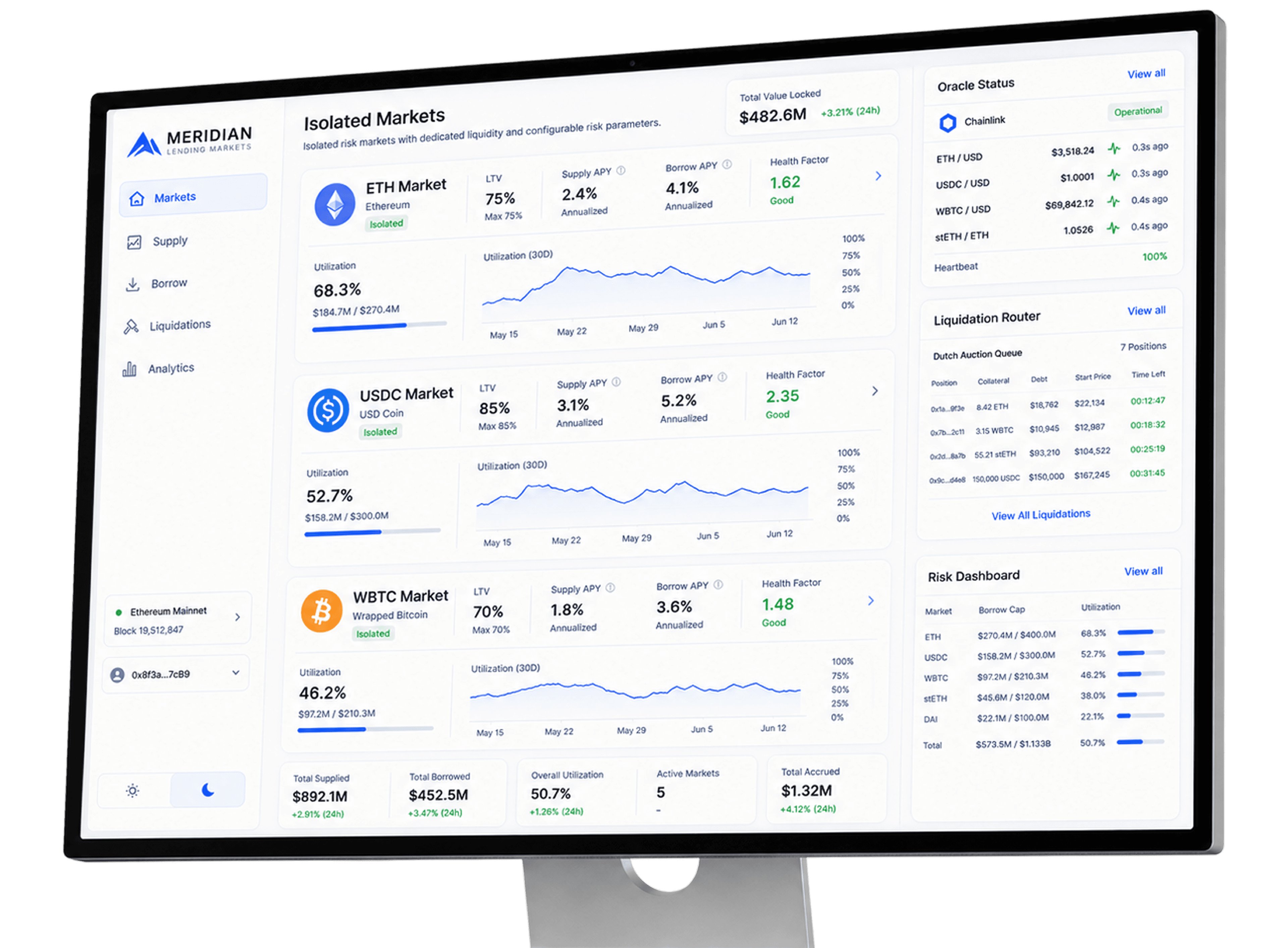
Meridian is an isolated-pool DeFi lending protocol we engineered for institutional desks. It pairs aggressive capital efficiency with conservative risk controls: per-asset silos, configurable loan-to-value (LTV) and liquidation bonuses, and predictable auction paths that keep solvency provable under stress. Bitronix delivered the full lending-protocol surface - Solidity markets, oracle safeguards, and a composable liquidation router - built audit-ready from day one.
Read case studyTech stack
- Solidity
- Foundry
- Chainlink
- TypeScript
- Ethereum