NFT Development Guide 2027: Process, Cost & Benefits

Published by Tausif AhmedFounder and CTO
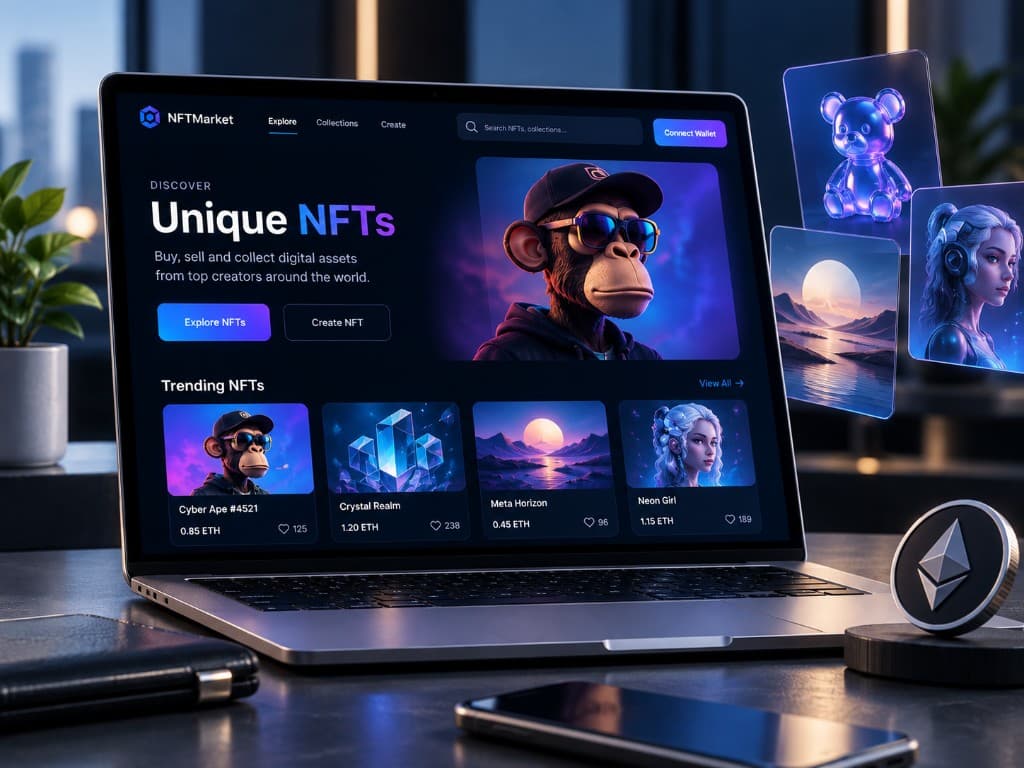
NFTs are no longer limited to digital art and collectibles. Businesses can use them to represent in-game items, event tickets, membership access, digital certificates and certain real-world assets. The value of an NFT project depends on what it helps users do, not simply on creating a token.
For example, a gaming company might use NFTs to let players own and trade in-game items. A ticketing business could use them to verify event passes. A brand might offer NFT-based memberships with special benefits for customers.
However, launching a useful NFT project takes more than writing a smart contract. You need to decide what the NFT represents, choose a suitable blockchain, plan the user experience, protect digital assets and understand the costs involved.
This guide explains the NFT development process, common use cases, key features, benefits, risks and estimated development costs for 2027. It also covers the decisions businesses should make before starting a project.
What Is NFT Development?
NFT development is the process of building a blockchain-based system that creates, manages, transfers, or trades non-fungible tokens.
A non-fungible token is a unique token that can be distinguished from other tokens. Unlike a standard cryptocurrency token where units are generally interchangeable, an NFT can have its own identifier and associated metadata.
For example, imagine a company issuing 1,000 digital membership passes. Each pass could have a unique token ID and provide access to a particular service or benefit. A smart contract can define how those passes are created and transferred.
An NFT project might be as simple as a collection of digital collectibles or as complex as a marketplace with user accounts, wallet connections, auctions, analytics and multiple blockchain networks. The right setup depends on what the business wants to achieve.
Types of NFT Development Projects
Before estimating costs, decide what kind of NFT product you need. Different projects require different features and development effort.
1. NFT Collection Development
An NFT collection contains a set of digital assets represented by individual tokens. These could include artwork, collectibles, profile images, or branded digital items. Development may include a collection smart contract, minting page, metadata, wallet integration and tools to manage the release.
2. NFT Marketplace Development
An NFT marketplace lets users discover, list, buy, sell, or bid on NFTs. Depending on the business model, it may support fixed-price sales, auctions, creator profiles, search filters and transaction history. A marketplace usually costs more than a basic NFT collection because it requires additional application logic and user-facing features. See also our NFT marketplace development cost guide.
3. NFT Gaming Development
Games can use NFTs to represent characters, skins, weapons, virtual land, or other in-game items. Players may be able to transfer or trade supported assets outside the game, depending on the rules and technical design. Gaming projects need careful planning around gameplay, ownership, transaction fees and the balance between blockchain features and the actual gaming experience.
4. NFT Ticketing and Membership Platforms
Businesses can issue NFT-based event tickets, club memberships, digital passes, or loyalty rewards. The system may verify ownership before granting access to an event, service, or private community. The main challenge is making the process easy for people who have never used a crypto wallet.
5. NFT Platforms for Digital Certificates
An organization can use blockchain records to help verify certificates, credentials, or other digital records. The NFT may link to supporting information, but sensitive personal details should not automatically be placed on a public blockchain. Access controls, privacy, verification rules and the legal meaning of the record must be considered before development.
6. NFT and Real-World Asset Applications
NFTs can be used in systems that represent or reference certain real-world assets. However, creating a token does not automatically establish legal ownership of a physical asset. Projects involving property, commodities, financial interests, or other regulated assets may need legal agreements, identity checks, ownership verification and compliance processes in addition to blockchain development. For property-focused programmes, see real-world asset tokenization.
How Does NFT Development Work?
An NFT project typically combines smart contracts, a blockchain network, metadata, digital asset storage and an application through which users interact with the system.
Here is a simplified example of an NFT collection:
A creator uploads an image or other digital file.
The platform prepares metadata describing the NFT.
The user connects a compatible wallet.
A minting transaction creates the NFT through a smart contract.
The blockchain records the token and its ownership.
The application displays the NFT and its associated information.
If transfers or sales are supported, ownership can change through the relevant blockchain transactions.
The exact process varies by project. Some systems mint NFTs immediately, while others use lazy minting, where the token is created only when a qualifying purchase or transaction occurs.
It is also important to understand that an NFT and the digital file it references are not always stored in the same place. A token may exist on the blockchain while its image or metadata is stored elsewhere. Storage reliability and content availability should therefore be part of the project plan.
NFT Development Process: Step by Step
Step 1: Define the Business Goal
Start by deciding why the project needs NFTs. Are you creating digital collectibles, launching a marketplace, offering membership benefits, or building a game with tradable items? Each goal affects the required features, budget and technical architecture. Write down the target users, the problem the project solves and the actions users should be able to complete.
Step 2: Choose the Right Blockchain
The blockchain affects transaction fees, ecosystem support, wallet compatibility, developer tools and user experience.
- Ethereum: A widely used ecosystem for NFTs, smart contracts and developer tools.
- Polygon: An EVM-compatible network often considered for applications where transaction costs and compatibility are important.
- Solana: An option for projects that want to build within its NFT and application ecosystem.
- BNB Smart Chain: An EVM-compatible option with its own users, infrastructure and ecosystem.
These networks are not interchangeable in every respect. Compare transaction costs, technical requirements, wallet support, marketplace compatibility and the needs of your users before choosing.
Step 3: Select the NFT Standard
The token standard determines how the NFT contract behaves and what types of assets it can support.
ERC-721 is commonly used when each token needs its own unique identity. It can suit individual collectibles, digital artwork and one-of-a-kind items.
ERC-1155 can support multiple token types within one contract, including unique and edition-based assets. It may be useful for gaming items, ticketing and collections with multiple copies.
The right standard depends on the product's requirements. Choosing one too early without understanding the use case can create unnecessary development work later.
Step 4: Plan Smart Contracts
Smart contracts define important NFT rules. Depending on the project, these may include minting limits, permissions, transfer rules, sale logic and royalty information. The contract should be designed before implementation, with its responsibilities and limitations clearly documented. Developers should also consider what happens if an administrator loses access, a transaction fails, or a feature needs to be changed.
Contract upgrades require particular care. Some contracts are designed to be immutable, while others use upgrade mechanisms with additional trust and security considerations. Bitronix's smart contract development work typically starts with this design step before any code is written.
Step 5: Design the User Interface
A good NFT platform should make the main actions easy to understand. Users may need to connect a wallet, upload an asset, mint an NFT, view ownership details, or complete a purchase. The interface should explain transaction fees and show clear confirmation messages. It should also help users understand when an action requires a blockchain transaction and when it is simply an application-level action.
For a marketplace, consider collection pages, search filters, item details, creator profiles, listing forms and transaction history.
Step 6: Set Up Metadata and Storage
NFT metadata can describe an asset's name, attributes, description and media location. The development team needs to decide how files and metadata will be stored. Options may include IPFS or other suitable storage services, depending on the project's requirements. A storage plan should account for availability, backup or recovery needs, file size, access permissions and what happens if a storage provider or external link becomes unavailable.
Step 7: Integrate Wallets and Application Services
Wallet integration allows users to sign transactions and interact with the blockchain. Depending on the product, the platform may also need indexing services, databases, APIs, notifications, analytics, or payment integrations. These components help the application display useful information without requiring users to inspect every blockchain transaction manually. The team should clearly separate on-chain records from off-chain application data and protect any sensitive information handled by the platform.
Step 8: Test and Review Security
Before launch, test the platform on a suitable test network and verify the full user journey. Testing should cover minting, transfers, marketplace transactions, permissions, failed transactions, wallet connections and unusual user actions. Smart contracts should receive a security review appropriate to their complexity and risk.
An independent smart contract audit is strongly recommended for contracts that handle valuable assets or significant funds. An audit can help identify issues, but it cannot guarantee that a system is completely secure. See smart contract audit readiness for how Bitronix prepares contracts before external review.
Step 9: Deploy and Monitor the Platform
Once testing and security checks are complete, the team can prepare the production deployment. The launch plan should include contract addresses, deployment records, administrative access controls, monitoring, backup procedures, support arrangements and a process for responding to reported vulnerabilities. After launch, monitor errors, user feedback, transaction failures, storage availability and changes in the blockchain environment.
Essential Features of an NFT Platform
The features you need depend on whether you are launching a collection, a marketplace, or a more complex application.
| Feature | Purpose |
|---|---|
| NFT minting | Creates tokens according to the project's rules |
| Smart contracts | Define ownership, transfers and supported transactions |
| Wallet integration | Lets users connect wallets and sign transactions |
| Metadata management | Stores or references NFT descriptions and attributes |
| Digital asset storage | Makes NFT images, media, or related files available |
| NFT gallery | Displays a user's assets or available collections |
| Search and filters | Helps users discover relevant NFTs |
| Marketplace functions | Supports listings, purchases, offers, or auctions when required |
| Admin tools | Manages permitted platform settings and content |
| Analytics | Helps track usage, transactions and platform activity |
| Security controls | Helps protect contracts, application services and administrative access |
Not every project needs every feature. A simple membership NFT may not require a full trading marketplace, while a gaming platform could need game-specific asset rules and integrations.
Benefits of NFT Development for Businesses
Verifiable Ownership Records
A blockchain can provide a public record of token ownership and transfers. This can help users and applications verify the current owner of a particular NFT, subject to the network and contract design.
New Digital Products
Businesses can create digital collectibles, memberships, access passes, or in-game assets that fit their existing products and audiences.
Direct Creator Engagement
NFT projects can provide new ways for artists, brands and communities to distribute digital assets and connect with customers. The commercial results still depend on demand and the value offered to users.
Programmable Rules
Smart contracts can automate certain actions, such as minting, transfers, access checks, or supported payment splits. The exact behavior depends on the contract and the applications that interact with it.
Potential for Secondary Trading
If an NFT is transferable and supported by compatible marketplaces, its owner may be able to resell it. Resale is not guaranteed and a token may have little or no market demand.
Digital Access and Membership
An NFT can serve as a digital pass that an application checks before granting access to a community, service, or event. The business must still maintain the underlying access system and define what happens when a token changes hands.
How Much Does NFT Development Cost in 2027?
NFT development costs depend on the product type, smart contract complexity, blockchain choice, design requirements, integrations, testing and security work.
The following figures are illustrative planning estimates in US dollars, not fixed quotations or verified 2027 market prices.
| Project type | Estimated development cost | Approximate timeline |
|---|---|---|
| Basic NFT smart contract and minting setup | $8,000–$20,000 | 3–8 weeks |
| NFT collection with a custom minting website | $12,000–$30,000 | 1–3 months |
| Standard NFT marketplace | $25,000–$80,000 | 3–5 months |
| Advanced NFT marketplace or gaming integration | $70,000–$150,000+ | 5–9+ months |
| Enterprise or multi-chain NFT platform | $150,000–$250,000+ | 6–12+ months |
Actual timelines depend on the team, project scope, integrations and the time needed for testing and review. Some projects may fall outside these ranges.
What Affects the Cost?
- Smart contract complexity: A basic minting contract requires less work than a system with auctions, revenue splits, access permissions, or complex trading rules.
- Blockchain selection: Network fees, development tools, wallet support and integration requirements affect the implementation.
- Platform features: A collection website is usually simpler than a marketplace with search, offers, bidding, dashboards and transaction history.
- Design and user experience: Custom designs, mobile responsiveness, wallet onboarding and accessibility can increase the workload.
- Storage and backend services: Indexing, metadata management, notifications, analytics and API integrations may require additional development and infrastructure.
- Security testing: Internal testing and independent audits add cost but are important when contracts or platform services handle valuable assets.
- Maintenance: Updates, monitoring, infrastructure, customer support and future compatibility work create ongoing costs after launch.
Additional Costs to Budget For
The initial development quote may not include all launch expenses. Consider budgeting separately for:
- Smart contract audits and any required remediation.
- Blockchain deployment and transaction fees.
- File storage, pinning, indexing and hosting.
- Wallet, payment, or third-party service fees.
- Legal advice, intellectual property review and regulatory analysis.
- Marketing, community management and customer support.
- Ongoing maintenance and future feature updates.
Ask the development team to explain exactly what is included in the quotation. Two proposals with similar headline prices may cover very different scopes.
Which Blockchain Is Best for an NFT Project?
There is no single best blockchain for every NFT project. The right choice depends on the users you want to reach and the type of transactions they will make.
| Requirement | What to evaluate |
|---|---|
| Digital art and collectibles | Marketplace reach, creator tools, wallet support and ecosystem activity |
| Gaming assets | Transaction costs, throughput, game integrations and user experience |
| Memberships and ticketing | Simple wallet onboarding, verification and transfer rules |
| Marketplace development | Smart contract tooling, indexing, liquidity or demand and integrations |
| Enterprise applications | Privacy requirements, governance, integration needs and legal considerations |
Before making a decision, test the user journey and compare the full operating cost—not just the blockchain's transaction fees.
NFT Development Risks and Challenges
NFT technology can support useful products, but it does not remove business or technical risks.
- Smart contract vulnerabilities: A contract bug may allow unauthorized actions or cause assets to become inaccessible.
- Unreliable metadata or storage: A token may remain on-chain even if its linked media or metadata becomes unavailable.
- Intellectual property disputes: Minting a digital file does not automatically grant copyright or commercial rights to the person who creates the token.
- Uncertain demand: A technically sound NFT project may still struggle to attract buyers or active users.
- Wallet and user experience issues: Transaction fees, lost wallet access and confusing signing requests can discourage users.
- Regulatory uncertainty: Rules may vary by jurisdiction and by what the NFT represents or promises.
- Ongoing maintenance: Blockchain changes, third-party service issues and security findings may require future updates.
Plan for these risks before launch rather than treating them as problems to solve after users arrive.
NFT Development Best Practices
A practical development plan should focus on the product's purpose and the people who will use it.
- Start with a clear use case. Explain what users gain from the NFT and why blockchain is appropriate for the problem.
- Build only the necessary first version. Validate demand before investing in complex features.
- Choose the blockchain based on requirements. Consider users, transaction costs, ecosystem tools and integration needs.
- Document contract behavior. Make ownership rules, permissions, fees and upgrade limitations clear.
- Plan for secure storage. Decide how media and metadata will remain available over time.
- Test the full experience. Include wallet connection, minting, transfers, errors and mobile usability.
- Arrange an appropriate security review. Address findings before deploying contracts that manage valuable assets.
- Prepare for ongoing operations. Assign responsibility for monitoring, support, maintenance and incident response.
How Bitronix Technologies Can Help With NFT Development
Bitronix Technologies works across blockchain, smart contract and Web3 development. For an NFT project, the first step is to understand the business objective and decide which components are actually needed.
Depending on the scope, a development plan may cover:
- NFT use-case planning and technical requirements.
- Blockchain and token-standard selection.
- Smart contract design and implementation.
- NFT minting websites or marketplace development.
- Wallet, metadata, storage and API integrations.
- Testing, deployment planning and security review coordination.
- Post-launch maintenance and feature improvements.
The scope and cost should be defined around your requirements rather than assuming every project needs a full marketplace.
Plan Your NFT Project
Answer these five questions to create a more practical NFT development plan for your business.
Share your answers on WhatsApp and we will outline the next steps. Select one or more options above to personalise your message.
Final Conclusion
NFT development can help businesses create digital collectibles, membership systems, gaming assets, ticketing platforms and other blockchain-based products. But the right approach starts with a clear business goal—not simply the decision to launch an NFT.
Before development begins, decide what your NFTs will represent, which blockchain suits your users, what features are essential and how you will handle security, storage and ongoing maintenance. Start with a manageable first version, test it with real users and expand when there is a clear reason to do so.
The cost of NFT development in 2027 will depend on the complexity of the project. A basic minting application will require a different budget from a custom marketplace or multi-chain platform. Plan for testing, security reviews, deployment and post-launch support as well as the initial build.
Bitronix Technologies can help you assess your requirements and plan a blockchain solution around your business goals. Explore Bitronix Technologies or NFT development to discuss your project.
Frequently Asked Questions About NFT Development
What is NFT development?
NFT development involves creating blockchain-based tokens and the applications needed to mint, manage, display, or trade them. A project may include smart contracts, wallet integration, metadata storage and a minting website or marketplace.
How much does NFT development cost in 2027?
As an initial planning estimate, a basic NFT contract and minting setup may cost $8,000–$20,000. A standard NFT marketplace may cost $25,000–$80,000, while advanced platforms can exceed $150,000. The final price depends on features, blockchain choice, integrations and security requirements.
How long does it take to develop an NFT platform?
A basic NFT project may take around 3–8 weeks. A standard marketplace may take 3–5 months, while a more advanced platform can require 6–12 months or longer. These timelines depend on scope, testing and audit requirements.
Which blockchain is best for NFT development?
Ethereum, Polygon, Solana and BNB Smart Chain are options to evaluate. The right choice depends on transaction costs, target users, wallet compatibility, developer tools and the project's requirements.
What is the difference between ERC-721 and ERC-1155?
ERC-721 is commonly used for individually unique tokens. ERC-1155 supports multiple token types within a single contract and can be useful for collections, gaming items and edition-based assets.
Can a business build its own NFT marketplace?
Yes. A business can develop a custom marketplace with features such as minting, listings, purchases, auctions, wallet integration, search and creator profiles. The required features depend on the business model and target audience.
Are NFTs secure?
NFT security depends on smart contract quality, wallet security, application design and storage reliability. Testing and an independent security audit can reduce risk, but no audit can guarantee complete protection.
Do NFTs automatically provide copyright ownership?
No. Owning an NFT does not automatically mean owning the copyright to the artwork or other content it represents. The rights granted to the buyer should be stated clearly in the project's terms and legal agreements.
Can NFTs be used outside digital art?
Yes. NFTs can support gaming assets, memberships, event tickets, digital certificates, loyalty programs and selected real-world asset applications. Each use case requires suitable technical and legal planning.
What costs should be considered beyond development?
Businesses should also consider security audits, deployment fees, hosting, metadata and file storage, third-party services, legal advice, marketing, customer support and ongoing maintenance.
Can NFTs be built for multiple blockchains?
Yes, but multi-chain support can increase development and testing costs. Each supported network may require separate contract deployments, integrations, wallet compatibility checks and monitoring.
How do I choose an NFT development company?
Review the team's relevant blockchain and smart contract experience, technical approach, security process, project scope, source-code ownership terms, maintenance arrangements and cost breakdown. Ask for a clear proposal before committing to a project.

Founder and CTO
Founder and CTO of Bitronix Technologies. Helps businesses scope NFT collections, marketplaces and smart contract platforms around clear product goals.
Related Posts
 Blockchain
October 23, 202619 min read
DEX Clone Script: Features, Development Cost & How to Build a Decentralized Exchange
Explore DEX clone script features, development costs, smart contracts, liquidity pools, security and the steps to build a decentralized exchange.
Read article Blockchain
October 21, 202613 min read
Agricultural Commodity Tokenization in 2027: Benefits, Process & Cost
Learn how agricultural commodity tokenization works, its benefits, development process, costs, use cases and key regulatory considerations.
Read article Blockchain
October 21, 202618 min read
CoinMarketCap Clone Script: Features, Cost and How to Build a Crypto Price Tracking Platform
Explore CoinMarketCap clone script features, development costs, APIs, revenue models and how to build a cryptocurrency market data platform.
Read article