Gold Tokenization Development: How to Build a Gold-Backed Digital Asset Platform

Written by Saquib FrazTechnically reviewed by Tausif Ahmed
Published Updated 15 min read
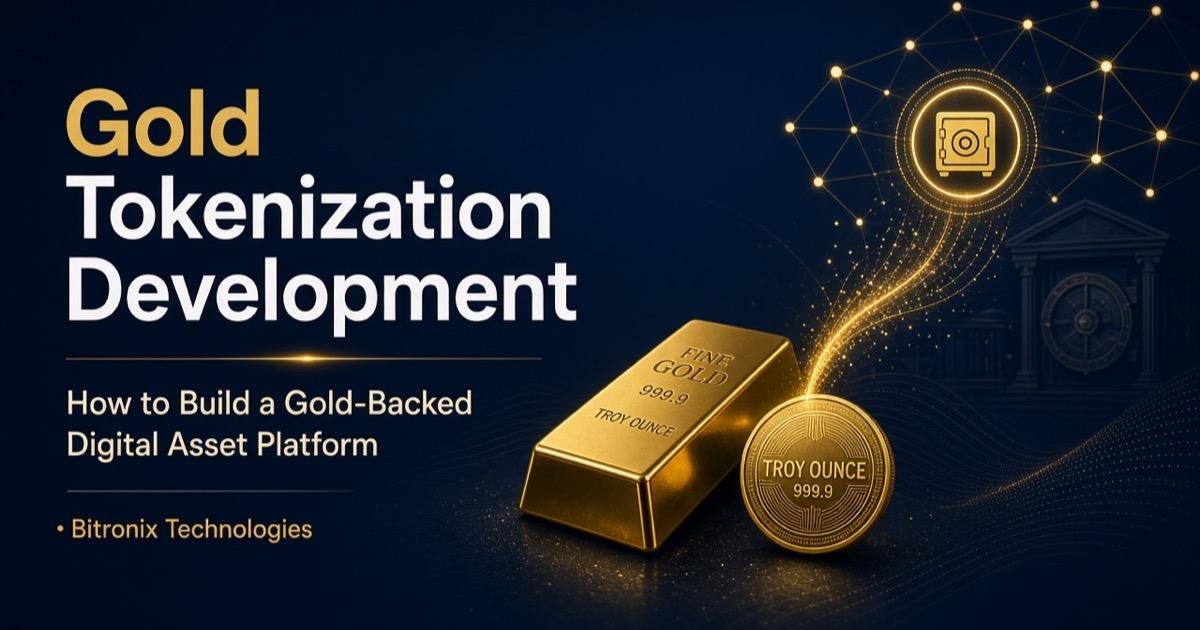
Gold tokenization development is the process of turning physical gold held in secure vaults into digital tokens on a blockchain. Each token is a claim on real bullion, which lets people own small fractions of gold, trade at any hour from anywhere, and settle transfers within minutes instead of days.
Gold has always been a trusted store of value, but owning it is awkward. Bars cost money to store and insure, and you cannot sell half a bar. A gold-backed digital asset platform fixes this. Users buy small amounts, hold them in a wallet and trade around the clock.
This guide explains how a gold-backed token works, what a platform needs and how to build one. It also covers the main risks, the rules to watch and what affects cost. It is written for fintech founders, wealth platforms, exchanges and gold dealers who are thinking about launching their own product.
What Is Gold Tokenization?
Gold tokenization means issuing blockchain tokens that each stand for a fixed amount of physical gold, usually one troy ounce or one gram. The gold sits in a professional vault, and the token is the digital claim on it. Because every token is tied to real metal, holders get fractional ownership, 24/7 global trading and fast settlement without moving any gold.
The price of the token follows the price of gold because it is tied to real metal, not because a formula holds it there. If gold rises, the token rises. If gold falls, so does the token.
Tokenized gold belongs to a wider group called real world asset tokenization, where things like property, bonds and commodities are put on a blockchain.
How Does Tokenized Gold Compare With Other Ways to Hold Gold?
Every way of owning gold trades one cost for another.
| Option | What you own | Main upside | Main drawback |
|---|---|---|---|
| Bars and coins | The metal itself | Direct ownership | Storage, insurance, wide dealer spreads, hard to split |
| Gold ETFs | Shares in a fund | Easy to trade through a broker | Exchange hours only, no easy way to get metal |
| Futures | A contract on the price | Leverage | Margin and rollover costs, no claim on bars |
| Tokenized gold | A claim on allocated gold | 24/7 trading, small units, fast transfers | You must trust the issuer, the vault and the tech |
Why Are Businesses Building Gold-Backed Digital Asset Platforms?
Businesses are building them because demand is growing and the product fills a real gap. Investors want gold exposure that is easy to buy in small amounts, and platforms want something that keeps users active.
1. A Market That Is Already Large
As of late September 2026, 4IRE Labs reported that tokenized gold had a combined market value of around $5.2 billion. XAUT and PAXG account for most of it. That is enough to prove demand, and still small enough to leave room for new products.
2. Gold Becomes Easy to Buy in Small Amounts
Users can own a fraction of an ounce instead of saving up for a coin or a bar. That opens gold to first-time investors and to people in regions where physical gold is hard to buy.
3. Trading and Transfers Run 24/7
Tokens move between wallets in minutes and can trade at any hour. There is no shipping and no waiting for a dealer to open.
4. Gold Can Work Inside Digital Products
Tokenized gold can be used as collateral, sit inside a portfolio dashboard or be offered next to cards and payments in a fintech app. A bar in a safe cannot do any of that.
5. New Revenue for Wealth Platforms and Exchanges
Fees on buying, selling, storage and redemption give platforms a steady income line, and gold gives cautious investors a reason to join.
How Does a Gold-Backed Token Work?
A gold-backed token works in a simple loop: gold goes into a vault, tokens are created against it, and when someone redeems, the tokens are destroyed and the gold is released.
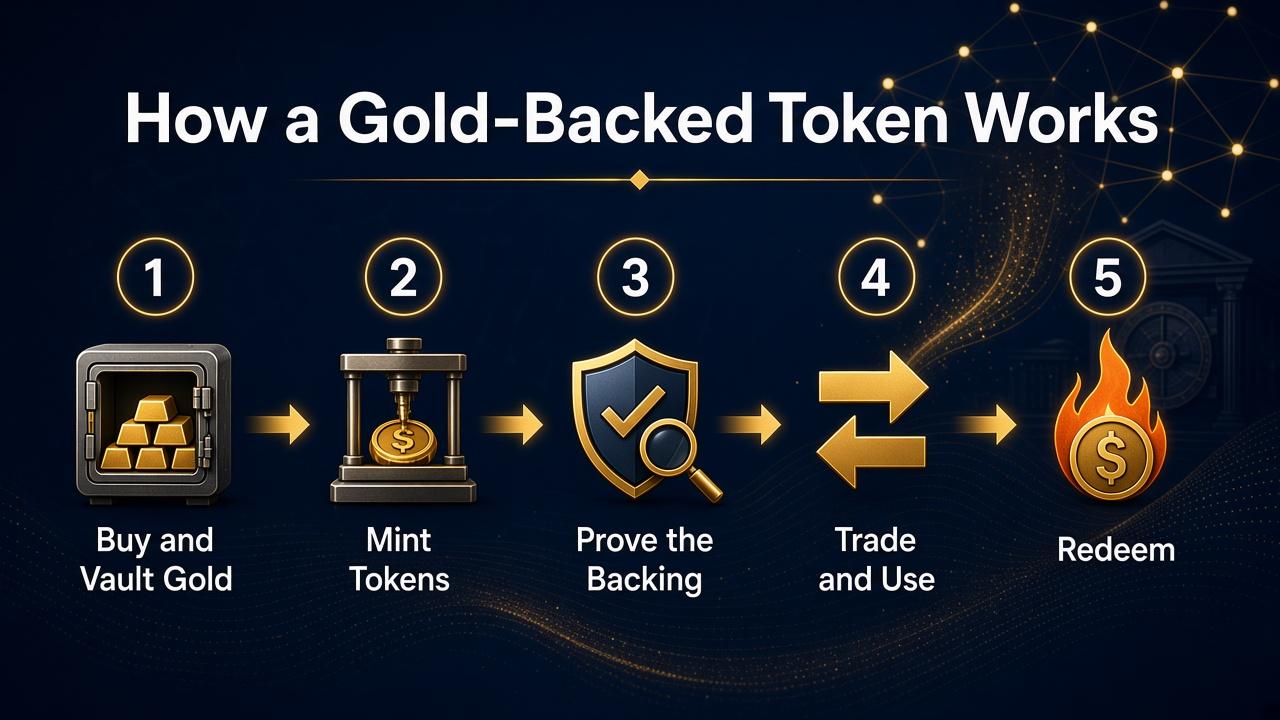
Buy and Vault Gold: LBMA Good Delivery bars stored with a professional vault operator
Mint Tokens: create tokens only for gold that is bought, recorded and allocated
Prove the Backing: independent auditors confirm vault gold matches circulating supply
Trade and Use: send between wallets, trade on exchanges or use inside apps and DeFi
Redeem: return tokens for physical gold or cash; burn tokens so supply shrinks with the vault
Step 1: Buy and vault the gold. The issuer buys bars that meet the LBMA Good Delivery standard and stores them with a professional vault operator.
Step 2: Mint tokens against that gold. Tokens are created only for gold that has actually been bought and recorded. Allocated storage means specific bars, with serial numbers, sit behind the tokens.
Step 3: Prove the backing. Independent auditors check that the gold in the vault matches the number of tokens in circulation. Stronger platforms also let holders look up the bars behind their tokens.
Step 4: Trade and use the tokens. Holders send them between wallets, trade them on exchanges or use them inside apps and DeFi.
Step 5: Redeem. A holder returns tokens for physical gold or for cash at the gold price. The tokens are then burned, so supply shrinks along with the vault.
How Do the Two Biggest Gold Tokens Compare?
| Feature | PAXG (Pax Gold) | XAUT (Tether Gold) |
|---|---|---|
| Issuer | Paxos | TG Commodities (El Salvador-registered) |
| Backing | One troy ounce per token, in London vaults | One troy ounce per token, on bars held in Switzerland |
| Attestation | Monthly | Quarterly |
| Main chain | Ethereum, also Solana | Ethereum, also Tron |
Both tokens show why trust matters. The code is simple. What buyers really judge is the vault, the audits and how easy redemption is.
What Are the Core Layers of a Gold Tokenization Platform?
A gold tokenization platform has six layers that must work together. If one is weak, the whole product feels unreliable.
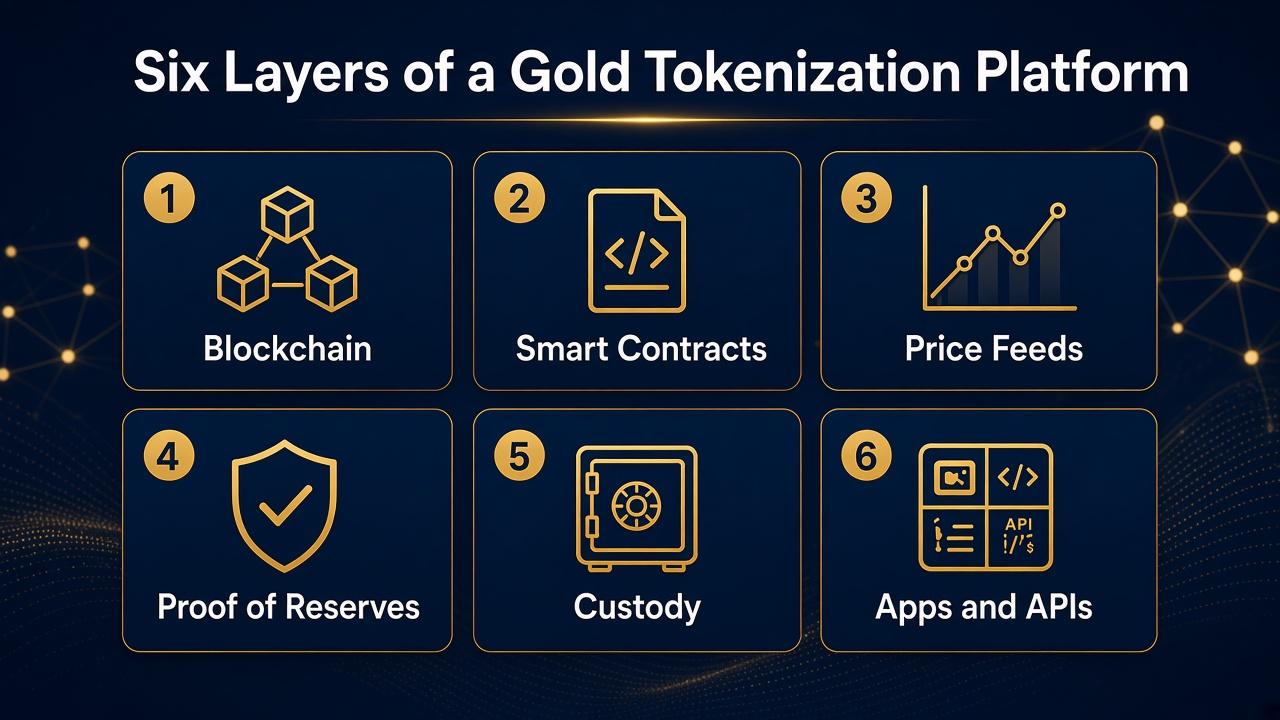
| Layer | What it does | What can go wrong |
|---|---|---|
| Blockchain | Hosts the token and processes transfers | High fees, slow finality, limited wallet support |
| Smart contracts | Control minting, burning, transfers and compliance | Code bugs, weak admin controls |
| Price feeds (oracles) | Bring the live gold price on-chain | Stale or manipulated prices |
| Proof of reserves | Shows tokens match the gold in the vault | Audit gaps, wrong reporting |
| Custody | Tracks gold from refiner to vault to token | Bar mix-ups, weak insurance |
| Apps and APIs | Onboarding, KYC/AML, trading, reports | Poor user experience, slow integrations |
1. Blockchain
This is where the token lives. Most gold tokens sit on Ethereum, because it has the deepest liquidity and the most regulated custody partners. Layer 2 networks and chains like Solana offer lower fees.
2. Smart Contracts
These are the rules. They decide when new tokens can be created, destroy tokens on redemption, and can limit transfers to verified wallets. A good contract also has pause and freeze controls for regulators and emergencies. Bitronix’s smart contract development work typically starts with this design step before any code is written.
3. Oracle Price Feeds
Oracles bring the live gold price onto the blockchain. A strong setup uses more than one source, such as the LBMA benchmark price plus a fast, decentralized feed, and checks that prices are not stale. See also smart contract integration with APIs and oracles.
4. Proof of Reserves
This confirms the vault holds at least as much gold as there are tokens. Many issuers use monthly or quarterly audit reports. Newer platforms add automated, on-chain proof of reserves such as Chainlink’s, so anyone can check the numbers at any time.
5. Custody
Custody is the link between the metal and the token. Gold should come from refiners on the LBMA Good Delivery list, move under secure transport, and be stored in an insured vault. Serial numbers of bars should map to the tokens they back.
6. Apps and APIs
This is what users and partners actually see: sign-up, KYC checks, buy and sell screens, redemption requests and reports. APIs let wealth platforms or exchanges add gold to their own products.
How Do You Build a Gold-Backed Digital Asset Platform?
You build one in seven steps, starting with the business and legal choices and ending with launch and liquidity.
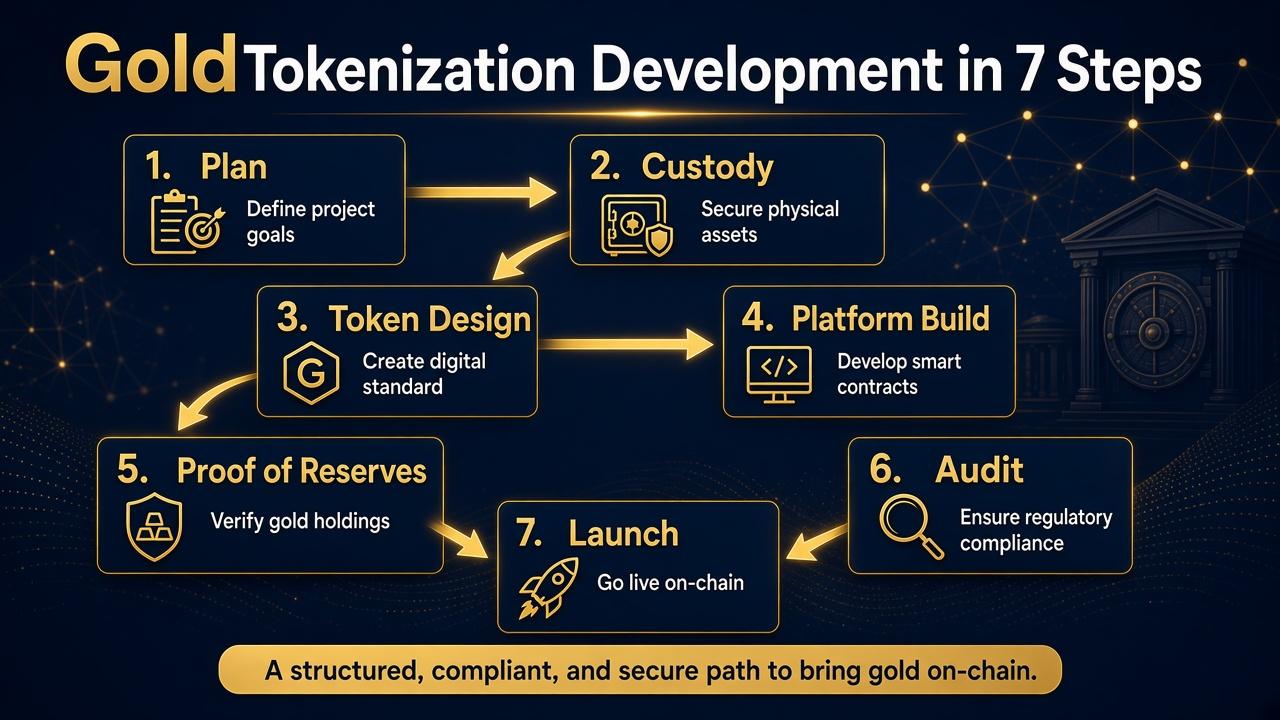
Plan: define the model, holders, redemption and licence path
Custody: vault operator, auditor and insurance
Token Design: unit, chain, mint/burn and compliance controls
Platform Build: KYC, buy/redeem flows, bar ledger and integrations
Proof of Reserves: attestations and on-chain reserve data
Audit: smart contract audit, pen tests and key management checks
Launch: go live, list liquidity and add partner integrations
1. Define the Model and Where You Will Operate
Decide who can hold the token, whether it can be redeemed for metal, and which licences apply in your target countries. These answers shape everything that follows. For a broader regulatory view, see RWA tokenization regulations.
2. Set Up Custody and Audits
Sign a vault operator for allocated, LBMA Good Delivery gold, plus an independent auditor for regular attestations. Also check insurance cover, both in the vault and in transit.
3. Design the Token
Pick the unit (ounce or gram), the blockchain and the token standard. Plan mint and burn controls, pause and freeze functions, and permissioned transfers if your users must be verified.
4. Build the Platform
Create investor onboarding with KYC/AML, purchase and redemption flows, a ledger that records which bars back which tokens, and reporting. Add connections to wallets, exchanges and payment methods.
5. Connect Proof of Reserves and Price Feeds
Publish regular attestations. Where you can, add on-chain reserve data and a reliable gold price feed so the numbers are public and current.
6. Test and Audit
Run a smart contract audit, penetration tests and load tests. Check key management closely, since the minting keys are the most sensitive part of the system. See smart contract audit readiness for how Bitronix prepares before external review.
7. Launch and Build Liquidity
Go live, list the token with exchanges and market makers, and add DeFi or partner integrations once the token is trusted.
Which Blockchain Should You Choose for Tokenized Gold?
Choose the chain that fits your users, your custodians and your regulators, not simply the fastest one.
- Ethereum: Holds more than 97% of PAXG and XAUT supply, according to rwa.xyz data in October 2026. It has the strongest institutional tools, but fees rise when the network is busy.
- Layer 2 networks (Arbitrum, Optimism, Base): Cheaper and faster, while still settling back to Ethereum. Good for frequent trading.
- Solana: Very fast with low fees. Paxos brought PAXG to Solana in June 2026.
- Tron: Widely used for stablecoin-style transfers and home to XAUT.
For many new platforms, a Layer 2 first approach with Ethereum for larger settlements gives a sensible balance of cost, security and access.
If you plan to run on more than one chain, be careful with bridges. Chainalysis counted around $2 billion stolen across 13 bridge hacks by August 2022. A controlled bridge run by the issuer is usually safer than an open one for a product built on trust.
What Risks Should You Plan For?
Every gold tokenization project should plan for five risks.
1. Custody and Counterparty Risk
Holders rely on the issuer, the vault and the auditor. Be clear about whether gold is allocated (specific bars) or unallocated (pooled), because it matters if a custodian ever fails.
2. Redemption Limits
Physical delivery often comes with minimum amounts, fees, identity checks and limited delivery locations. State these plainly to users.
3. Regulatory Risk
Gold tokens are treated differently in different places. Under the EU’s MiCA rules, a token that tracks the value of another asset, such as gold, can count as an asset-referenced token and may need an authorised issuer. Singapore, the US and the UAE each have their own approach.
4. Smart Contract and Key Risk
Bugs and badly managed admin keys can be costly. Use independent audits, multi-signature approvals and time locks on upgrades.
5. Price and Oracle Risk
Gold prices move, and a weak price feed can make a platform mis-price trades. Use more than one source and add stale-price checks.
What Does Gold Tokenization Development Cost?
The cost depends on how much you build yourself and how many markets you serve. A simple token with a basic portal costs far less than a full platform with redemption, multi-chain support and institutional APIs.
| Factor | Effect on cost |
|---|---|
| Token design and smart contracts | More controls and upgrade logic raise the cost |
| Number of blockchains | Each extra chain adds build and audit work |
| KYC/AML and compliance tools | Multi-country rules cost more than a single market |
| Custody and proof-of-reserves integration | Automated, on-chain reporting adds work |
| Apps, dashboards and APIs | Web, mobile and partner APIs raise scope |
| Security audits and testing | Required for a product that holds real value |
| Licences, vault and audit fees | Ongoing costs outside development |
A clear scope and a phased launch keep the budget under control. Start with one chain, one market and the essential features, then expand. Related commodity programmes are covered in our agricultural commodity tokenization guide.
How Can Bitronix Help You Build a Gold-Backed Digital Asset Platform?
Bitronix Technologies builds gold tokenization platforms from first idea to live product. Our team covers the full stack, so you do not have to coordinate several vendors.
- Token and smart contract development: Minting, burning, pause and freeze controls, and permissioned transfers.
- Custody and proof-of-reserves integration: Vault connections, bar-level records and published reserve reporting.
- Price feeds and trading: Reliable gold pricing and purchase and redemption flows.
- Compliance tools: KYC/AML, sanctions screening, transaction monitoring and audit logs.
- Apps and APIs: Web and mobile apps, plus APIs so your wallet, exchange or wealth platform can add gold quickly.
- Security and support: Audits before launch, then updates, patches and new chain support afterward.
You can also add related products on the same platform, such as a crypto portfolio tracker, a custodial or non-custodial wallet, or a token vesting dashboard. We are happy to start with a single gold token and grow from there.
Is Gold Tokenization Worth the Investment?
It is worth it if you have a clear audience, a trusted vault partner and a plan for compliance. The technology is proven, and the market already holds billions in value. The hard parts are earning trust and handling the legal side, so those deserve most of your attention.
Start small: one token, one market and a strong custody and audit setup. Prove that holders can redeem easily and that reserves are visible. Then add chains, features and partners.
FAQs
What is gold tokenization?
Gold tokenization is turning physical gold into digital tokens on a blockchain. Each token stands for a set amount of gold, such as one troy ounce, held in a vault.
How does a gold-backed token work?
Gold is bought and vaulted, tokens are minted against it, independent audits confirm the backing, users trade the tokens, and redemption burns the tokens and releases gold or cash.
How much does gold tokenization development cost?
Cost depends on the number of blockchains, compliance needs, custody integration and apps you want. A phased launch keeps the first budget manageable. Bitronix gives a clear quote after a short discovery call.
How long does it take to build a gold tokenization platform?
A simple token with a basic portal can take a few weeks to a couple of months. A full platform with redemption, multiple chains and compliance tools takes longer, and legal and custody setup often run alongside development.
Is tokenized gold the same as owning physical gold?
Not exactly. A token is a claim on gold held by an issuer in a vault. Holders usually do not store the metal themselves, and redemption may have minimums and fees.
Which blockchain is best for tokenized gold?
There is no single best chain. Ethereum has the deepest liquidity and institutional support, while Layer 2 networks and Solana offer lower fees. Choose based on your users, custodians and regulators.
How do you prove a gold token is really backed?
Through independent audits and proof of reserves. Some issuers publish monthly or quarterly attestation reports, and newer platforms add automated on-chain reserve data that anyone can check.
Do I need a licence to launch a gold-backed token?
It depends on your country and how the token works. Rules such as MiCA in the EU and local laws in places like Singapore may apply. Speak to a legal advisor before launch.
Share your answers on WhatsApp and we will outline next steps. Select one or more options above to personalise your message.
Technically Reviewed By

Founder & CTO
Founder & CTO of Bitronix Technologies with 10+ years in enterprise software, blockchain and AI. Leads enterprise AI, blockchain and automation programmes from architecture through production delivery.
Related Posts
Saquib Fraz13 min read
Crypto Wallet Development Cost in 2027: Complete Business Pricing Guide
How much does crypto wallet development cost in 2027? See prices by wallet type, cost factors, hidden fees, timelines and ways to save.
Read articleSaquib Fraz19 min read
NFT Development Guide 2027: Process, Cost & Benefits
NFT development process, benefits, features, blockchain options and costs for building an NFT project in 2027.
Read articleSaquib Fraz19 min read
DEX Clone Script: Features, Development Cost & How to Build a Decentralized Exchange
DEX clone script features, costs, smart contracts, liquidity pools, security and steps to launch a DEX.
Read article