Crypto Wallet Development Cost in 2027: Complete Business Pricing Guide

Written by Saquib FrazTechnically reviewed by Tausif Ahmed
Published Updated 13 min read
Crypto wallet development cost depends on the type of wallet, the blockchains it supports and how strong its security needs to be. A simple branded wallet can start near $5,000. A wallet that holds customer funds at scale can pass $300,000.
That gap confuses many founders. Quotes from different vendors rarely compare, because each one counts different things.
A crypto wallet is software that lets users store, send, receive and swap digital assets. For a business, it can be a product on its own, a part of an exchange or payment platform, or a service for customers.
This guide explains what you will pay in 2027, why prices differ, where the hidden costs are and how to keep your budget under control.
How Much Does Crypto Wallet Development Cost in 2027?
Most business wallets cost between $15,000 and $150,000 in 2027. White-label wallets sit below that range, and institutional custody sits above it.
The reason is simple. A wallet is not one product. A basic wallet that sends and receives tokens on one chain is very different from one that holds customer funds, supports ten chains and meets compliance rules.
Other published guides agree on one point. The biggest cost levers are wallet type, how many blockchains you support and how deep the security and compliance work goes.
Here are Bitronix planning estimates for 2027:
| Wallet type | Estimated cost (USD) | Typical timeline |
|---|---|---|
| White-label wallet (branded, ready script) | $5,000 – $15,000 | 2 to 6 weeks |
| Basic non-custodial wallet (1 to 2 chains) | $15,000 – $35,000 | 2 to 3 months |
| Multi-chain non-custodial wallet | $30,000 – $80,000 | 3 to 5 months |
| Custodial wallet platform | $25,000 – $90,000 | 3 to 5 months |
| MPC wallet | $50,000 – $150,000 | 4 to 7 months |
| Enterprise or institutional custody | $120,000 – $300,000+ | 6 to 10 months |
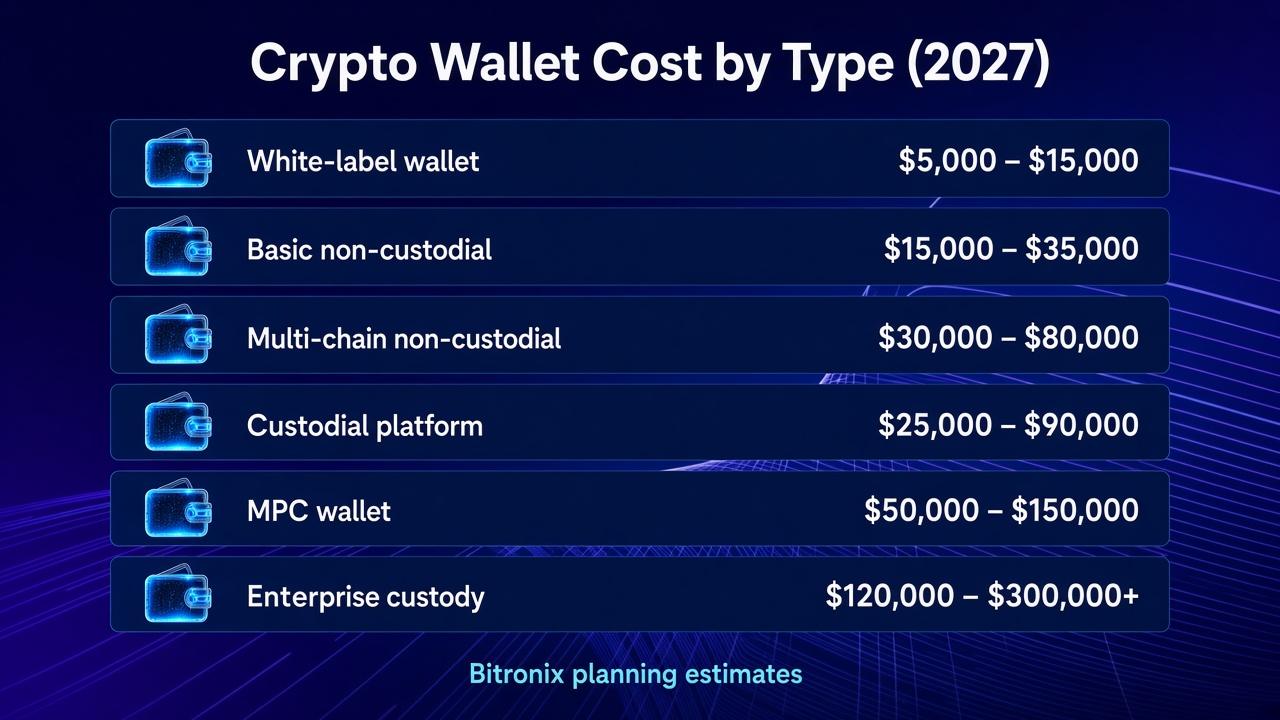
These are planning ranges, not fixed quotes. Your final price depends on the features, chains and compliance work you need.
What Does Each Type of Crypto Wallet Cost?
Each wallet type carries its own build, security and legal workload. Here is what you get at each price level.
1. White-Label Wallet: $5,000 to $15,000
A white-label wallet is a ready-made wallet that a vendor customizes with your brand, chains and features. You skip most of the build, so it is the fastest and cheapest way to launch.
It suits startups testing a market, or businesses that want a wallet for their community without a long project. See also white-label MPC wallet development when key sharing is part of the brief.
2. Basic Non-Custodial Wallet: $15,000 to $35,000
In a non-custodial wallet, users hold their own keys. You build account creation, recovery phrase backup, send and receive, balances and basic security on one or two chains.
It costs less to run than a custodial wallet, because you never hold user funds.
3. Multi-Chain Non-Custodial Wallet: $30,000 to $80,000
Support for several chains, token swaps, NFT views, dApp connections and a built-in browser adds work. Each new chain means more testing and more upkeep.
4. Custodial Wallet Platform: $25,000 to $90,000
Here your company holds the keys for users. You build a custody ledger, hot and cold storage, withdrawal controls, KYC/AML checks and an admin dashboard through custodial wallet development.
The code is often simpler than a non-custodial wallet. The cost comes from security, compliance and the back office.
5. MPC Wallet: $50,000 to $150,000
An MPC wallet splits a private key into shares so no single device ever holds the full key. It needs specialist cryptography work. One cost guide estimates that adding an MPC framework adds roughly $25,000 to $50,000 to a standard non-custodial budget.
It suits exchanges, fintech firms and any business that wants strong security without making users handle seed phrases.
6. Enterprise or Institutional Custody: $120,000 to $300,000+
This is the top tier. It adds multi-signature approvals, policy engines, audit logs, treasury reporting, role-based access and deep integrations. Security reviews take longer, and so do compliance checks.
What Factors Decide Your Crypto Wallet Development Cost?
Eight factors move your price the most. Knowing them helps you compare quotes fairly.
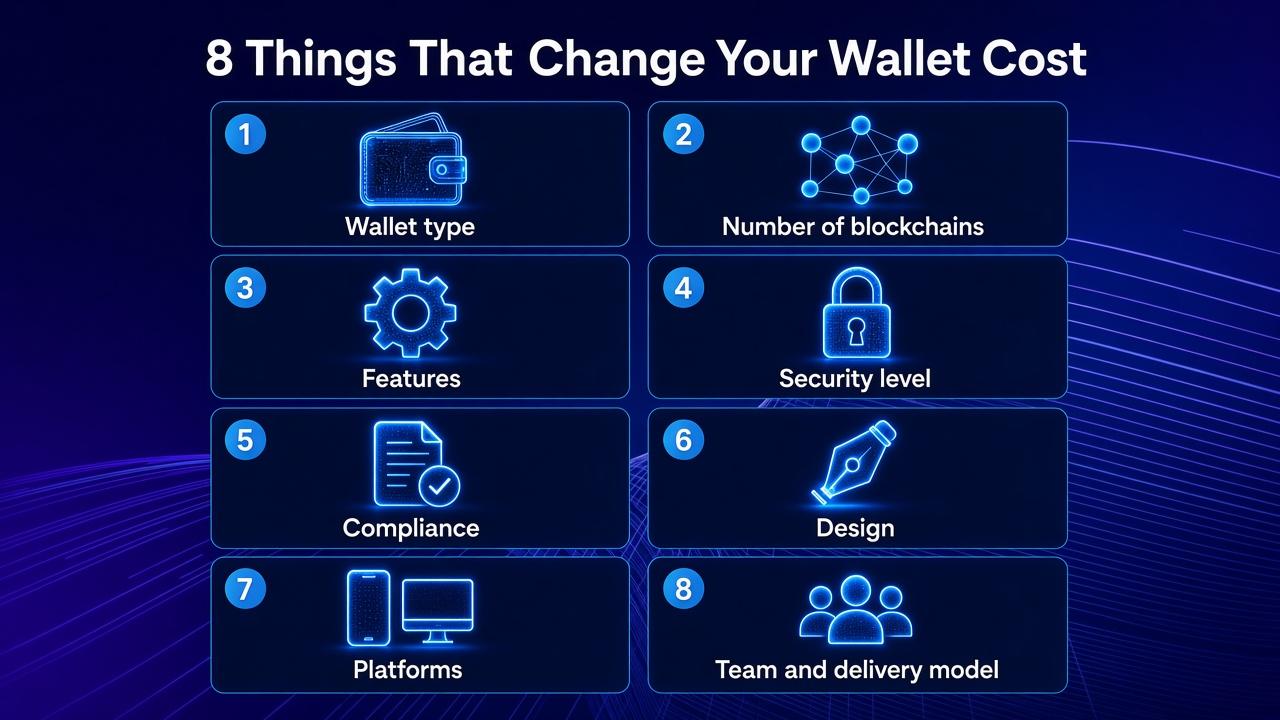
1. Wallet Type
Custodial, non-custodial and MPC wallets need different work. Custody and MPC cost more because of the security and compliance load.
2. Number of Blockchains
One chain is simple. Each extra chain adds integration, testing and ongoing monitoring. EVM chains are cheaper to add together than a mix of EVM and non-EVM chains.
3. Features
Basic wallets send, receive and show balances. Swaps, staking, NFT support, fiat on-ramp, dApp browsers and card payments each add weeks of work.
4. Security Level
Encryption, secure key storage, biometrics, 2FA and anti-phishing alerts are the base. Hardware wallet support, MPC and multi-signature add more. Security is the last place to cut.
5. Compliance
KYC/AML, sanctions screening and the Travel Rule need provider integrations and reporting tools. The more markets you serve, the more work this takes.
6. Design and User Experience
A clean, simple flow takes real design time. It is worth it, because confusing wallets lose users fast.
7. Platforms
A web wallet, a browser extension and mobile versions for iOS and Android each need their own build. A shared codebase lowers the cost, but not to zero.
8. Team and Delivery Model
A dedicated team costs more per month than a fixed-price MVP, but gives more flexibility. Rates also vary by region, and the cheapest quote often leaves out audits and support.
Where Does the Money Go? Cost by Development Stage
A wallet project has six stages. This is roughly how a typical budget splits.
| Stage | Share of build budget | What it covers |
|---|---|---|
| Discovery and planning | 5% – 10% | Scope, features, architecture, timeline |
| UI/UX design | 10% – 15% | Screens, flows, prototype |
| Development | 40% – 50% | Wallet core, chain integration, backend, admin tools |
| Security testing and audit | 15% – 20% | Penetration tests, code review, smart contract audit |
| Deployment | 3% – 5% | Launch setup, store release, monitoring |
| Support (per year) | 15% – 20% of build | Updates, patches, new chains, bug fixes |
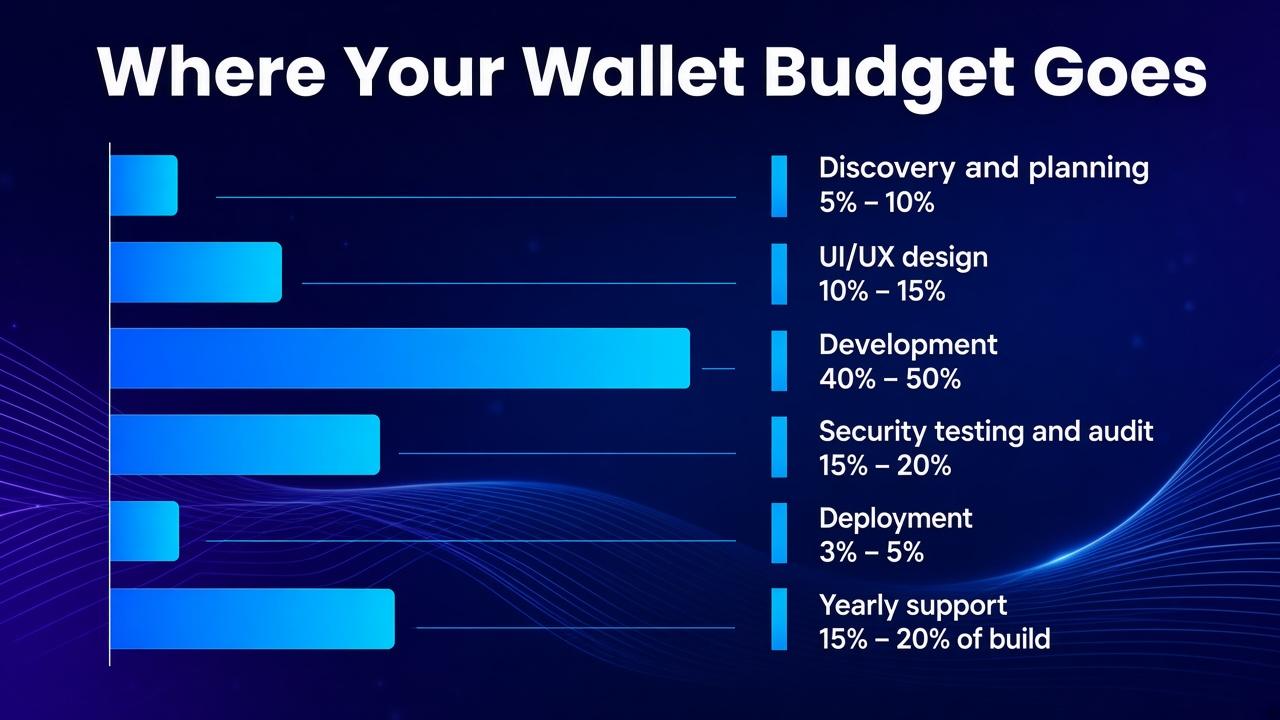
The surprise for many teams is the audit share. A wallet holds real money, so testing is not where you save. See smart contract audit readiness for how Bitronix prepares contracts before external review.
What Are the Hidden and Ongoing Costs After Launch?
The build is only part of the bill. These running costs often catch teams off guard.
1. Security Audits
An external audit of your contracts and key handling is a one-time cost at launch. You will need another after major updates.
2. Node and Blockchain Access
Most wallets use paid RPC or node services to read and send on-chain data. Costs rise with the number of users and chains.
3. KYC and Compliance Providers
Identity checks are often charged per verification. If you onboard many users, this adds up fast.
4. Cloud Hosting and Monitoring
Servers, databases, alerts and backups run every month. Wallets that handle funds need monitoring around the clock.
5. Store Fees and Updates
Publishing on Apple and Google stores involves developer fees and review rules. Operating system updates also mean regular releases.
6. Maintenance and Support
Plan on 15% to 20% of the build cost each year for bug fixes, new chains, new features and security patches.
7. Legal and Licensing
Holding customer funds can require licenses in some markets. Legal advice before launch can save you far more than it costs.
White-Label or Custom: Which Costs Less?
A white-label wallet costs less and launches faster. A custom wallet costs more but gives you full control over design, features and architecture.
| Question | White-label wallet | Custom wallet |
|---|---|---|
| Starting cost | $5,000 – $15,000 | $15,000 – $150,000+ |
| Time to launch | 2 to 6 weeks | 2 to 10 months |
| Design control | Branding and key features | Full control |
| Unique features | Limited to what the script allows | Anything you can scope |
| Best for | Testing a market, fast launch | Long-term products with special needs |
Many teams start white-label and move to a custom build once they have users. That keeps the first budget small and the risk low. MetaMask-style products can begin from a MetaMask wallet clone base when speed matters.
How Long Does It Take to Build a Crypto Wallet?
Timelines follow the same pattern as cost. White-label wallets take weeks, basic wallets take 2 to 3 months, and MPC or custody platforms take 4 to 10 months.
Delays usually come from three places: changing the scope mid-project, waiting on KYC and exchange partners, and fixing issues found during the audit. A clear scope at the start saves the most time.
How Can You Lower Wallet Costs Without Cutting Security?
You can cut the budget by choosing what you build first, not by skipping protection. These steps work well.
1. Launch an MVP First
Start with sign-up, send, receive, balances and recovery. Add swaps, staking and extras after you have real users.
2. Begin With One or Two Chains
Pick the chains your users already use. Add more once demand is clear.
3. Use a White-Label Base
A tested wallet script saves months of work. You can swap in custom features later.
4. Reuse Proven Security Tools
Audited libraries and standard key storage cost less than custom cryptography and are safer too.
5. Plan the Audit Early
Fixes found early cost far less than fixes found right before launch.
6. Ask What Is in the Quote
Check whether the price includes design, audits, deployment and support. A low quote that leaves them out is not low for long.
What Will Change in 2027 for Wallet Budgets?
Three shifts are already visible, and they affect what you should budget for.
1. MPC and Smart Accounts Become Standard
Account abstraction and MPC are already shaping enterprise wallet budgets, while traditional non-custodial wallets remain the most cost-efficient option. Expect more buyers to ask for key recovery without seed phrases.
2. Passkeys and Biometrics Replace Passwords
Users expect to sign in with a face or fingerprint. Wallets that still depend on long recovery phrases feel dated.
3. AI Risk Tools Are Becoming a Feature
AI that scores transactions, flags unusual activity and warns about risky contracts is moving into mainstream wallets. It adds some cost, and it also cuts fraud losses and support load.
4. Compliance Expectations Keep Rising
More markets ask wallet providers to run KYC, screen addresses and keep records. Building these tools in from the start costs less than adding them later.
How Can Bitronix Help You Build Your Crypto Wallet?
Bitronix Technologies is a crypto wallet development company that builds wallets for startups, exchanges, fintech firms and enterprises. We work across the whole range in this guide.
- White-label and MetaMask-style wallets for fast launches under your brand
- Non-custodial wallets with multi-chain support and dApp connection
- Custodial wallet platforms with custody ledgers, withdrawal controls and KYC/AML
- MPC wallets with threshold key recovery and approval policies
- AI risk tools that score transactions and flag unusual activity
- Security audits, deployment and ongoing support
We start with a short call, define your scope and give you a fixed quote with a clear timeline. You own the code and the wallet.
Is Crypto Wallet Development Worth the Investment?
Yes, if the wallet supports a clear business goal, such as keeping users in your ecosystem, earning fees or building trust with your community.
The cost is manageable when you plan it well. Pick the right wallet type, start with an MVP, budget for audits and running costs, and work with a team that explains what is in the price.
The businesses that spend carefully now will be ready when 2027 brings more users and tighter rules.
FAQs
How much does crypto wallet development cost in 2027?
Bitronix planning estimates range from about $5,000 for a white-label wallet to $300,000+ for enterprise custody. Most business wallets cost between $15,000 and $150,000.
What is the cheapest way to launch a crypto wallet?
A white-label wallet is the cheapest route. It uses a ready-made script that is customized with your brand, chains and features, and it can launch in a few weeks.
How much does a non-custodial wallet cost?
A basic non-custodial wallet usually costs $15,000 to $35,000. A multi-chain version with swaps and dApp support costs $30,000 to $80,000.
How much does a custodial wallet cost?
A custodial wallet platform usually costs $25,000 to $90,000. The price depends on custody security, compliance tools and the admin back office.
How much does an MPC wallet cost?
An MPC wallet usually costs $50,000 to $150,000, because it needs specialist cryptography and more testing.
How long does it take to build a crypto wallet?
A white-label wallet takes 2 to 6 weeks, a basic wallet takes 2 to 3 months, and an MPC or custody platform takes 4 to 10 months.
What ongoing costs should I plan for?
Plan for audits, node access, KYC fees, hosting, store fees and maintenance. Support and updates often run 15% to 20% of the build cost each year.
How can I reduce wallet development cost?
Start with an MVP, support fewer chains, use a white-label base, reuse proven security tools and plan your audit early.
Do I need a license to run a crypto wallet?
It depends on your country and on whether you hold customer funds. Custodial wallets are more likely to need one. We suggest speaking to a legal advisor before launch.
Let’s Talk About Your Wallet Project
Free consultation with our wallet experts. Explore crypto wallet development or book a call when you are ready to scope.
Share your answers on WhatsApp and we will outline a planning range. Select one or more options above to personalise your message.
Technically Reviewed By

Founder & CTO
Founder & CTO of Bitronix Technologies with 10+ years in enterprise software, blockchain and AI. Leads enterprise AI, blockchain and automation programmes from architecture through production delivery.
Related Posts
Saquib Fraz15 min read
Gold Tokenization Development: How to Build a Gold-Backed Digital Asset Platform
Learn how gold tokenization development works and how to build a gold-backed digital asset platform, from custody and smart contracts to compliance and cost.
Read articleSaquib Fraz19 min read
NFT Development Guide 2027: Process, Cost & Benefits
NFT development process, benefits, features, blockchain options and costs for building an NFT project in 2027.
Read articleSaquib Fraz19 min read
DEX Clone Script: Features, Development Cost & How to Build a Decentralized Exchange
DEX clone script features, costs, smart contracts, liquidity pools, security and steps to launch a DEX.
Read article