How Much Does It Cost to Launch a Crypto Token in 2026?

By Tausif AhmedFounder and CTO
A well-funded blockchain team once built a cross-chain protocol, raised real capital, hired real developers and shipped a product that worked exactly as intended, until a single gap in the smart contract logic let an attacker walk away with roughly $600 million in a matter of hours. The project was Poly Network, the exploit happened in 2021 and most of the funds were eventually returned in one of crypto's stranger twists. But the lesson it left behind has outlasted the headlines: the team didn't lose that money because they were underfunded. They lost it because one part of the budget got treated as less important than the rest.
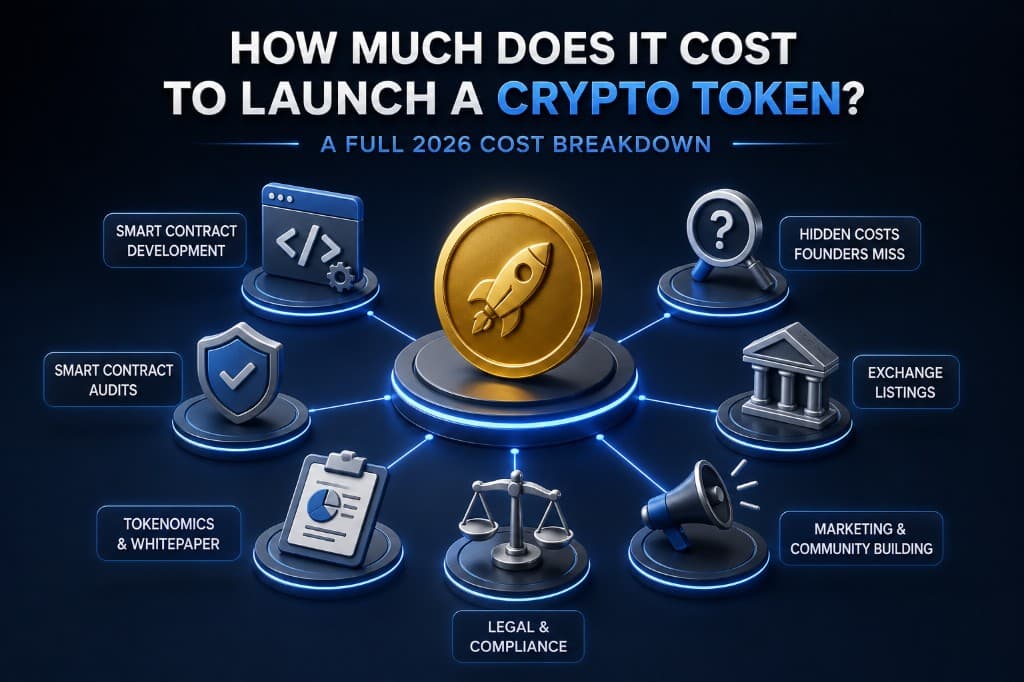
That's the real story buried inside every "how much does a crypto token cost" question. The number people usually want is a single figure, but the honest answer is a range and where a project lands inside that range says a lot about whether it survives contact with real users. A basic token can be live on a blockchain within days for a few thousand dollars. A token backed by proper audits, legal review, liquidity and a real marketing push can cost anywhere from tens of thousands to well over half a million dollars and skipping the wrong line item to save money is usually the most expensive decision a founder makes.
This guide breaks down what actually drives the cost of launching a crypto token in 2026, what each stage typically costs and where founders tend to get caught off guard by expenses nobody mentioned at the pitch stage.
What Actually Determines the Cost of a Token Launch
Every token quote comes down to the same handful of variables. Understanding them makes it much easier to tell a realistic estimate from a lowball one.
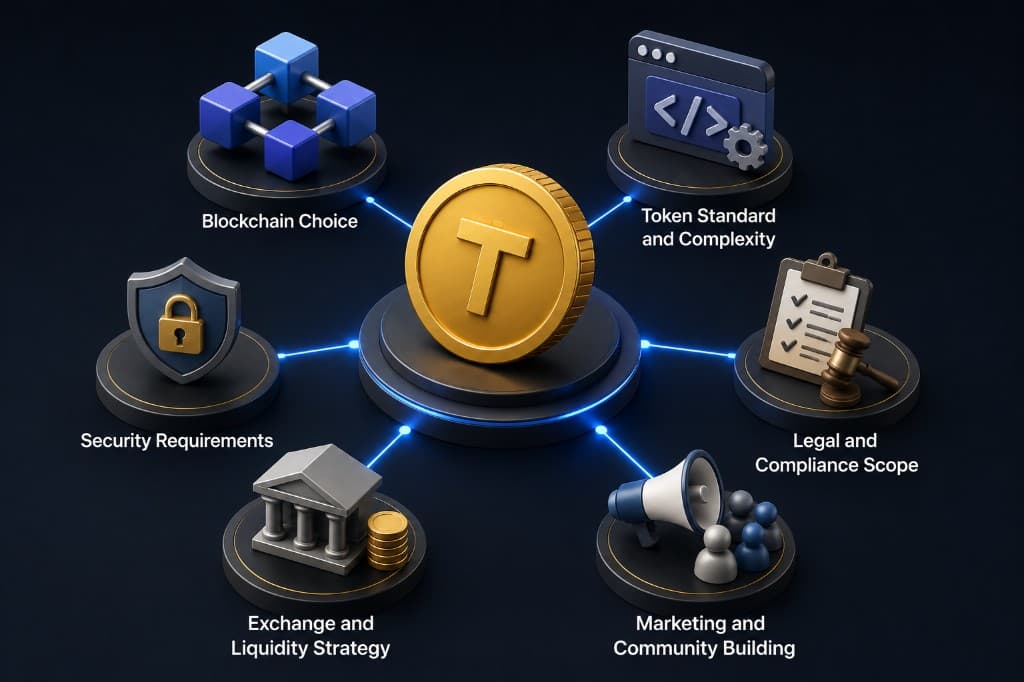
- Blockchain Choice, Ethereum development and gas costs run higher than BNB Chain, Solana, Polygon, or TRON, both for deployment and for every transaction after launch.
- Token Standard and Complexity, A plain ERC-20 or SPL token with no custom logic is cheap and fast. Add staking, vesting, governance voting, or deflationary burn mechanics and development time (and cost) climbs quickly.
- Security Requirements, A token that will hold real user funds or trade on a major exchange needs a formal third-party audit. A meme token with no real utility can sometimes get away without one, though that's a risk, not a recommendation.
- Legal and Compliance Scope, Regulatory requirements vary sharply by jurisdiction and token type. Security tokens and anything resembling a public sale carry the heaviest compliance costs, since they usually require legal opinions and investor checks.
- Exchange and Liquidity Strategy, Listing on a decentralised exchange is inexpensive. Listing on a top-tier centralised exchange is one of the largest expenses in the entire project, often larger than development itself.
- Marketing and Community Building, A token with no audience doesn't move, no matter how well the smart contract is written. Serious launches budget real money for this, not an afterthought line at the bottom of the spreadsheet.
Cost Breakdown by Component
| Component | Typical Cost Range | Notes |
|---|---|---|
| Basic token development (ERC-20, SPL, BEP-20, etc.) | $3,000 – $15,000 | Standard token creation with minimal or no custom logic |
| Custom smart contract features (staking, vesting, governance) | $10,000 – $50,000+ | Scales with how much custom logic is required |
| Security audit | $5,000 – $20,000 | Higher for DeFi protocols or complex contract logic |
| Legal and compliance review | $5,000 – $50,000+ | Depends heavily on jurisdiction and token type |
| Tokenomics and business consulting | $2,000 – $15,000 | Supply modelling, distribution planning, vesting design |
| DEX listing (Uniswap, PancakeSwap, Raydium, etc.) | $1,000 – $10,000 | Relatively low barrier to entry |
| Tier-2 CEX listing (KuCoin, Gate.io, etc.) | $30,000 – $80,000 | Includes due diligence and listing fees |
| Tier-1 CEX listing (Binance, Coinbase, etc.) | $100,000 – $500,000+ | Scales with traction, due diligence and negotiating leverage |
| Marketing and community launch | $20,000 – $80,000 | Content, KOL partnerships, community management |
| Post-launch maintenance | 15–20% of build cost, annually | Monitoring, bug fixes, infrastructure, ongoing support |
Cost by Project Type
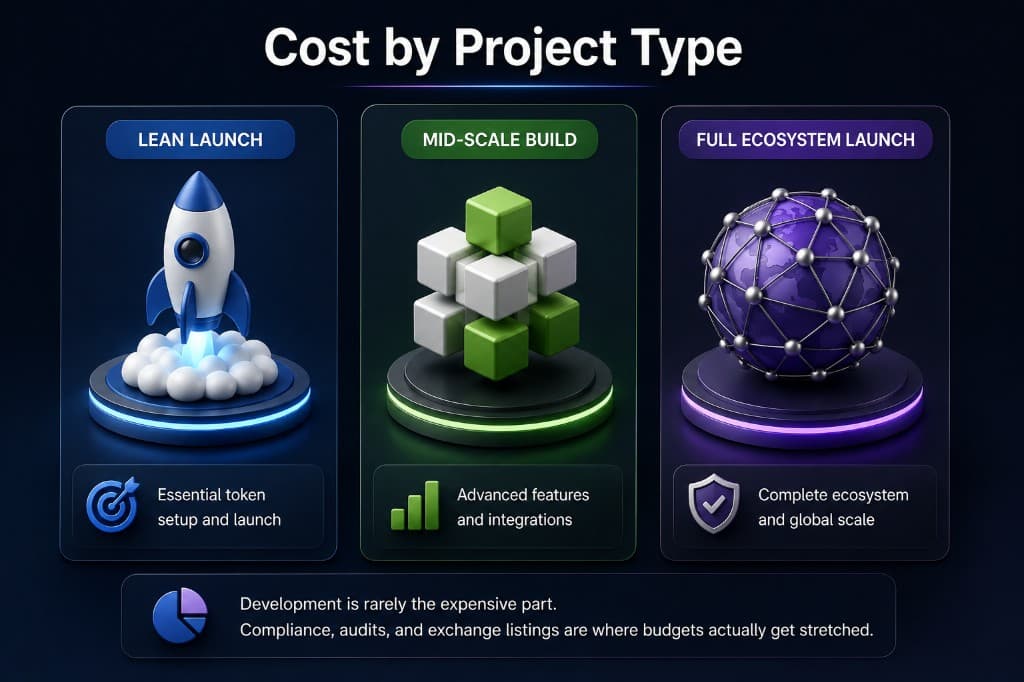
| Project Type | Estimated Total Cost | Estimated Timeline |
|---|---|---|
| Lean token launch (basic utility token, DEX-only) | $5,000 – $40,000 | 1–4 weeks |
| Mid-scale token with custom features and audit | $40,000 – $150,000 | 4–10 weeks |
| DeFi or governance token with full compliance review | $75,000 – $250,000 | 2–4 months |
| Full coin and ecosystem launch (own chain, CEX listing, marketing) | $250,000 – $500,000+ | 3–9 months |
These figures line up closely across independent industry cost guides published in 2026 and the pattern holds regardless of which one you check: development itself is rarely the expensive part. Compliance, audits and exchange listings are where budgets actually get stretched.
How Blockchain Choice Affects the Total Bill
The blockchain you build on doesn't just affect speed and fees for your users, it affects what you pay to build and run the token in the first place.
- Ethereum carries the highest development and gas costs of the major networks, but it still offers the deepest liquidity, the largest developer pool and the strongest institutional trust, which can matter more than the raw price tag for enterprise and DeFi projects.
- BNB Chain, Polygon and TRON cost less to deploy and operate and they're common choices for startups that want lower fees without giving up EVM compatibility.
- Solana offers some of the lowest transaction costs of any major chain, with average fees staying under a cent, which makes it attractive for high-volume applications like gaming or payments where per-transaction cost adds up fast at scale.
Picking a chain purely on upfront cost is a common mistake. A cheaper chain with a smaller ecosystem can end up costing more later in liquidity incentives and marketing needed to build the audience a bigger chain would have handed you for free.
Hidden Costs Founders Often Miss
A lot of token budgets look fine on paper and then blow past their number in the first few months. These are the usual reasons why.
- Ongoing Maintenance, A token launch is not a one-time expense. Monitoring, bug fixes and infrastructure typically run 15 to 20 percent of the original build cost every year and that number doesn't disappear just because the token is live.
- Re-Audits After Updates, Every meaningful change to a smart contract technically invalidates the previous audit. Projects that iterate quickly need to budget for repeat security reviews, not just the initial one.
- Liquidity Provisioning, Getting listed is not the same as being tradable. Projects need real liquidity behind the token from day one and undercapitalising this step is one of the fastest ways to tank a token's price the moment it goes live.
- Legal Costs That Don't End at Launch, Regulatory frameworks like the EU's MiCA and ongoing SEC enforcement in the US mean compliance isn't a box you tick once. Projects operating across multiple jurisdictions often need continued legal review as rules shift.
- Gas Optimisation, Inefficient smart contract code costs users real money on every single transaction. It's cheaper to pay for proper gas optimisation upfront than to explain to a community later why fees are higher than they should be.
Token Development vs Building Your Own Blockchain: A Cost Comparison
One of the most expensive mistakes a founder can make is assuming they need to build a new blockchain when a token would do the job for a fraction of the price. The two are not close in cost and confusing them at the planning stage is how budgets spiral before development even starts.
A token is built on infrastructure that already exists. Ethereum, Solana, BNB Chain and the rest have already solved consensus, security and network scaling, so a token launch is really just building on top of proven ground. That's why a functional token can go live for a few thousand dollars and a few weeks of work.
A brand-new blockchain has none of that to lean on. Consensus mechanisms, validator infrastructure, network security and tooling all need to be built and stress-tested from zero and that work alone typically runs into hundreds of thousands of dollars before a single application is built on top of it. Enterprise-grade blockchain builds with heavy custom infrastructure can run well past $150,000 and that's before ongoing validator incentives and network security costs are factored in.
For the overwhelming majority of businesses and this includes most payment platforms, loyalty programmes, gaming projects and DeFi products, a token on an existing chain delivers the same business outcome as a custom blockchain at a fraction of the cost, the time and the ongoing maintenance burden. A new blockchain only makes sense when a project has technical requirements no existing chain can meet, which is a genuinely rare situation.
Sample Budget Allocation: Where a Mid-Size Token Launch Actually Goes
Numbers are easier to plan around when they're broken into shares rather than one lump total. Here's a realistic allocation for a mid-size token launch with a total budget in the $75,000 range, the kind of project that includes a custom smart contract, a proper audit and a real go-to-market push.
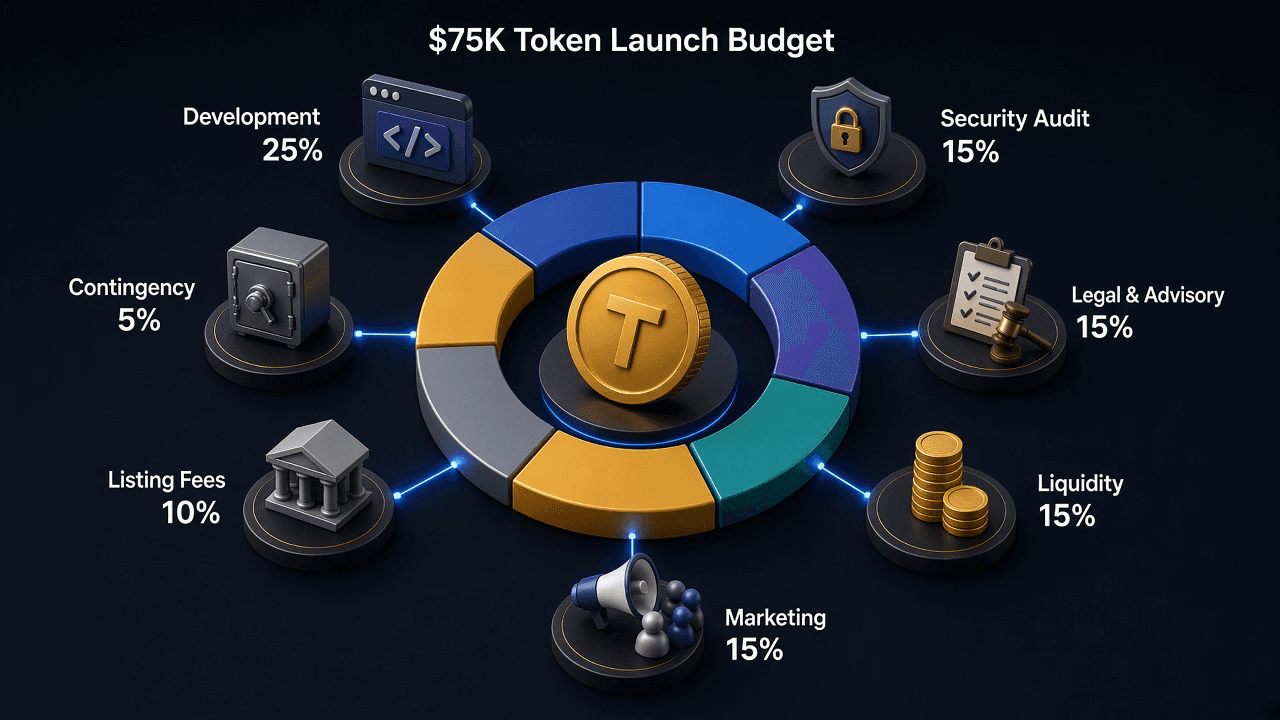
| Budget Category | Share of Total Budget | Approximate Amount |
|---|---|---|
| Smart contract development | 25% | ~$18,750 |
| Security audit | 15% | ~$11,250 |
| Tokenomics and legal consulting | 15% | ~$11,250 |
| Liquidity provisioning | 15% | ~$11,250 |
| DEX/CEX listing fees | 10% | ~$7,500 |
| Marketing and community launch | 15% | ~$11,250 |
| Contingency and post-launch buffer | 5% | ~$3,750 |
The exact split shifts depending on which exchanges a project targets and how much custom smart contract work is involved, but the pattern generally holds: development is rarely more than a quarter of the total budget. The rest goes toward the parts of the launch that determine whether the token actually gets used once it's live, which is exactly the part founders tend to underestimate when they're only pricing out the code.
In-House vs Agency: Which Costs Less?
Building a token development team in-house sounds like the cheaper option until the fully loaded cost of a senior blockchain developer is on the table, typically well into six figures annually once salary, benefits and overhead are accounted for. For most businesses launching a single token or a handful of blockchain products, that math doesn't work.
Working with an experienced development agency spreads that specialised cost across the project rather than a full-time hire and a good agency brings something in-house teams often lack on day one: a security-first process shaped by dozens of previous launches, rather than one team learning the hard lessons for the first time.
How to Keep Costs Down Without Cutting Corners
- Start with a clear scope. Vague requirements are the single biggest reason blockchain quotes balloon mid-project.
- Choose the right blockchain the first time. Migrating a token to a new chain later, the way Helium did in 2023, is possible, but it's a far bigger project than getting the choice right at the start.
- Never skip the audit to hit a launch date. The cost of a proper security review is a rounding error next to the cost of an exploit.
- Separate "must-have" from "nice-to-have" features. Staking, governance and advanced tokenomics can often be added in a second phase after the token proves it has real demand.
- Ask for an itemised quote, not a flat number. A single bundled price makes it impossible to tell what you're actually paying for and where a partner might be padding the estimate.
Conclusion
There's no single honest number for what it costs to launch a crypto token in 2026 and any guide that gives you one flat figure is oversimplifying. A basic token can go live for a few thousand dollars. A serious, audited, exchange-ready launch with real legal and marketing backing can run into six figures before a single user shows up.
The projects that succeed aren't always the ones that spent the most. They're the ones that budgeted honestly for security, compliance and liquidity from day one instead of treating those as optional extras to add later. Poly Network didn't lose $600 million because the team was underfunded. They lost it because one part of the process got treated as less important than the rest.
If you're scoping a token launch and want a realistic, itemised estimate rather than a padded quote, talk to our team about what your specific project actually needs, or explore our smart contract development and coin & token development services.
Frequently Asked Questions
What's the cheapest way to launch a crypto token?
A basic token on an existing blockchain, such as an ERC-20, BEP-20, or SPL token with no custom smart contract logic, is the least expensive route, typically costing a few thousand dollars and taking one to two weeks.
Do I really need a security audit for a small token?
If the token will hold real user funds, trade on an exchange, or involve any custom smart contract logic beyond a basic transfer, yes. Skipping an audit to save a few thousand dollars is one of the most common ways projects lose far more later.
Why is exchange listing so expensive?
Centralised exchanges, particularly Tier-1 platforms, charge for due diligence, compliance review and market-making support and demand grows with the exchange's size and reputation. Decentralised exchange listings are far cheaper because there's no centralised gatekeeper involved.
Is Solana cheaper than Ethereum for launching a token?
Generally, yes. Solana's transaction fees are typically under a cent, well below Ethereum's, which matters most for high-volume applications where fees are paid constantly rather than just at deployment.
How much should I budget for ongoing costs after launch?
Plan for roughly 15 to 20 percent of your original development cost every year for maintenance, monitoring and infrastructure, on top of any liquidity, marketing, or compliance costs that continue after launch.

Founder and CTO
Founder and CTO of Bitronix Technologies. Helps businesses scope, build and audit crypto tokens with transparent, itemised pricing through smart contract and token development services.
Related Posts
 Blockchain
October 14, 202615 min read
Crypto Token Development Cost in 2027: Pricing, Features and Budget Breakdown
Explore crypto token development cost in 2027, with estimated pricing, key cost factors, smart contract audits, development timelines, & hidden expenses.
Read article Blockchain
October 1, 202613 min read
Top 10 Companies to Hire Blockchain Developers in India 2026-2027
Find the top 10 companies to hire blockchain developers in India. Compare blockchain services, expertise, use cases, & tips for choosing a development partner.
Read article Blockchain
September 25, 202616 min read
RWA Tokenization in Singapore: Regulations, Licensing & Complete Guide 2026
Learn about RWA tokenization in Singapore, including MAS regulations, licensing, compliance, use cases, costs and how to build an RWA platform in 2026.
Read article